Personalized Medical Care & Dedicated International Patient Concierge


Skin Rejuvenation & Texture Care · Consultation Required
Potenza
Potenza is a fractional radiofrequency microneedling treatment in which insulated needles deliver radiofrequency energy beneath the skin surface, with the aim of improving skin condition and producing a more even texture.
Schedule a ConsultationPotenza RF Microneedling in Jeju, Korea

Medically reviewed by Dr. Oh Eunhui, Medical Director, Liyan Clinic
Potenza is an RF microneedling treatment offered at Liyan Clinic in Jeju, Korea, designed to improve overall skin condition and create smoother, more even-looking skin texture. It combines microneedling with radiofrequency energy: fine needles pass through the skin surface and radiofrequency is delivered from them into the tissue below. It is a gradual treatment rather than an instant one, and it is normally taken as a course rather than as a single session.
What Is Potenza?
Potenza is a fractional radiofrequency microneedling treatment in which insulated needles deliver radiofrequency energy beneath the skin surface, with the aim of improving skin condition and producing a more even texture.
The platform can use monopolar or bipolar radiofrequency, and it accepts different needle configurations.
The system provides multiple radiofrequency modes and multiple treatment depths, so the same device is set differently for different skin.
The treated area at Liyan Clinic is full face.
Chair time is 40 to 60 minutes including numbing time.
A course of three or more sessions at monthly intervals is usual for this class of treatment.
No overnight stay is required for a treatment of this type.
The clinical argument for combining the two elements is straightforward. Microneedling alone creates fine channels in the skin; adding radiofrequency puts energy into the dermis at a depth the needles choose. Because the needles are insulated, the energy is placed where the tip ends rather than being spread through the full thickness of the skin, and because the depth is adjustable, the same treatment can be aimed at shallow textural roughness in one area and at deeper scarring in another during the same pass.
What it is intended to address is skin condition and texture. RF microneedling as a treatment type may also improve acne scars, wrinkles and mild skin laxity, but results vary between patients and the treatment should not be described as producing a fixed outcome. Liyan Clinic lists Potenza under its Skin Rejuvenation & Texture Care category, which is the category aimed at the quality of the skin rather than at lifting.
Who Performs Potenza at Liyan Clinic
|
|
|
Dr. Oh Eunhui, Medical Director | Dr. Hyun Moonsu, Vice Director | Dr. Kim Seunkon, Vice Director |



For this treatment the decisions that matter are made before the handpiece touches the skin: how deep the needles go, which radiofrequency mode is used, and how many passes a given area receives. Those are clinical judgements about a specific face, and a US patient is entitled to know who is making them. Liyan Clinic lists all three of its doctors for this area of treatment.
Dr. Oh Eunhui is the Medical Director of Liyan Clinic and the clinic's legal representative on its business registration. She graduated from Seoul National University. Before Liyan Clinic she held Vice Director posts at Joy Dermatology and Me&Me Clinic and was Medical Director of The Goun Clinic. She is a full member of the Korean Society of Aesthetic Plastic Surgery and Laser Medicine and of the Korean Society of Laser Dermatology and Hair Research, and a member of the Korean Society of Aesthetic Medicine, the Korean Society of Obesity and Aesthetic Medicine and the Korean Society of Aesthetic Functional Medicine.
Dr. Hyun Moonsu is a Vice Director at Liyan Clinic and a medical specialist associated with Dong-A University. He previously served as Head of the Medical Department at Seogwipo Medical Center, as Director at Mijak Clinic and as Representative Director at Neulbom Miarum Clinic. He is a member of the Basic Aesthetic Research Association, the Korean Society of Laser Dermatology and Hair Research, the Korean Society of Aesthetic Plastic Surgery and Laser Medicine and the Korean Society of Obesity and Aesthetic Medicine.
Dr. Kim Seunkon is a Vice Director at Liyan Clinic. He previously held Director posts at Madi Clinic and at Jeju Clinic before joining Liyan Clinic. He is a member of the Korean Society of Laser Dermatology and Hair Research, the Korean Society of Aesthetic Plastic Surgery and Laser Medicine and the Korean Society of Obesity and Aesthetic Medicine.
All three of Liyan Clinic's doctors are listed as performing doctors for this area of treatment, and the clinic has not published an assignment of particular treatments or sessions to particular doctors, so this page names the team rather than claiming one doctor performs every session.
Read more about each doctor on the profiles for Dr. Oh Eunhui, Dr. Hyun Moonsu and Dr. Kim Seunkon. A practical question to ask on the day, and one the American Academy of Dermatology also tells patients to ask, is simply who will be operating the device for your session.
Potenza Options and Settings
Variable | What it changes | How it is decided |
|---|---|---|
Radiofrequency mode — monopolar or bipolar | How the energy is distributed in the tissue | Selected by the clinician against the skin being treated |
Needle configuration | The pattern and number of needles placed per pass | Selected by the clinician from the configurations the platform accepts |
Treatment depth | How deep in the skin the energy is delivered | Set from the platform's multiple depth options, and varied across the face |
There is one further practical point that speaks directly to a concern American patients raise about treatment abroad. Potenza uses a disposable treatment tip, and Liyan Clinic itemises its two tip types separately rather than folding them into the session as a single undifferentiated line. That structure is what lets a patient see that a fresh tip is being used for their own treatment, which is the question behind most of the counterfeit-and-consumables worry that dominates English-language discussion of Korean aesthetics.
Who Is a Good Candidate for Potenza?

Every patient at Liyan Clinic speaks with a doctor before treatment begins, and the clinic assesses each face, each skin and each way of living before recommending anything. For Potenza specifically, the clinician evaluates skin texture, pores, scars, pigmentation, laxity and treatment goals before selecting radiofrequency settings and needle depth. Medical history, current medications, skin sensitivity and previous procedures are reviewed at the same time.
You may be a candidate if
You are a healthy adult.
Enlarged pores are what you want addressed.
Acne scarring is what you want addressed.
Uneven texture is what you want addressed.
Loss of skin firmness is what you want addressed.
You accept that the change produced is non-surgical and gradual rather than instant.
You can accept the actual timing: texture change from about three to four weeks.
Your interest is skin quality — pores, surface, overall condition — rather than facial shape.
You may need to avoid or postpone treatment if
An active skin infection is present.
The skin in the treatment area is significantly irritated.
A medical condition is present that the clinician judges relevant to treatment.
Acne scarring is worth singling out, because it is one of the main reasons patients in the United States look at Korean dermatology at all. The American Academy of Dermatology's patient guidance on acne scars explains that scar types differ, that treatment is usually matched to the scar type rather than chosen in advance, and that a dermatologist should assess the skin before any plan is set (AAD — Acne scars). The same logic governs the consultation here.
What to Expect: Procedure, Recovery, and Results Timeline

The appointment has a fixed sequence:
The treatment area is cleansed and make-up is removed.
The area is photographed for the clinical record, with the patient's consent.
The treatment area is marked or mapped so that coverage matches the shot count or line count that has been quoted.
Topical numbing is applied where it is used, and time is allowed for it to take effect.
Microneedle radiofrequency is delivered across the marked area.
The doctor makes a check pass over any area judged under-treated.
The treated skin is cooled or soothed.
Post-treatment instructions are given and the review appointment is booked.
Before the appointment, follow the clinician's instructions on skincare products and medications. Treatment is not carried out over active infections or irritated skin, and medications, skin conditions and previous procedures should be disclosed at consultation.
Stage | What is typically happening |
|---|---|
Immediately after | Warmth and flushing across the treated area. |
Days 1–4 | Redness and a sandpaper-like surface texture are expected after microneedle radiofrequency. Many patients are back to routine activities within about a day, though more noticeable irritation can take longer to settle. |
Weeks 3–4 | The first texture change becomes visible. |
Months 2–3 | The fullest effect follows, counted from the final session of the course. |
Ongoing | Results are cumulative across a course and maintained with periodic sessions. |
Mild redness and swelling commonly settle within several days, though recovery varies with treatment intensity and skin type. The important expectation to set is the gap between the treatment and the result: nothing much happens in week one, which is not a sign that the session did not work.
For a patient travelling from the United States, four to five days in Korea is the plan for this treatment. That figure exists because of the sandpaper phase rather than because of any restriction on flying — patients frequently ask whether they will look treated when they board, and for this treatment in the first few days the honest answer is that the skin will look and feel different. Liyan Clinic is closed on Wednesdays, Sundays and Korean public holidays, so the treatment day has to be placed on an open day, and the review appointment after it does too.
Combining Potenza with Other Treatments
The clinic documents several natural pairings within its own service range. Any combination is selected and scheduled by the clinician, not assembled by the patient during a short visit.
The nearest alternatives to Potenza inside the clinic's own range are Pico Toning and LDM Skin Treatment. Both work by a different mechanism, and a patient comparing them should compare mechanisms rather than assuming the more intensive option is automatically the right one.
Safety, Precision, and Clinic Standards
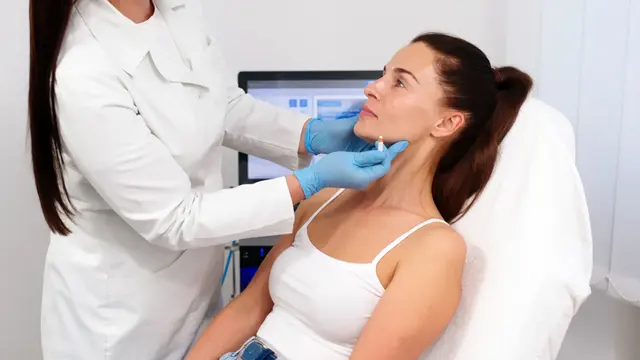
Liyan Clinic is a Potenza genuine-product certified clinic.
Liyan Clinic is a Registered Medical Institution for Attracting Foreign Patients, certified by the Ministry of Health and Welfare in compliance with the Medical Overseas Expansion and Foreign Patients Attraction Act.
Liyan Clinic opened in Jeju City in 2013, has operated from the same address ever since, and records more than 60,000 cumulative patient visits.
Radiofrequency microneedling has documented risks at the category level, and a patient travelling from the United States should read them before booking. In October 2025 the Food and Drug Administration issued a safety communication about radiofrequency microneedling devices; the agency's microneedling device page carries that link and explains how devices in this class are regulated in the United States (FDA — Microneedling Devices). The American Academy of Dermatology's statement on the same reports describes burns, scarring, loss of facial fat and nerve injury among the harms recorded, and urges anyone considering the treatment in the United States to have it performed by a board-certified dermatologist (AAD — Statement on FDA RF microneedling risks). Those statements are about the treatment category, not about any one clinic's results, and they are the reason depth and energy settings are a doctor's decision rather than a menu choice.
Liyan Clinic publishes no case volume, no outcome rate and no complication rate for this treatment, and this page claims none. Liyan Clinic has not published a price or a price range for this treatment, so none is stated on this page, and cost is confirmed at consultation.
Ask for written documentation of the session before leaving Jeju — device name, areas treated, settings where the clinic will provide them, and the date. Korean medical liability does not work the way the American system does, and a US dermatologist reviewing the skin later will want to know what was actually done.
The Bottom Line
Potenza is RF microneedling: insulated needles deliver radiofrequency energy into the skin, at depths and in modes the clinician selects.
It is aimed at skin condition and texture — pores, acne scarring, uneven surface — and not at lifting or facial shape.
Chair time is 40 to 60 minutes including numbing, and it is normally taken as a course of three or more monthly sessions.
Expect redness and a sandpaper feel for a few days, first texture change from about three to four weeks, and the fullest effect two to three months after the last session.
Radiofrequency microneedling carries real category-level risks reported by the FDA and the AAD; ask who is operating the device and what depth is being used.
Frequently Asked Questions
Is Potenza painful?
Because Potenza combines microneedling with radiofrequency energy, some warmth, stinging or discomfort can be expected during the session. Topical numbing is used where the clinician judges it appropriate, and the 40 to 60 minute chair time includes that numbing period. Tolerance differs from patient to patient and from area to area of the face.
How long does a Potenza appointment take?
Chair time is 40 to 60 minutes including numbing. The overall length of the visit can vary with the area treated, the settings selected and whether any other treatment is performed the same day. Consultation and clinical photography sit outside that figure.
How many days should I plan in Korea for Potenza?
Four to five days is the working plan for a patient coming from the United States. Arrive at least one full day before treatment. A patient who lands at Jeju and is treated the same day is treated jet-lagged after two flights, and the clinic's Wednesday and Sunday closure means the arrival day has to be chosen so that the treatment day falls on an open day. That leaves the treatment day itself, and time for the first few days of redness before a long flight.
When will I see a result?
Visible improvement develops gradually rather than immediately. The first texture change is generally noticed from about three to four weeks, and the fullest effect follows two to three months after the final session in a course. How much change occurs varies with skin condition, the settings used and individual response.
How many sessions are needed?
A course of three or more sessions at monthly intervals is usual for this class of treatment, and results accumulate across the course rather than arriving from one session. Follow-up needs depend on the treatment plan and on how the skin responds, which is assessed at review rather than fixed in advance.
What should I avoid before and after treatment?
Before: avoid aggressive exfoliation or other irritating treatments shortly beforehand unless your clinician advises otherwise. After: avoid excessive heat, harsh exfoliation and irritating skincare while the skin is recovering. Disclose medications, skin conditions and any recent cosmetic treatments at consultation so that timing can be adjusted.
Can I have an online consultation before I travel?
Yes — online consultation is available, and it is the sensible way to establish whether Potenza is even the right treatment before booking flights. The clinic may request facial photographs and relevant medical or treatment history for that assessment. Final suitability is decided by a doctor in person.
What results are realistic?
A gradual improvement in skin quality, not a transformation. The treatment is designed to improve skin condition and produce smoother, more even-looking texture, and the degree of change varies with the starting skin, the settings used and individual response. Anyone promising a fixed result for this treatment is overstating what it does.
Book a Consultation at Liyan Clinic
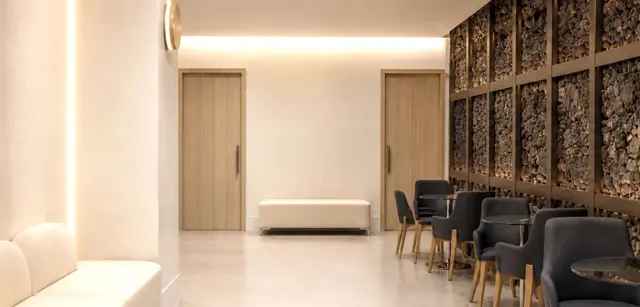
Potenza is performed at Liyan Clinic in Jeju City, and whether it is the right treatment is established at consultation with a doctor.
Liyan Clinic is at 3rd Floor, 371 Jungang-ro, Jeju-si, Jeju-do, South Korea, and opens Monday 10:00-19:00, Tuesday 10:00-20:00, Thursday 10:00-19:00, Friday 10:00-20:00 and Saturday 10:00-15:30, closed Wednesdays, Sundays and Korean public holidays.
English-speaking assistance is available for both online and in-person consultations at Liyan Clinic, and enquiries are handled through the clinic's contact page.
To ask about a course, timing around a trip, or an online assessment first, use the Liyan Clinic contact page.
Disclaimer
This page is for general informational purposes and does not constitute individualized medical advice. Candidacy, technique, and expected outcomes can only be determined through a consultation with a qualified physician.
Sources & Further Reading
FDA — Microneedling Devices — the regulatory position on microneedling devices in the United States and the October 2025 radiofrequency microneedling safety communication: https://www.fda.gov/medical-devices/aesthetic-cosmetic-devices/microneedling-devices
AAD — Statement on FDA RF microneedling risks — burns, scarring, fat loss and nerve damage reported after RF microneedling, and the Academy's advice to patients: https://www.aad.org/news/statement-on-fda-rf-microneedling-risks
AAD — Acne scars: consultation and treatment — how scar types differ and how a dermatologist approaches assessment before treatment: https://www.aad.org/public/diseases/acne/derm-treat/scars/treatment
Other Services
Explore additional treatments offered by our specialists.
Radiesse
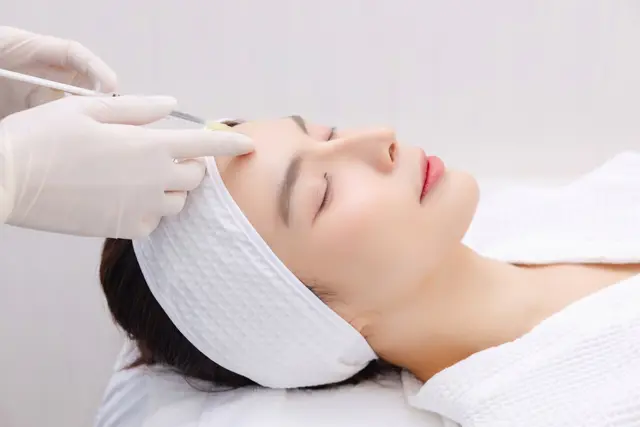
Radiesse is an injectable implant of synthetic calcium hydroxylapatite microspheres in a gel carrier, used to restore facial volume and improve the appearance of wrinkles and folds, and capable of stimulating a collagen and elastin response as well.
Learn More
Aqua Peel
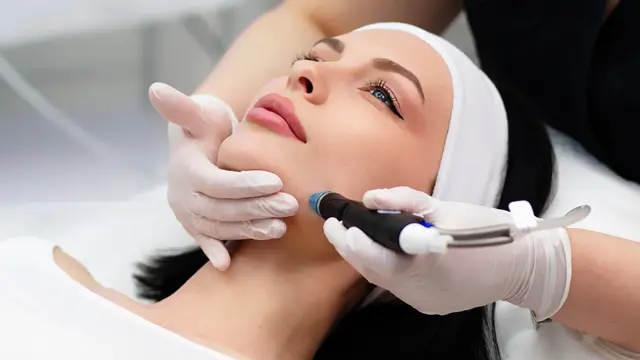
Aqua Peel is a hydro-dermabrasion facial: a handpiece combines liquid flow with vacuum suction to lift surface debris out of the pores while an exfoliating or cleansing solution loosens it.
Learn More
Thermage FLX RF
Thermage FLX, made by Solta Medical, is a radiofrequency system that delivers controlled RF heating to the skin and underlying tissue and may add skin vibration during treatment.
Learn More