Personalized Medical Care & Dedicated International Patient Concierge


Medical Guide
Potenza RF Microneedling: Texture, Pores, and Scars
Potenza RF microneedling at Liyan Clinic in Jeju: how needles plus radiofrequency treat texture and acne scars, how long a course runs, and what to ask.
Schedule a ConsultationPotenza RF Microneedling: Texture, Pores, and Scars
Medically reviewed by Dr. Oh Eunhui, Medical Director, Liyan Clinic
Acne scarring is one of the main reasons American patients research Korean dermatology in the first place, and RF microneedling is usually where that research lands. Potenza is Liyan Clinic's device for it — a treatment that combines microneedling with radiofrequency energy to improve overall skin condition and produce smoother, more even-looking texture.
This guide explains how the two halves work together, what a realistic course looks like, and how to read the one credential this clinic actually holds.
Microneedling, and then microneedling plus energy
Microneedling on its own is a well-established procedure. Fine needles create controlled micro-injuries in the skin, and the healing response that follows is what improves texture and the appearance of scarring over time. The American Academy of Dermatology's patient page on microneedling is a good plain-language starting point, and the FDA maintains a consumer page specifically on microneedling devices — worth reading because it explains why the same-sounding device can be regulated very differently depending on what it claims to do.
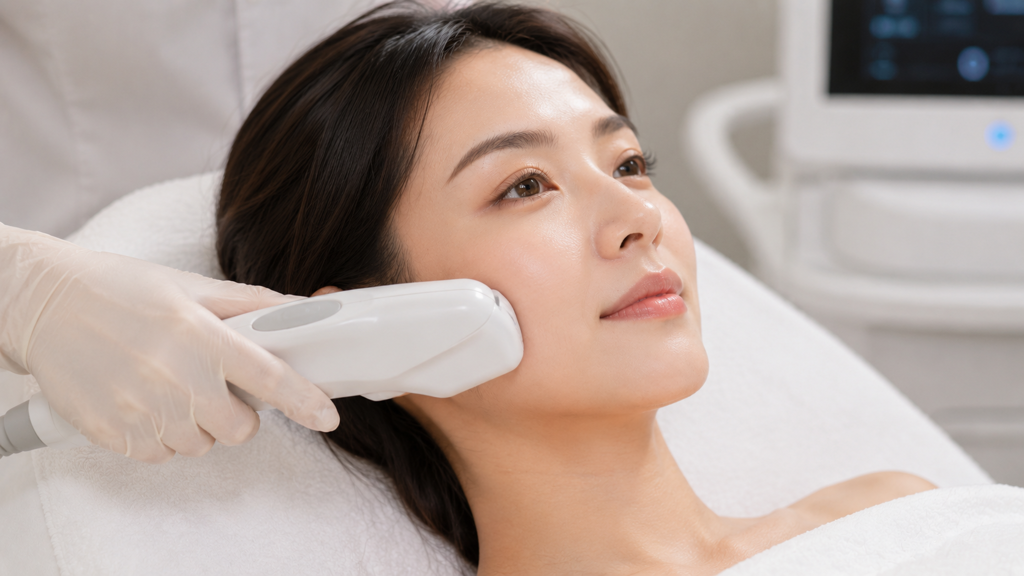
RF microneedling adds a second variable. The needles deliver radiofrequency energy at depth as well as creating the mechanical channel, so the tissue response is driven by both. Potenza is a fractional RF microneedling platform that can use monopolar or bipolar RF and different needle configurations, with multiple RF modes and treatment depths available for a customized approach.
The practical meaning of "multiple modes and depths" is that the treatment is adjustable to the problem. A shallow setting aimed at texture and pores is not the same treatment as a deeper setting aimed at scarring, even on the same device in the same room. When you are told what is planned, the depth and the mode are the specifics worth writing down.
Why acne scarring sends people looking abroad
It is worth naming the pattern, because understanding it helps you evaluate what you find.
Acne scarring is a slow, cumulative problem. It rarely responds to a single intervention, it usually needs a course, and the course is the expensive and inconvenient part rather than any individual appointment. That combination is why patients research it more thoroughly than they research most aesthetic concerns, and why Korean dermatology in particular turns up in that research so often.
The useful consequence is that you should evaluate the plan rather than the device. Two questions do most of the work. What kind of scarring do I have, and is it the kind this treatment addresses? And how many sessions is a realistic course for it, given that I do not live here?
The first question is genuinely clinical. Scarring is not one thing, and different patterns respond differently to a treatment that works by controlled injury and remodeling. The assessment before treatment covers skin texture, pores, scars, pigmentation and laxity precisely because the answer determines the settings and the needle depth, and because a setting appropriate for texture is not the setting appropriate for a deeper scar.
The second question is logistical and is the one most often left until it is awkward. If a course of three or more monthly sessions is what your case needs, the plan has to survive the fact that you will be on another continent between appointments. Raise it at the first consultation, and ask what the alternatives are if returning monthly is not possible — whether the intervals can be adapted, and what is lost if they are.
Who it suits
Adults in good general health whose main concern is enlarged pores, acne scarring, uneven texture or skin firmness — and who accept that the change is non-surgical and gradual rather than instant. The timing is specific: texture change from about three to four weeks.
It may need to be postponed with active skin infection, significant irritation or certain medical conditions. The clinician evaluates skin texture, pores, scars, pigmentation, laxity and your goals before selecting RF settings and needle depth, and reviews your medical history, medications, skin sensitivity and previous procedures. Avoid aggressive exfoliation or irritating treatments shortly before the procedure unless your clinician tells you otherwise.
The specific risk profile for this treatment is settled at consultation rather than published in advance, so ask for it directly — what the common reactions are for the settings planned for you, what would be unexpected, and what to do about either.
A session, and a course
Cleansing of the area and removal of makeup. Photography for the clinical record, with your consent. Marking or mapping of the area so coverage matches what was quoted. Topical numbing where used, and a wait for it to take effect. Delivery of microneedle radiofrequency across the marked area. A check pass over anything the doctor judges under-treated. Cooling or soothing of the skin. Post-treatment instruction and booking of the review.
Chair time is 40 to 60 minutes including numbing time. A course of three or more sessions at monthly intervals is usual for this class of treatment. No overnight stay is needed.
The clinic prices the two tip types separately and itemizes the tip, which is a consumable disclosure rather than a marketing point: an itemized tip is a record that a tip was used for your session.
For a visiting patient the clinic suggests planning four to five days in Korea for Potenza. Mild redness and swelling commonly settle within several days, though recovery varies with treatment intensity and skin type; many people return to routine activities within about a day, while more noticeable irritation takes longer to resolve. Some warmth, stinging or discomfort may be felt during treatment.
Afterwards, avoid excessive heat, harsh exfoliation and irritating skincare while the skin is recovering.
The four-to-five day suggestion is worth reading as a working window rather than a recovery requirement. It allows for the consultation, the session itself, a day for the most visible redness to settle, and a review before you fly — which is the part people leave out when they compress a trip. If your itinerary cannot accommodate the review, say so at the consultation rather than at the airport, because a plan that assumed one and did not get it is not the plan that was agreed.
It is also the window in which questions tend to occur to you. Skin that is settling raises questions that skin sitting in a consultation room does not, and being in the same city as the people who treated it is the easiest those questions will ever be to ask.
The course is the treatment
This is the part most worth internalizing. Results are cumulative across a course and are maintained with periodic sessions. Texture change begins from about three to four weeks, and the fullest effect arrives two to three months after the final session — not after the first one.
If you are flying in, that arithmetic has consequences. A single session on a single trip is a start rather than a course, and a plan built on monthly intervals needs a conversation about how it will actually be delivered to someone who lives elsewhere. Have that conversation before the first session, not after it. The closest alternatives on the clinic's own menu are Pico Toning and LDM Skin Treatment, and it is fair to ask how they compare for your particular concern.
The credential that exists, and what it covers
American patients are trained to look for credentials, and the honest position here is narrow and worth stating precisely.
Liyan Clinic holds Korean business registration number 616-30-23197, in the name of its representative, Dr. Oh Eunhui. It is also a Registered Medical Institution for Attracting Foreign Patients, certified by Korea's Ministry of Health and Welfare in compliance with the Medical Overseas Expansion and Foreign Patients Attraction Act.
Read that second one carefully, because it is precise. It is a registration to treat foreign patients — a statement about the institution's standing to do that, under a specific Korean law. It is not a certification of any individual treatment, any device, or any clinical outcome, and nobody should present it as one. What it does tell you is that the clinic operates within a regulated framework for international patients rather than outside one, which is a real and checkable thing and more than many clinics can show.
Everything else that looks like a credential should be read with the same care. The American Academy of Dermatology's list of questions to ask before a cosmetic treatment is a good discipline: ask who performs the treatment and what their training is, rather than asking whether the clinic is accredited and accepting a yes.
Keep your own record
One habit is worth more than any of this for a patient treated abroad: keep your own records. Translated documents are available from the clinic, so ask for what was done, with which device, at which settings and depths, on which dates, and keep it somewhere you will find it.
MedlinePlus has a short overview of personal health records and why maintaining one matters. For an aesthetic course spread across sessions and continents, it matters more than usual. If you continue treatment at home, or if you need to explain to a clinician in the United States what was done to your skin in Jeju, the record you kept is the only version of that story that will exist in a form anyone can act on.
Start the conversation through the clinic's contact page, and read about the practice and its doctors on the about page.
The Bottom Line
- Potenza combines microneedling with radiofrequency on a fractional platform that offers monopolar or bipolar RF, several modes and adjustable depths — so the settings, not the device name, describe your treatment.
- It suits adults concerned with enlarged pores, acne scarring, uneven texture or firmness who accept gradual change.
- Chair time is 40 to 60 minutes including numbing; a course of three or more monthly sessions is usual, and the clinic suggests planning four to five days in Korea.
- Texture change starts from about three to four weeks, and the fullest effect comes two to three months after the final session — results are cumulative across the course.
- The clinic's documented credential is registration as a Medical Institution for Attracting Foreign Patients under Korea's Ministry of Health and Welfare; that covers the institution, not any individual treatment or outcome.
Frequently Asked Questions
How is RF microneedling different from plain microneedling?
Plain microneedling creates controlled micro-injuries with fine needles and relies on the healing response. RF microneedling delivers radiofrequency energy at depth through those needles as well, so both the mechanical channel and the energy drive the tissue response.
What does Potenza treat?
Enlarged pores, acne scarring, uneven texture and skin firmness, with settings and needle depth chosen for the specific concern.
How long does a session take, and how many will I need?
Chair time is 40 to 60 minutes including numbing. A course of three or more sessions at monthly intervals is usual for this class of treatment.
How many days should I plan in Korea?
The clinic suggests four to five days for Potenza. Mild redness and swelling commonly settle within several days, and many people return to routine activities within about a day.
When will I see the result?
Texture change begins from about three to four weeks. The fullest effect arrives two to three months after the final session, and results build across the course rather than appearing after the first appointment.
Does it hurt?
Some warmth, stinging or discomfort may be felt during treatment. Topical numbing is used where the clinic's protocol calls for it, and the numbing time is included in the 40 to 60 minute appointment.
What should I avoid afterwards?
Excessive heat, harsh exfoliation and irritating skincare while the skin is recovering. Ask for the specific aftercare for the settings you had, and take it away in writing.
This article is for general informational purposes only and does not constitute individualized medical advice. It is not a self-diagnosis tool, and it cannot replace an in-person assessment by a licensed dermatologist who has examined your skin.
More Articles
Continue reading our clinical guides.
Ultherapy PRIME Lifting in Korea: What to Expect
Ultherapy PRIME lifting at Liyan Clinic in Jeju: how micro-focused ultrasound works, who it suits, the honest results timeline, and how US patients plan it.
Learn More
Potenza RF Microneedling: Texture, Pores, and Scars
Potenza RF microneedling at Liyan Clinic in Jeju: how needles plus radiofrequency treat texture and acne scars, how long a course runs, and what to ask.
Learn More

Thermage FLX RF Skin Tightening: A Patient's Guide
Thermage FLX at Liyan Clinic in Jeju: how monopolar radiofrequency tightening works, what the shot count means, the results timeline, and who it suits.
Learn More