Personalized Medical Care & Dedicated International Patient Concierge

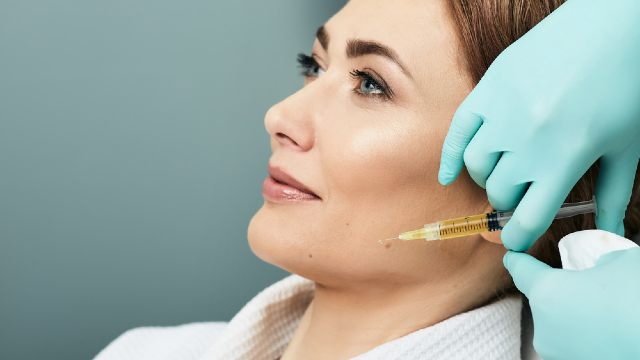
Medical Guide
Skin Boosters Explained: What They Do and Who They Suit
Skin boosters are a class, not a product: minimally invasive injectables aimed at skin quality, hydration, texture and elasticity. What that means for you.
Schedule a ConsultationSkin Boosters Explained: What They Do and Who They Suit
Medically reviewed by Dr. Oh Eunhui, Medical Director, Liyan Clinic
A skin booster is not a product. It is a class of minimally invasive injectable treatments aimed at the quality of skin — hydration, texture, elasticity and overall appearance — rather than at its shape. Liyan Clinic offers several, and a reader who understands what the class is for can narrow sensibly before ever comparing brand names. That narrowing is what this page is for.
The one distinction that does all the work
Injectables split into two jobs, and almost every confused consultation starts by mixing them.
One job is structure: putting material where volume has been lost, so that a contour changes. You see the result when you stand up, because the result is the material.
The other job is quality: improving the condition of the skin itself — how hydrated it is, how it reflects light, how fine lines sit in it, how elastic it feels. Nothing about the shape of your face changes. What changes is the state of the surface and the tissue immediately under it.
Skin boosters do the second job. That is the whole definition, and everything else follows from it.
It also produces the fastest possible self-sorting test. Stand in front of a mirror and ask: is what bothers me a shape or a surface? If the honest answer is that something has gone — a hollow, a flattened area, a fold that has deepened — you are describing the first job, and no booster is the efficient answer to it. If what bothers you is dullness, roughness, crepiness, dryness or a loss of bounce, you are describing the second.
The American Academy of Dermatology's overview of fillers is a good grounding in the first category for a US reader, precisely because reading it makes clear how little of it is about skin quality.
Who the class suits
Liyan Clinic describes candidates for this group as adults in good general health whose main concern is skin barrier quality and hydration, fine lines and texture, elasticity, volume loss and facial contour, or under-eye skin thinning.
American patients who ask about these treatments tend to give a consistent reason: they want minimally invasive rejuvenation and a natural-looking result without major surgery. That is a reasonable description of what the class offers, and it is worth saying that "natural-looking" here is not marketing — it is a structural consequence. A treatment that does not change your shape cannot make you look like someone else.
It is not for everyone. The clinic names active skin infections or significant inflammation at the injection site, known contraindications to the selected product, and medical conditions that make injectable treatment inappropriate. Suitability is determined at consultation rather than from a list, and that is the correct place for it.
What the class actually delivers
The documented benefits are specific and worth reading as a set: improvement in skin barrier quality and hydration, in fine lines and texture, and in elasticity — each without surgery and without an incision.
The limitations are documented just as plainly, and they are the part that prevents disappointment. This group does not remove skin. It does not replace surgery where surgery is what the anatomy requires. And the degree of change varies between individuals.
Hold both halves at once. A treatment that measurably improves the condition of your skin over a course of sessions is a real thing to want. It is not a facelift with a needle, and a clinic that lets you believe otherwise has done you no favors.
The timings, in one place
This is where the class stops behaving as one thing, and knowing the split is useful before you compare individual products.
Chair time is 20 to 45 minutes including numbing, across the group. No overnight stay is required.
Visible recovery is injection points, swelling and bruising for roughly two to seven days — expected across the group rather than exceptional.
Onset splits in two. The quality-focused products in this class show early change from about a fortnight. The collagen-building ones are slower, showing early change from about six to eight weeks.
Peak also splits. For the quality-focused products the fullest effect arrives once the course is complete. For the slower group it is around three to six months.
Duration ranges widely — six months to two years depending on the product.
Most are a course, commonly two to four sessions spaced two to four weeks apart.
That last line is the one with consequences. A course spread across weeks does not fit inside a single visit from another country, which makes "what does a partial course produce" the single most important question a traveling patient can ask about this category.
Risks worth reading rather than skimming
Temporary redness, swelling, tenderness, small bumps, bruising or discomfort can occur after treatments in this group. Less commonly, infection, prolonged inflammation, or product-related reactions are possible.
Two observations about that list.
It is short, and that is honest rather than reassuring. This is a category with a comparatively contained risk profile because it is not placing structure at depth — but "comparatively contained" is not "none", and the less common items are the ones to have a plan for.
And it is a class-level list. Each individual product carries its own, and the one you are actually offered is the one whose risks you should be given. Ask for them specifically rather than accepting the category answer.
How to narrow before you look at names
Here is a sequence that gets you to a shortlist without needing to learn a vocabulary.
Describe the concern, not the category. "Dull and rough, worse in winter, makeup sits badly" is a brief a clinician can work with. "I want a skin booster" is a request that skips the step that matters.
Say how fast you need to see something. The split above is real: some of this class shows change in a fortnight and some takes a couple of months. That preference legitimately narrows the field.
Say what your calendar can complete. A course of two to four sessions spaced two to four weeks apart is a month or two of commitment. If that does not fit, say so at the start rather than after the first session.
Ask what it will not do. The most useful sentence any clinician can give you, and the one that separates a plan from a sale.
Only then does a product name become meaningful — and by that point the choice will usually have narrowed to two or three, which is a conversation rather than a catalogue.
Where this class sits against everything else
Two neighboring categories are worth placing, briefly, so you know when you have wandered out of the category.
Structural injectables are the other half of the split described at the top. If your concern is shape, that is where the answer lives. The US Food and Drug Administration's consumer page on soft tissue fillers describes that family and what it is for, and the Academy of Dermatology's filler FAQs cover the patient-facing half.
Regenerative and platelet-based approaches are a separate conversation again, and the Academy's discussion of platelet-rich plasma is a useful example of the register to read them in — a plausible mechanism, described candidly, without overclaiming.
And if what you are describing might be a skin condition rather than a quality concern, that comes first. MedlinePlus, the US National Library of Medicine's patient service, maintains an overview of skin conditions that is worth a look if you are unsure whether what you are seeing is something to treat as a condition before anything cosmetic is considered.
What a course actually asks of you
Because most of this class is a course, it is worth being concrete about what that commitment looks like from a distance, rather than leaving it as a line in a table.
Two to four sessions, two to four weeks apart, means a span of roughly four to twelve weeks between the first appointment and the last. Then the fullest effect arrives after the course completes — so the point at which you can fairly judge what you bought is later still.
For someone living near the clinic that is unremarkable. For a visitor it means one of three things, and it is better to pick deliberately than to discover which one you are in.
You return. Realistic for some people and expensive for most.
You complete part of it here and continue at home. Possible for some products and not others, and the answer belongs to the clinician rather than to a general article. Ask it explicitly.
You have one session and treat it as a sample. A legitimate choice if you know that is what you are choosing. It becomes a bad one only when someone expects a course's result from a session's treatment.
The question that settles it is not "is it worth it" but "what specifically would I and would I not get from a partial course". Ask that before the first session, because afterwards it is a question about sunk cost rather than about treatment.
Before you narrow to a product
Send a description rather than a request. Your concern in plain words, when it appeared, what your skin does through the year, how quickly you would like to see something, and what your calendar can support. Those five lines let a clinician reach a shortlist, and they make the reply you get worth reading.
The contact page is where that lands and the about page describes the practice. A reply that names what it would not address is the one to trust.
The Bottom Line
- A skin booster is a class, not a product: minimally invasive injectables aimed at skin quality — hydration, texture, elasticity and overall appearance — rather than at shape.
- The sorting question is whether your concern is a shape or a surface. Shape belongs to a different category of injectable entirely.
- Chair time is 20 to 45 minutes including numbing, and injection points, swelling and bruising for roughly two to seven days are expected across the group.
- Onset splits: the quality-focused products show early change from about a fortnight, the collagen-building ones from about six to eight weeks.
- Most are a course of two to four sessions two to four weeks apart — which no single overseas visit completes, so ask what a partial course produces.
Frequently Asked Questions
What is a skin booster?
A class of minimally invasive injectable treatments designed to improve skin quality, hydration, texture, elasticity and overall appearance — rather than to change facial shape.
Who is it for?
Adults in good general health whose main concern is skin barrier quality and hydration, fine lines and texture, elasticity, volume loss and facial contour, or under-eye skin thinning.
How is it different from a structural injectable?
A structural product changes contour by placing material. A booster works on the condition of the skin itself, so nothing about the shape of your face changes.
How long does a session take, and what shows afterwards?
Twenty to forty-five minutes including numbing. Injection points, swelling and bruising for roughly two to seven days are expected across the group.
How soon will I see something?
It depends which part of the class you are given. Quality-focused products show early change from about a fortnight; collagen-building ones from about six to eight weeks, peaking at around three to six months.
How long does the result last?
Six months to two years depending on the product, and most are maintained with repeat sessions.
Do I need a course?
Most of this group is a course of two to four sessions spaced two to four weeks apart. If you are visiting from abroad, ask what a partial course would produce before you start one.
Who should not have these treatments?
Anyone with an active skin infection or significant inflammation at the injection site, a known contraindication to the selected product, or a medical condition that makes injectable treatment inappropriate.
This article is for general informational purposes only and does not constitute individualized medical advice. It is not a self-diagnosis tool, and it cannot replace an in-person assessment by a licensed dermatologist who has examined your skin.
More Articles
Continue reading our clinical guides.
Ultherapy PRIME Lifting in Korea: What to Expect
Ultherapy PRIME lifting at Liyan Clinic in Jeju: how micro-focused ultrasound works, who it suits, the honest results timeline, and how US patients plan it.
Learn More

Potenza RF Microneedling: Texture, Pores, and Scars
Potenza RF microneedling at Liyan Clinic in Jeju: how needles plus radiofrequency treat texture and acne scars, how long a course runs, and what to ask.
Learn More

Thermage FLX RF Skin Tightening: A Patient's Guide
Thermage FLX at Liyan Clinic in Jeju: how monopolar radiofrequency tightening works, what the shot count means, the results timeline, and who it suits.
Learn More