Personalized Medical Care & Dedicated International Patient Concierge

Medical Guide
Rejuran Skin Booster: Injections for Skin Regeneration
Rejuran at Liyan Clinic in Jeju: what polynucleotide skin boosters treat, the 3-4 session course, real downtime, and how to run a course from another country.
Schedule a ConsultationRejuran Skin Booster: Injections for Skin Regeneration
Medically reviewed by Dr. Oh Eunhui, Medical Director, Liyan Clinic
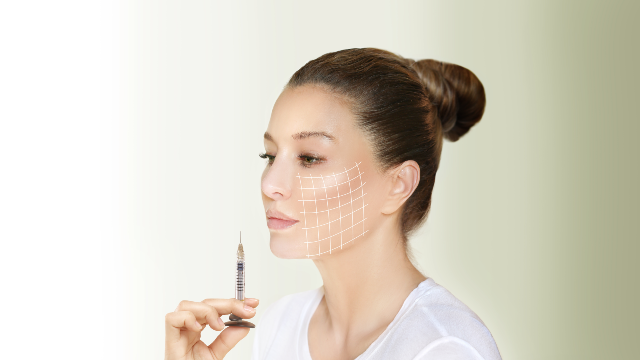
Rejuran is an injectable skin-rejuvenation treatment aimed at overall skin quality. It is used for fine lines, uneven texture, dryness and reduced elasticity — the cluster of complaints people describe as their skin looking tired rather than looking old.
It is also the entry point most American patients take into a category that barely exists at home in this form, so this guide spends as much time on what a course is as on what the product does.
Skin quality is a different target from volume
Aesthetic injectables split into two jobs that get talked as one. Some add or restore structure — they change the shape of a face. Others change the condition of the skin itself: how it holds water, how it reflects light, how fine the surface texture is.
Rejuran belongs to the second group. That is why patients who want to look less tired and patients who want to look fuller are, despite appearances, not asking the same question, and why the answer to one is a poor answer to the other.
United States patients tend to arrive at this category for a specific reason: Korean aesthetic clinics offer a wide range of injectable skin-rejuvenation treatments, and there is real interest in minimally invasive options focused on overall skin quality rather than on adding facial volume. Wanting the second without the first is a coherent preference, and it is worth saying out loud at consultation, because it narrows the options quickly.
Where it sits on the clinic's booster menu
Liyan Clinic's skin booster and injectable rejuvenation group is eight named services: Rejuran, Gouri, Re2O, Exosome, Filorga NCTF, Juvelook, Sculptra and Radiesse. They are not interchangeable and they do not all do the same job — some work on skin quality, some build collagen over months, and some restore volume.
Eight is a lot to choose between from a website. It is a reasonable number to choose between with a doctor who has looked at your face. The clinic's own closest alternatives to Rejuran are Filorga NCTF, Exosome and Juvelook, which tells you which part of the menu it competes in.
Who it suits
Adults concerned about fine lines, reduced elasticity, rough or uneven skin texture, dryness or an overall decline in skin quality. Suitability is settled at an individual consultation rather than by a checklist.
Some people should not have it, or should wait. Active skin infection or inflammation at the treatment site, known contraindications to the product, certain bleeding problems, or other medical conditions that make injections unsuitable all rule it out for now. Pregnancy and breastfeeding may mean postponement depending on medical advice.
Bleeding problems are the item most often left unmentioned, and blood-thinning medicines and supplements affect bruising after any injection. Whether to pause any of them is a decision for the doctor who prescribed them — never one to make on your own.
The disclosure that matters most is also the least medical-sounding: tell the clinic about every prescription medicine, every supplement and every recent aesthetic treatment. Two weeks ahead is a sensible point to do it, because it leaves time for the plan to change if something in that list matters. Patients reliably remember the prescriptions and reliably forget the supplements, and several common ones affect how much you bruise.
What was recently done to your skin belongs in the same disclosure. A treatment three weeks ago that you consider finished may still be influencing what your skin will tolerate, and the clinician cannot see it.
What the appointment involves
The sequence is deliberate and worth knowing in advance, because half of it is verification rather than treatment.
The area is cleansed and prepared with antiseptic. The area is photographed for the clinical record, with your consent. Injection points are marked according to what is being treated — skin barrier quality, fine lines, elasticity, hydration, under-eye skin thinning. Topical numbing is used where the protocol calls for it, with a wait for it to take effect. The vial is opened in front of you. The agreed amount is injected into the planned tissue plane. Every injection point is then pressed, cooled and inspected. Finally you get post-treatment instruction and a booked review.
Chair time is 20 to 40 minutes including the numbing wait.
The clinic quotes this treatment in ampoules: Rejuran Healer at one ampoule (2cc), two ampoules (4cc) or three ampoules (6cc). Knowing which of the three you are having is worth more than knowing the product name, because it is the part that actually varies.
Two steps in that list deserve more attention than they usually get. The marking step is where a plan becomes specific to your face — injection points are placed according to what is being treated, and a patient who watches the marking learns more about their own treatment than from any consultation summary. And the inspection step at the end, where every point is pressed, cooled and checked, is the quality control you cannot perform yourself. If a clinic skips it, the omission is invisible to you at the time and obvious a week later.
The pairings the clinic names for this treatment are Potenza, Juvelook, botulinum toxin injections and Ultherapy PRIME. Whether any of them belongs in your plan is a clinical judgment, and the sequencing is part of that judgment rather than an afterthought.
The downtime pattern, and why it matters here
Every injectable at this clinic follows roughly the same recovery shape, and learning it once saves you from misreading any of them.
Day zero, the injection points are visible and swelling begins. Through days one to five you have injection papules and bruising — for Rejuran specifically, two to five days is what is expected. By the end of week one the bruising is fading and most people can cover what remains with makeup. Week two is the first point at which the result has settled enough to be judged.
Two practical consequences follow. The first is that there is no version of this treatment where you walk out looking finished — anyone promising that is describing a different product. The second is about flying: swelling can be more noticeable after a long flight, so patients who want no visible marks when they arrive home generally schedule injectables at the start of a stay rather than the day before departure.
After that, the arc is slower. Early change comes from about two to three weeks, and the fullest effect arrives after the course completes.
Temporary redness, swelling, small bumps, tenderness, bruising or itching can occur at injection sites. Less commonly there can be infection or prolonged inflammatory reactions, and severe or persistent symptoms deserve medical evaluation rather than patience.
Aftercare is simple and worth following exactly: keep the treated area clean, avoid unnecessary touching or pressure, and follow the clinic's instructions on skincare, makeup, exercise, heat and sun exposure.
Reading claims about regenerative treatments
Treatments described as regenerative occupy a space where enthusiasm frequently outruns evidence, and an American patient is right to want a way to think about that.
The U.S. Food and Drug Administration publishes consumer guidance on regenerative medicine therapies that is worth reading once — not because it is about this product, but because it models the questions: what is the product, what is it authorized for, and who is telling you it works. The American Academy of Dermatology's discussion of platelet-rich plasma is a useful companion, since it walks through a regenerative aesthetic treatment whose evidence base is still developing and says so plainly.
Neither will tell you whether Rejuran suits your skin. What they will do is calibrate the confidence with which you should hold anything you read about this whole category, including this article.
Running a course from another country
This is the part that decides whether the treatment is a good idea for you, and it has nothing to do with the product.
A course of three to four sessions spaced two to four weeks apart is standard here. For someone living in Jeju that is six to twelve weeks of ordinary appointments. For someone flying from the United States it is a genuine logistical problem, and it deserves an answer before the first injection rather than after it.
There are three honest ways it resolves, and a clinic should be willing to discuss all three. You stay long enough to complete the course, which for two-week spacing means several weeks in Korea. You complete part of it and continue with a provider at home, which requires knowing exactly what was used and at what amount. Or you decide this is the wrong treatment for your travel pattern and choose one with a single-appointment arc instead.
What does not work is starting a course you cannot finish and treating the first session as a trial. The arc is built on completion; the fullest effect is defined as arriving after the course completes.
So ask before you book: how many sessions for my skin, at what spacing, and what happens to the result if I can only do two? Write the answer down. MedlinePlus, the patient service of the U.S. National Library of Medicine, recommends taking written questions into an appointment, and this is exactly the appointment for it — you are not asking about a procedure, you are asking about a schedule that has to survive a flight home.
Scheduling is the question to put first, and the clinic takes enquiries on its contact page. Who you would be dealing with is set out on the about page; what other patients say sits on the reviews page.
The Bottom Line
- Rejuran is a skin-quality injectable — it targets fine lines, texture, dryness and elasticity, and it is not a volume treatment.
- Chair time is 20 to 40 minutes including numbing, and the clinic quotes it in ampoules: one (2cc), two (4cc) or three (6cc).
- Expect injection papules and bruising for two to five days, makeup coverage by week one, and a result that can first be judged at week two.
- Early change comes at about two to three weeks; the fullest effect arrives only after the whole course completes.
- A standard course is three to four sessions two to four weeks apart — settle how you will complete that from another country before the first appointment.
Frequently Asked Questions
What does Rejuran treat?
Overall skin quality: fine lines, uneven texture, dryness and reduced elasticity. It is not intended to add facial volume.
How many sessions will I need?
A course of three to four sessions spaced two to four weeks apart is standard for this product. Your own number is set at consultation.
How much downtime should I expect?
Injection papules and bruising for two to five days is what is expected with this product. Most people can cover what remains with makeup by the end of the first week.
When can I judge the result?
Week two is the first point at which it has settled enough to assess. Early change comes from about two to three weeks, and the fullest effect after the course completes.
Who should not have it?
Anyone with active skin infection or inflammation at the treatment site, known contraindications to the product, certain bleeding problems, or other conditions that make injections unsuitable. Pregnancy and breastfeeding may mean postponing.
Should I stop my blood thinners first?
Not on your own. Blood-thinning medicines and supplements do affect bruising after any injection, but whether to pause one is a decision for the doctor who prescribed it.
What if I can only manage part of the course before I fly home?
Ask that at consultation, not afterwards. The options are staying longer, continuing with a provider at home using a written record of what was given, or choosing a treatment with a single-appointment arc instead.
This article is for general informational purposes only and does not constitute individualized medical advice. It is not a self-diagnosis tool, and it cannot replace an in-person assessment by a licensed dermatologist who has examined your skin.
More Articles
Continue reading our clinical guides.
Ultherapy PRIME Lifting in Korea: What to Expect
Ultherapy PRIME lifting at Liyan Clinic in Jeju: how micro-focused ultrasound works, who it suits, the honest results timeline, and how US patients plan it.
Learn More

Potenza RF Microneedling: Texture, Pores, and Scars
Potenza RF microneedling at Liyan Clinic in Jeju: how needles plus radiofrequency treat texture and acne scars, how long a course runs, and what to ask.
Learn More

Thermage FLX RF Skin Tightening: A Patient's Guide
Thermage FLX at Liyan Clinic in Jeju: how monopolar radiofrequency tightening works, what the shot count means, the results timeline, and who it suits.
Learn More