Personalized Medical Care & Dedicated International Patient Concierge

Medical Guide
Re2O Skin Booster: What Makes It Different From Others
Re2O at Liyan Clinic in Jeju: a skin-quality injectable, not a structural one — who it suits, what recovery involves, and why the product is picked in person.
Schedule a ConsultationRe2O Skin Booster: What Makes It Different From Others
Medically reviewed by Dr. Oh Eunhui, Medical Director, Liyan Clinic
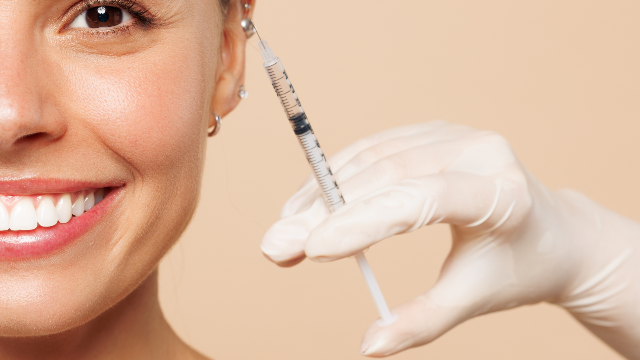
Re2O is a skin-rejuvenation injectable intended to improve overall skin quality, hydration, texture and radiance. Liyan Clinic positions it as a skin-quality treatment rather than a structural one, and that positioning is the most useful thing about it.
It also raises a fair question that this guide answers directly: when a clinic offers eight injectables in the same category, how does anyone end up with this one? The answer is not that you choose it. It is chosen for you, at an appointment, and understanding why changes how you should prepare.
Quality, not architecture
Injectable aesthetics divides along a line that marketing keeps blurring.
On one side are treatments that change the structure of a face — they occupy space, support tissue, and alter a contour you could trace with a finger. On the other are treatments that change what the skin itself is like: how well it holds water, how evenly it reflects light, how fine its surface texture is.
Re2O is on the second side. It is intended for hydration, texture and radiance, and it does not create the structural volume associated with traditional dermal fillers.
For an American patient this distinction is worth carrying around, because the two sides fail differently. A structural treatment that misses looks wrong — there is something there that should not be. A quality treatment that misses simply does not show. That asymmetry is why the quality side is the safer place for a first injectable, and why patients who want to test the water usually should.
Who it suits
Adults seeking improvement in dehydrated, dull, uneven or early-aging skin who prefer a minimally invasive skin-quality treatment rather than significant facial-volume enhancement.
It is not suitable for people with active infection or significant inflammation at the treatment site, a known serious allergy to the product's ingredients, or medical circumstances that make injectable treatment inappropriate.
The clinician assesses skin condition, hydration, texture, elasticity, pigmentation and facial concerns, and reviews medical history, medications, allergies and previous injectable treatments before deciding whether Re2O is appropriate. That list is longer than the treatment is, which is the correct proportion.
The appointment picks the product
This is the part patients get wrong before they arrive, and it is worth saying plainly.
Liyan Clinic's booster group is eight services. The documented flow is that the doctor examines the area and decides which of them applies and at what amount — and the clinic states that this decision cannot be made online. The enquiry is made through the clinic's international contact, Bae Sowon, who is the Information Manager; the clinic replies with what it needs in order to advise; you attend in Jeju City; the area is examined; and only then are the treatment and the amount confirmed and the plan agreed.
Several things follow from that which are easy to resist.
You may not get what you asked for. A patient who books "Re2O" and is advised toward a different booster has not been upsold or downsold; they have been assessed. The assessment is the service.
You cannot finish the decision from home. A pre-travel conversation is genuinely useful — it establishes whether you are broadly a candidate, what to prepare, and what to bring — but it is not the appointment where the product is selected, and treating it as though it were sets up a disagreement on the day.
And the sequence is protective rather than bureaucratic. A clinic that names the product before seeing the skin has decided what to sell before learning what you need.
What to bring to an assessment that decides things
If the appointment is where the product is chosen, then what you bring to it determines the quality of the choice. Four things matter, and only one of them is paperwork.
A clear statement of your priority. Not a product, a priority. Hydration, texture, radiance, firmness, volume — which one, and which you would trade away. A clinician can work with that. They cannot work with "I want to look better", which is true of everyone in the room.
A complete list of what you take. Every prescription medicine and every supplement. Blood-thinning medicines and supplements affect bruising after any injection, and several common over-the-counter supplements belong in that category even though nobody thinks of them as medication. Whether to pause anything is a decision for the doctor who prescribed it.
Every recent aesthetic treatment, with dates. What was done to your skin in the last few months changes what it will tolerate now. This is the item most often left out, usually because the patient considers it finished.
Photographs, if the clinic asks for them. Clear, bare-faced, in even light. They are used to plan, not to judge.
Bringing those four turns a consultation from an interview into an assessment. Bringing none of them means the clinician is working from what they can see in a single sitting, which is less than they could have had.
What recovery looks like
Short, and shaped like every injectable's.
The injection points are visible on the day and swelling begins. Injection-site reactions for a few days are expected with any injectable booster. Bruising fades through the first week and is generally coverable with makeup. By the second week the result has settled enough to be judged.
Improvement develops progressively rather than immediately. How long it lasts varies with the formulation, the treatment protocol, your skin condition and your individual response, and a maintenance schedule may be recommended. It is an outpatient treatment with no overnight stay; the treatment duration and number of sessions follow the plan rather than a fixed rule.
Temporary redness, swelling, tenderness, small bumps, bruising or discomfort can occur after injectable skin treatments. Less common but more serious injection-related complications are possible, and product-specific safety information should come from the clinician treating you rather than from a web page.
Aftercare: follow the product-specific instructions you are given, avoid unnecessary touching or pressure on treated areas immediately afterwards, and observe whatever restrictions you are given on strenuous activity, heat, skincare products and makeup.
One scheduling note that applies to any injectable. Swelling can be more noticeable after a long flight, so if you want no visible marks when you arrive home, an injectable belongs at the start of a stay rather than the day before you leave.
It is worth sitting with that for a moment, because it inverts the instinct. Most people plan a trip so the cosmetic appointment is the last thing before the airport — the logic being that the result is freshest on arrival. For anything injected, the logic runs the other way: what is freshest on arrival is the bruising, and the result is still weeks away regardless. Book the injectable early, do the non-invasive things late, and you land looking like yourself.
Comparing it without a comparison chart
The clinic names Gouri, Rejuran and Juvelook as the closest alternatives to Re2O, which is a more honest orientation than a feature table.
What that grouping tells you is that these four occupy adjacent ground, and the choice between them turns on details of your skin that you are not in a position to weigh — which is the same conclusion the consultation rule reaches from the other direction.
What you can usefully do beforehand is form a clear view of your own priority. Is it hydration? Texture? Radiance? Firmness? Volume? The American Academy of Dermatology's overview of fillers and its preparation guidance are good background for the category as a whole, and the U.S. Food and Drug Administration's consumer page on soft tissue fillers covers what a structural product does — useful here precisely as the contrast.
Arriving able to say "my priority is texture, and I do not want my face to change shape" gives the assessment something to work with. Arriving with a product name gives it something to overrule.
It is also worth knowing why the eight-service menu exists at all, because the obvious cynical reading is wrong. A clinic carrying one injectable can only offer that one, which means every patient who walks in is a candidate for it. A clinic carrying eight can decline to use any of them, and the value of the range is precisely that it makes "none of these" a reachable answer. Whether a particular clinic actually reaches it is the thing to watch for in your own consultation — and the simplest test is to ask what they would not recommend for you, and see whether the answer is specific.
Before you fly
A pre-travel conversation is worth having, and telehealth is now ordinary enough in US care that most patients know what to expect from one. MedlinePlus, the National Library of Medicine's patient service, has a clear overview of what a remote appointment can and cannot do, and the boundary it draws is the same one that applies here: a call can review your history, answer questions and tell you what to prepare, but it cannot examine your skin.
So use the call for the things it is good at. Confirm you are broadly a candidate. Ask what to disclose and when. Ask what documentation to bring. And leave the product decision where it belongs.
Enquiries go through the contact page. The about page is the shorter read and answers who is behind the assessment.
The Bottom Line
- Re2O is a skin-quality injectable — hydration, texture and radiance — and it does not create the structural volume a traditional filler does.
- It suits dehydrated, dull, uneven or early-aging skin in someone who does not want their face to change shape.
- The product and the amount are chosen at an in-person assessment; the clinic states that decision cannot be made online, so a pre-travel call cannot settle it.
- Recovery is a few days of injection-site reactions, coverable within a week, judgeable at two.
- Its closest alternatives at this clinic are Gouri, Rejuran and Juvelook — adjacent options that a consultation, not a chart, should pick between.
Frequently Asked Questions
What is Re2O for?
Overall skin quality — hydration, texture and radiance — rather than adding facial volume.
Can I choose it before I arrive?
Not finally. The clinic's documented flow is that the doctor examines the area and decides which booster applies and at what amount, and it states that this cannot be settled online. A pre-travel call establishes candidacy and preparation.
How long does recovery take?
Injection-site reactions for a few days are expected. Bruising fades through week one and is generally coverable with makeup; the result is settled enough to judge at week two.
When will I see the improvement?
It develops progressively rather than immediately. How long it lasts varies with the formulation, the protocol, your skin and your response, and maintenance may be recommended.
Who should not have it?
Anyone with active infection or significant inflammation at the treatment site, a known serious allergy to the product's ingredients, or medical circumstances that make injectable treatment inappropriate.
How is it different from the other boosters here?
Its closest relatives at this clinic are Gouri, Rejuran and Juvelook. They occupy adjacent ground, and which one suits you turns on findings from an examination rather than on a feature comparison.
Should I have it at the start or the end of my trip?
The start. Swelling can be more noticeable after a long flight, so scheduling an injectable early in a stay leaves time for it to settle before you travel home.
This article is for general informational purposes only and does not constitute individualized medical advice. It is not a self-diagnosis tool, and it cannot replace an in-person assessment by a licensed dermatologist who has examined your skin.
More Articles
Continue reading our clinical guides.
Ultherapy PRIME Lifting in Korea: What to Expect
Ultherapy PRIME lifting at Liyan Clinic in Jeju: how micro-focused ultrasound works, who it suits, the honest results timeline, and how US patients plan it.
Learn More

Potenza RF Microneedling: Texture, Pores, and Scars
Potenza RF microneedling at Liyan Clinic in Jeju: how needles plus radiofrequency treat texture and acne scars, how long a course runs, and what to ask.
Learn More

Thermage FLX RF Skin Tightening: A Patient's Guide
Thermage FLX at Liyan Clinic in Jeju: how monopolar radiofrequency tightening works, what the shot count means, the results timeline, and who it suits.
Learn More