Personalized Medical Care & Dedicated International Patient Concierge

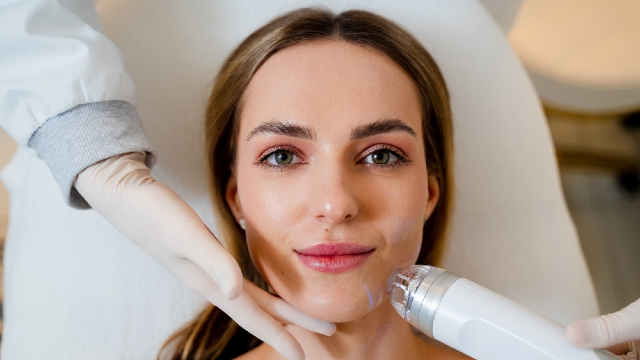
Medical Guide
Oligio RF Skin Tightening: Sessions and Recovery
Oligio RF skin tightening at Liyan Clinic in Jeju: what monopolar radiofrequency treats, how long a session runs, recovery, and planning around closed days.
Schedule a ConsultationOligio RF Skin Tightening: Sessions and Recovery
Medically reviewed by Dr. Oh Eunhui, Medical Director, Liyan Clinic
Oligio is a non-surgical radiofrequency skin-tightening treatment. RF energy generates controlled heat in targeted tissue, which can cause temporary collagen contraction and stimulate longer-term collagen remodeling. The intent is to improve the appearance of skin firmness, fine lines and mild-to-moderate laxity without surgical incisions.
It is made by the Korean manufacturer Wontech and uses monopolar radiofrequency at 6.78 MHz. Liyan Clinic in Jeju offers it as one of six facial lifting and tightening technologies, and this guide is written for patients weighing it up from the United States — with particular attention to the two questions that matter most for a trip: how long a session takes, and how the clinic's schedule shapes the week you book.
What RF tightening does, and what it does not
Radiofrequency heats tissue. That is the entire mechanism, and everything else follows from it.
The heat produces two effects on different timescales. In the short term there can be some contraction of existing collagen, which is why a few people notice a slight change almost immediately. In the longer term the heating stimulates remodeling, which is a biological process that unfolds over weeks to months. The second effect is the one that matters, and it is the reason a fair assessment of the result cannot be made at the two-week mark.
Oligio is indicated for facial and neck areas including the cheeks, forehead, crow's feet, submental area and nasolabial folds.
The honest ceiling is the same one that applies across this whole category: RF does not remove significant excess skin and does not replace a facelift or neck lift when substantial surgical correction is what the anatomy needs. Where it does help is firmness, mild laxity, the appearance of fine lines, and facial definition in suitable patients. Results vary between individuals, develop progressively, and are not permanent.
How it differs from the ultrasound treatments on the same menu
Oligio uses monopolar radiofrequency at 6.78 MHz, delivering controlled thermal energy into deeper skin layers. The focused-ultrasound treatments on the clinic's list work by depositing ultrasound energy at selected depths instead. Different energy, different delivery principle — and, in practice, different answers about which is appropriate for a particular pattern of laxity.
That comparison is a consultation question rather than a reading question. The American Academy of Dermatology's overview of the ways to firm sagging skin is a good non-commercial primer on the category if you want the landscape before you walk in.
Why US patients ask about it specifically
Two reasons come up repeatedly, and they are different in kind.
The first is the straightforward one: Oligio offers a non-surgical route to tightening, generally requires less recovery than surgery, and may improve firmness and facial definition. That is true of the category and is the reason anyone considers an energy device at all.
The second is particular to traveling. Patients are interested in Korean RF devices and treatment protocols that are less familiar or less widely available in the United States. Availability is a legitimate reason to travel for something — it is a much better reason than novelty, and it is worth separating the two in your own thinking. A protocol you cannot get at home is a real reason to consider a trip. A device you have simply not heard of is not, by itself, a reason for anything.
The practical consequence of the second reason is that you will be evaluating a treatment without the usual local reference points. That places more weight on the consultation than it would carry at home, and it makes the quality of the answers you get the single best signal available to you. A clinician who explains why this device suits your pattern of laxity, and what they would use instead if it did not, is giving you information. One who explains that the technology is advanced is giving you an adjective.
Who should not have it
This list is documented, and it contains items patients routinely forget to mention:
- Certain implanted electronic devices, or metal in or near the treatment area
- Active skin infections or open wounds
- Significant skin inflammation
- Pregnancy
- Certain medical conditions
- Recent cosmetic procedures, which may require a waiting period
Tell the doctor about medical conditions, medications, allergies, pregnancy or breastfeeding, implants, fillers, threads, previous RF or HIFU treatments, and any active skin problems. Avoid treating over active infection, open wounds or significant irritation. Recent injections, fillers, threads, surgery or energy-based treatments elsewhere should be disclosed so the plan can be adjusted. The treating clinician determines suitability.
The session, and how long it takes
Consultation and treatment planning. Cleansing of the skin and removal of makeup. Assessment and, where required, marking of treatment areas. A comfort measure or topical numbing if appropriate. Delivery of RF energy to the selected areas. Monitoring of comfort and treatment response by the clinician. Cleansing or soothing of the skin. Aftercare instructions.
A session runs approximately 15 to 30 minutes, depending on the number of shots, the area and the settings. That is short enough to sit inside a half day with room to spare, which makes Oligio one of the easier treatments to fit into a trip that has other things in it.
Oligio is an outpatient treatment and does not normally require an overnight stay. The number and frequency of sessions are individualized.
Individualized is the operative word, and it is worth pressing on. Ask how many sessions are anticipated for your case, what the interval between them would be, and what would change that number. For a patient living on another continent, the answer determines whether a course is realistic at all — a plan built around three visits at monthly intervals means something quite different to someone in Jeju than to someone in Chicago. A clinic that has thought about international patients will have an answer ready; one that has not will improvise, and you will hear the difference.
The clinic's week, and why it changes your booking
Here is a scheduling detail that catches people out, and it has nothing to do with the treatment itself.
Liyan Clinic is closed on Wednesdays and Sundays, and on Korean public holidays. Its opening hours are Monday 10:00 to 19:00, Tuesday 10:00 to 20:00, Wednesday closed, Thursday 10:00 to 19:00, Friday 10:00 to 20:00, Saturday 10:00 to 15:30, and Sunday closed. All of that is Korea Standard Time, which is UTC+9 and does not observe daylight saving.
Two closed days midweek and at the weekend is a real constraint on a short itinerary. If you are planning a five-day trip that includes a consultation, a treatment and a review, a Wednesday in the middle removes a day you were probably counting on. Build the plan backwards from the treatment date, put the arrival at least one full day earlier, and check the Korean public holiday calendar for your dates before you book flights rather than after.
The time zone matters for correspondence too. A message sent from the US East Coast during business hours arrives in Jeju in the middle of the night, so a reply the next day is not slow — it is the first opportunity. Knowing that in advance prevents a lot of unnecessary worry when you are waiting on an answer about your own skin.
Recovery and the results timeline
| When | What you should expect |
|---|---|
| Treatment day | Heat in the area, some pinkness; no restriction on cosmetics for a treatment in this class |
| Following two days | Brief redness and nothing that interrupts a schedule |
| One week | Outwardly unchanged; the response is running and has not surfaced |
| Four to six weeks | Change starts to register — partly there already, then building |
| Two to three months | Where the fullest effect lands |
| Six to twelve months | Commonly discussed as around twelve months per cycle |
Some patients notice an early improvement in firmness, but the main effect is progressive rather than immediate, because remodeling takes time. Improvement may continue over several weeks to months. Longevity varies with age, skin condition, lifestyle, treatment parameters and individual response, and maintenance treatments may be recommended.
Recovery is generally short and normal activities can usually be resumed quickly, although temporary redness, warmth, swelling or tenderness can occur. Because Oligio is non-surgical with minimal downtime, flying after treatment may be possible if you feel well and the treating doctor has no concerns — a decision to confirm with the clinic rather than assume.
Choosing where to have it done
Choosing a provider you have not met is the genuinely hard part of treatment abroad, and it deserves more thought than choosing between devices. MedlinePlus, the US National Library of Medicine's patient service, publishes a structured guide to selecting a doctor or health care service; the American Academy of Dermatology's list of questions to ask before a cosmetic treatment covers the clinical half. If you are 65 or older, the Academy's guidance on cosmetic procedures in later life is worth reading alongside them.
Ask who performs the treatment, what settings are planned and why, what result is realistic for your degree of laxity, and what happens if something concerns you after you get home. You can open that conversation through the clinic's contact page, and there is background on the practice and its doctors on the about page.
The Bottom Line
- Oligio is monopolar radiofrequency at 6.78 MHz from Wontech, used on the cheeks, forehead, crow's feet, submental area and nasolabial folds.
- A session runs about 15 to 30 minutes depending on shots, area and settings, with no downtime beyond brief redness.
- Some tightening may be early, but the main effect is progressive: noticeable at four to six weeks, fullest at two to three months, commonly discussed as around twelve months per cycle.
- The clinic is closed Wednesdays, Sundays and Korean public holidays, which materially changes how a short trip should be planned.
- Implanted devices or nearby metal, active infection, inflammation, pregnancy and recent procedures are reasons to postpone or reassess.
Frequently Asked Questions
What does Oligio treat?
Skin laxity, mild-to-moderate sagging, fine wrinkles and loss of facial or neck firmness. It is indicated for facial and neck areas including the cheeks, forehead, crow's feet, submental area and nasolabial folds.
How long does one session take?
Approximately 15 to 30 minutes, depending on the number of shots, the treatment area and the settings.
When will I notice a change?
Some people notice initial tightening relatively soon after treatment. The substantive change comes from collagen remodeling and continues over several weeks to a few months, with the fullest effect at about two to three months.
How is it different from HIFU lifting?
Oligio uses radiofrequency; HIFU treatments use focused ultrasound. They deliver different energy in different ways, and which suits you depends on your pattern of laxity rather than on which technology sounds more advanced.
Can I fly home after treatment?
Generally yes, if you feel well and the treating doctor has no concerns, because the treatment is non-surgical with minimal downtime. Confirm the timing with the clinic before booking your return leg.
How should I plan around the clinic's schedule?
The clinic is closed on Wednesdays and Sundays and on Korean public holidays. Opening hours are 10:00 to 19:00 on Monday and Thursday, 10:00 to 20:00 on Tuesday and Friday, and 10:00 to 15:30 on Saturday, in Korea Standard Time. Plan the trip backwards from the treatment day and check the holiday calendar first.
What should I disclose before treatment?
Medical conditions, medications, allergies, pregnancy or breastfeeding, implants, fillers, threads, previous RF or HIFU treatments, and any active skin problems. Recent procedures elsewhere are the item most often forgotten and the one most likely to change the plan.
This article is for general informational purposes only and does not constitute individualized medical advice. It is not a self-diagnosis tool, and it cannot replace an in-person assessment by a licensed dermatologist who has examined your skin.
More Articles
Continue reading our clinical guides.
Ultherapy PRIME Lifting in Korea: What to Expect
Ultherapy PRIME lifting at Liyan Clinic in Jeju: how micro-focused ultrasound works, who it suits, the honest results timeline, and how US patients plan it.
Learn More

Potenza RF Microneedling: Texture, Pores, and Scars
Potenza RF microneedling at Liyan Clinic in Jeju: how needles plus radiofrequency treat texture and acne scars, how long a course runs, and what to ask.
Learn More

Thermage FLX RF Skin Tightening: A Patient's Guide
Thermage FLX at Liyan Clinic in Jeju: how monopolar radiofrequency tightening works, what the shot count means, the results timeline, and who it suits.
Learn More