Personalized Medical Care & Dedicated International Patient Concierge


Medical Guide
Lipolysis Injections: Candidates, Process, Results
Lipolysis injections at Liyan Clinic in Jeju: what injectable fat reduction can and cannot do, how it differs from liposuction, and how to ask about product.
Schedule a ConsultationLipolysis Injections: Candidates, Process, Results
Medically reviewed by Dr. Oh Eunhui, Medical Director, Liyan Clinic
Lipolysis injections are minimally invasive treatments intended to reduce small, localized areas of unwanted subcutaneous fat. A fat-dissolving injectable solution is administered into the targeted area through a series of small injections.
The word doing the most work in that description is "localized". This is a contouring treatment, not a weight treatment, and almost every disappointment with it traces back to that distinction being blurred somewhere between the search result and the consultation room. This guide is written to keep it in focus.
What it does, and what it is for
The treatment targets small pockets of fat under the skin. It may help reduce those deposits and improve body or facial contour. It is intended for localized contouring rather than overall weight loss, and results vary between individuals.
Suitable candidates are generally healthy adults who have localized pockets of fat and realistic expectations about gradual, modest contour improvement. Note all three parts of that: gradual, modest, and contour. A patient who wants a visible change in silhouette next month is not describing this treatment.
It may not suit people with an active infection or significant inflammation at the treatment site, certain allergies or medical conditions, or those who are pregnant or breastfeeding. Unrealistic expectations are also named as a reason it may not be appropriate — which is an unusual thing to see written down, and an honest one. A medical assessment is required either way.
How it compares with surgical fat removal
This is the comparison worth understanding, because the two are sometimes presented as alternatives when they are really answers to different questions.
Injectable fat reduction works on small, defined areas and produces gradual, modest change over weeks, often across multiple sessions. Surgical fat removal is a different order of intervention, with a different recovery and a different scale of result. The American Academy of Dermatology publishes patient-facing pages on both non-invasive fat removal and liposuction, and reading them side by side is the fastest way to calibrate expectations without a sales conversation in the middle. The FDA's overview of non-invasive body contouring technologies covers what claims in this category generally rest on.
Neither is a treatment for weight. Both work on where fat sits rather than how much of it there is, and future weight gain can affect a treated area.
The product question, and why it matters here
English-language discussion of Korean aesthetics returns repeatedly to one worry: whether the product going into you is genuine, full-dose and traceable to its manufacturer. It is one of the concerns US patients raise most often, and for an injectable it is more pointed than for an energy device, because with an energy device there is no consumable to be wrong about.
Liyan Clinic states a genuine-product, full-dose principle across its treatments, and says every patient speaks with a doctor before treatment begins. A stated principle is a starting point rather than a verification, so here is how to turn it into something checkable at your own appointment.
Ask what product is being used, by name. Ask to see it opened. Ask what dose is being given and over how many sessions, and ask for both in writing. For lipolysis specifically, the clinic is explicit that the product, the injection depth, the dosage and the injection pattern vary by practitioner and by treatment area and should be determined during an individual assessment — so these are not questions with a standard answer that could have been printed in advance. They are questions with your answer, and you are entitled to it.
A patient who asks those three questions politely and specifically is not being difficult. They are doing the one piece of verification that is genuinely available to them in the room.
What the assessment is actually for
The consultation before an injectable treatment is doing more work than it looks like it is doing, and it is worth knowing what the clinician is deciding so you can tell whether it happened.
They review your medical history, medications, allergies and treatment goals, and examine the target area to assess the localized fat that is there and whether the treatment suits it at all. That examination is the step that decides whether this is the right treatment, and it is not a step that can be completed from a photograph. An online consultation before you travel is useful for establishing general suitability and telling you what to prepare; the assessment that determines the plan happens in person.
Two judgments come out of it. The first is whether the fat in question is the kind this treatment addresses — small, localized, sitting under the skin — rather than a distribution that would not respond. The second is whether your expectation and the achievable result are the same size. That second judgment is the one worth listening hardest to, because it is the difference between a modest improvement you are pleased with and a modest improvement that disappoints you.
If you leave the consultation without a clear statement of which areas are being treated, roughly what change is expected, and over how many sessions, the assessment has not finished, and it is reasonable to say so before booking anything.
The session and the weeks after
The area is assessed and prepared, the skin is cleansed, and the solution is injected into the targeted fatty tissue through a series of small injections. Treatment time varies with the size and number of areas, and multiple visits or sessions may be required depending on the plan and the result you are aiming for.
Temporary swelling, redness, bruising, tenderness, pain, itching or firmness may occur. Less common complications can include infection, uneven contour, skin injury or nerve-related effects, depending on the area treated and the product used. Those are reasons to be treated by someone who assesses before injecting and who is reachable afterwards.
Aftercare is straightforward: keep the treated area clean, follow the instructions you are given, avoid excessive pressure, rubbing or strenuous activity if you are advised to, and watch for unusual or worsening swelling, pain or redness.
Results develop gradually over several weeks rather than immediately, and multiple sessions may be recommended. How long results last varies, and later weight gain can affect the treated area.
Before treatment, discuss your medical history, allergies, medications and goals with the clinician, follow any specific instructions you are given, and do not proceed on skin that is irritated or infected.
It is worth being specific about that last instruction, because it is the one patients most often decide for themselves. Irritated skin at the injection site is not a cosmetic inconvenience to be worked around; it changes the risk of the procedure. If the area is inflamed, broken or infected on the day, the correct outcome is that treatment is postponed — even if you have flown a long way for it, and even if rescheduling is genuinely difficult. A clinic that postpones under those circumstances is doing its job, and a patient who argues them out of it is buying a worse outcome with their own persuasion.
The same applies to anything you were meant to disclose and did not. There is no version of this treatment in which withholding a medication, an allergy or a recent procedure elsewhere works out in your favor.
What this treatment is not
Three boundaries are worth stating plainly, because each is a place where expectations commonly run ahead of the treatment.
It is not a weight-loss treatment. It addresses small, localized deposits and the contour they create, and it does nothing about overall body weight. If weight is the real concern, this treatment will not answer it however many sessions are done.
It is not a substitute for surgical fat removal where the volume involved is larger than it can address. Injectable treatment and surgery differ in scale, recovery and the kind of change they produce, and a course of injections is not a slower route to the same destination.
It is not permanent in the sense patients often assume. Results develop gradually and may need more than one session, and later weight gain can change a treated area. A durable result depends partly on what happens in the months and years afterwards, which is a fact about bodies rather than about the treatment.
Planning it as a visiting patient
Two features of this treatment interact awkwardly with travel, and it is better to know that in advance than to discover it.
The first is that results are gradual and often need more than one session. If a course is recommended, ask what the interval between sessions is and what happens if you cannot return for the next one on schedule. A plan that assumes local residency is not a plan for you, and the time to find that out is at consultation.
The second is that the recovery timeline for this specific treatment is settled case by case rather than published as a standard schedule, which means your instructions are genuinely yours and you should leave with them written down. Ask what is normal for the area you had treated, how long swelling and firmness usually persist, and at what point something would be worth reporting.
Ask the general questions too. The American Academy of Dermatology's list of questions to ask before any cosmetic treatment covers who performs it and what result is realistic; MedlinePlus has a structured guide to choosing a doctor or health care service. English-speaking support is available for consultation at the clinic, and online consultation before travel is available through the contact page. There is background on the practice and its three doctors on the about page.
The Bottom Line
- Lipolysis injections reduce small, localized pockets of subcutaneous fat through a series of small injections; they are a contouring treatment, not a weight treatment.
- Realistic candidates are healthy adults expecting gradual, modest contour change, often across more than one session.
- For an injectable, the product is the thing to verify: ask its name, ask to see it opened, and get the dose and session count in writing — the clinic says product, depth, dosage and pattern are decided case by case.
- Temporary swelling, bruising, tenderness and firmness are expected; infection, uneven contour, skin injury and nerve-related effects are the less common risks.
- Later weight gain can affect a treated area, so the durability of the result depends partly on what happens after the treatment.
Frequently Asked Questions
What are lipolysis injections actually for?
Reducing small, localized areas of unwanted fat under the skin, to improve body or facial contour. They are not a treatment for overall weight.
Who is a good candidate?
Generally healthy adults with localized pockets of fat and realistic expectations about gradual, modest contour improvement. A medical assessment is required to confirm suitability.
Who should not have them?
People with an active infection or significant inflammation at the treatment site, certain allergies or medical conditions, or those pregnant or breastfeeding. Unrealistic expectations are also a reason the treatment may not be appropriate.
How many sessions will I need?
That depends on the area and the result you are aiming for; multiple visits may be required. If you are traveling, ask at consultation what the interval is and what happens if you cannot return on schedule.
When do results appear, and do they last?
Results develop gradually over several weeks rather than immediately. How long they last varies, and future weight gain can affect the treated area.
How do I check the product is what I was told it would be?
Ask what is being used by name, ask to see it opened, and ask for the dose and the number of sessions in writing. The clinic says product, injection depth, dosage and pattern are determined at individual assessment, so these are reasonable questions with specific answers.
How does this compare with liposuction?
They answer different questions. Injectable treatment works on small defined areas with gradual, modest change; surgical removal is a larger intervention with a different recovery and scale of result. Neither addresses overall weight.
This article is for general informational purposes only and does not constitute individualized medical advice. It is not a self-diagnosis tool, and it cannot replace an in-person assessment by a licensed dermatologist who has examined your skin.
More Articles
Continue reading our clinical guides.
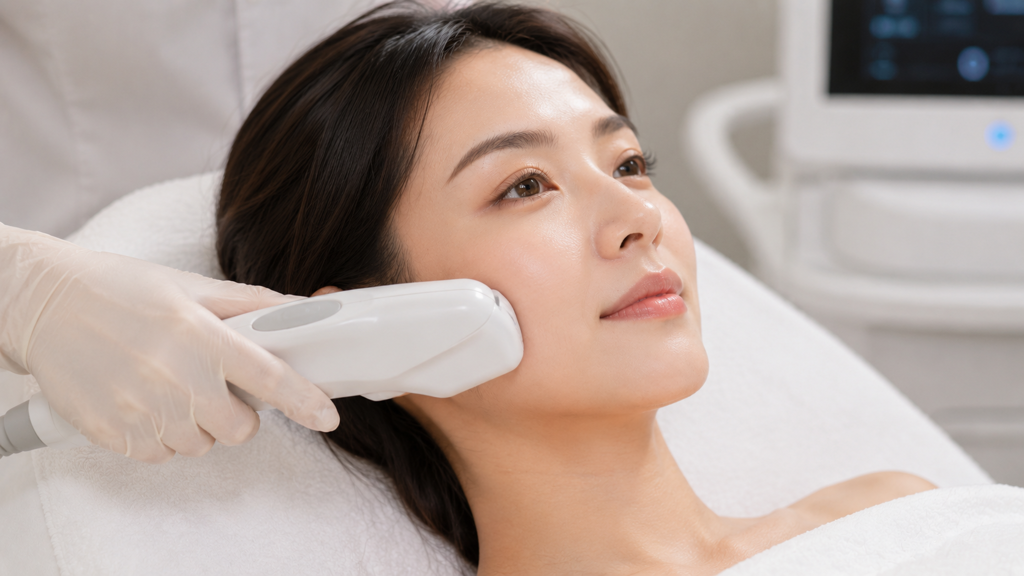
Ultherapy PRIME Lifting in Korea: What to Expect
Ultherapy PRIME lifting at Liyan Clinic in Jeju: how micro-focused ultrasound works, who it suits, the honest results timeline, and how US patients plan it.
Learn More

Potenza RF Microneedling: Texture, Pores, and Scars
Potenza RF microneedling at Liyan Clinic in Jeju: how needles plus radiofrequency treat texture and acne scars, how long a course runs, and what to ask.
Learn More

Thermage FLX RF Skin Tightening: A Patient's Guide
Thermage FLX at Liyan Clinic in Jeju: how monopolar radiofrequency tightening works, what the shot count means, the results timeline, and who it suits.
Learn More