Personalized Medical Care & Dedicated International Patient Concierge

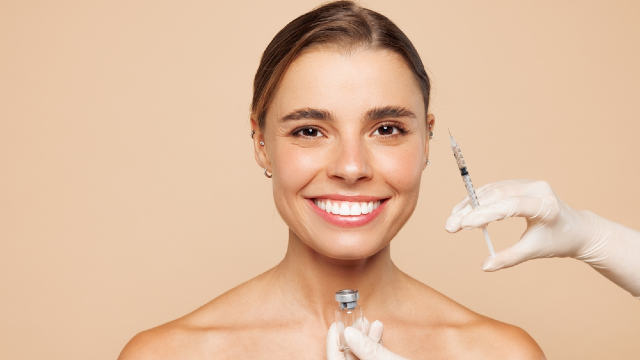
Medical Guide
Juvelook Collagen-Stimulating Injections: A Full Guide
Juvelook at Liyan Clinic in Jeju: how PDLLA builds your own collagen, the two formulations and their depths, the onset window, and how to pick the right job.
Schedule a ConsultationJuvelook Collagen-Stimulating Injections: A Full Guide
Medically reviewed by Dr. Oh Eunhui, Medical Director, Liyan Clinic
Juvelook is an injectable poly-D,L-lactic acid collagen stimulator — PDLLA, in the shorthand you will see everywhere once you start reading about it. Liyan Clinic offers it in two formulations: a skin booster and a volume version.
Understanding what a stimulator is, and how its job differs from the job a filler does, is the single most useful thing a patient can bring to this decision. It is also the thing most often blurred, because both arrive in a syringe.
Two different jobs that look alike
A filler occupies space. Material goes in, the contour changes, and the change is there when you stand up. Its result is the material.
A stimulator does something else. PDLLA microparticles suspended in a carrier are injected so that your body's own collagen response builds gradually around the particles. The particles are not the result; the collagen your body makes is. That is why nothing is visible early, and it is why the arc runs in months rather than minutes.
Neither approach is better. They answer different questions, and the difference matters most when a patient wants one and books the other. Someone hoping to see a change before they fly home has described a filler. Someone who wants their skin to be better in three months, without a moment where they looked treated, has described this.
The American Academy of Dermatology's overview of fillers and its filler FAQs are a useful grounding in what the first category does, and the U.S. Food and Drug Administration maintains a list of approved soft tissue fillers — worth a look precisely because it shows you what a regulated structural product looks like on paper.
The two formulations, and why depth is the point
Juvelook's skin booster formulation and its volume formulation are not two strengths of one thing. They are placed differently: the volume formulation goes deeper than the skin booster formulation.
That is the whole distinction, and it follows from what you are trying to change. Skin quality is a property of the skin, so a treatment aimed at it belongs in the skin. Volume deficiency sits beneath, so a treatment aimed at it belongs beneath.
At this clinic the skin booster is used across the full face, and the volume formulation is used for volume-deficient areas. The clinic documents both formulations and six separate amounts, which means the plan proposed to you is drawn from a written range rather than improvised — and it means you can reasonably ask which of the six you are having and why.
Who it suits
Adults with early to moderate signs of skin aging, fine lines, reduced elasticity, uneven texture, enlarged pores or dull and dehydrated skin, who want gradual skin-quality improvement.
It is not suitable for people with active skin infection or significant inflammation at the injection site, known hypersensitivity to the ingredients, certain bleeding disorders, or medical conditions and medications that make injectable treatment inappropriate.
Potential benefits are improved skin texture, hydration, elasticity, fine lines and pore appearance. Results are gradual because collagen remodeling takes time, and individual outcomes vary.
American patients name a few consistent reasons for asking about it. It is one of the products they hear about when researching what to have done in Korea. Collagen-stimulating injectables are increasingly preferred over hyaluronic acid options in the US market. And the change is gradual, which fits someone who will be back at work within a week and would rather nobody remarked on it.
What "six amounts" is actually telling you
A published range of amounts is more informative than it looks, and worth a moment.
When a clinic documents two formulations and six separate amounts, three things follow. The plan offered to you is drawn from a written set rather than improvised in the room. Your plan can be located within that set — there is a meaningful answer to "which of the six, and why that one". And a later session can be compared with an earlier one, because both are described in the same units.
The alternative, which is common enough, is a plan described only as "Juvelook" with the amount left implicit. That is not necessarily worse treatment. It is definitely worse information, and it removes your ability to notice if something changes between visits.
So ask which of the documented amounts is proposed, and ask what would move you up or down the range. The answer should be about your skin — its thickness, the area being covered, what the assessment found — rather than about what most patients have. If the reasoning is specific to you, the range is being used as a clinical tool. If it is not, the range is a menu.
None of this requires you to second-guess the recommendation. It requires only that the recommendation have a reason attached, which is a low bar that clarifies a great deal about how a clinic works.
What the weeks after look like
A session takes 20 to 40 minutes.
The first few days are the injectable pattern: visible injection points, some swelling, and bruising that most people cover with makeup inside a week. Temporary redness, swelling, tenderness, bruising, itching or small injection-site bumps can occur. Less commonly there can be infection, persistent nodules or inflammatory reactions, which is why product selection, injection technique and medical assessment all matter more here than the brand on the box.
Then nothing, for a while. Early change comes from about four to eight weeks. The fullest effect arrives at about three months. Collagen stimulators in this class are generally discussed in terms of a year or more, and maintenance is commonly two to three sessions spaced a month apart.
The quiet stretch between week one and week four is where patients lose confidence, and it is worth deciding in advance how you will handle it. The answer is not to book something else. It is to have agreed a review date at the time of treatment, and to hold your assessment until then.
Booking something else during that window is a specific and common error, and it compounds twice. You spend money on a second treatment to fix a first one that had not finished, and you make the eventual result impossible to attribute — two things happened, and nobody can now say which produced what. If the wait is uncomfortable, the honest remedy is a date in the calendar rather than another appointment.
Choosing between building and adding
If you are weighing this against a structural option, the decision is not really about products. It is about which of two problems you have — and many people have both, in different places.
Ask yourself what bothers you when you look in a mirror. Is it the quality of the surface: texture, pores, fine lines, dullness? Or is it that something has gone — a hollow, a flattened area, a contour that used to be there? The first is a stimulator's problem. The second is not, or at least not quickly.
Where both are true — and after a certain age most people have both — sequence becomes the question, and it is a clinical one rather than a matter of preference or budget. The clinic's own nearest alternatives to Juvelook are Sculptra, Gouri, Radiesse and conventional dermal filler treatment — a list that spans both jobs — and the pairings it names are Potenza, Rejuran and botulinum toxin injections. A plan that draws on more than one of those is normal; a plan that draws on all of them at once deserves a question about why.
There is one more variable worth raising, especially for patients over 65. The Academy of Dermatology's guidance on cosmetic procedures in later life is direct about how skin changes with age, and a treatment that depends on your own collagen response is, by definition, dependent on the response you have. That is not a reason to rule it out. It is a reason to ask the clinician what they expect from your skin specifically, rather than from the treatment in general.
Settling the plan before you travel
A pre-travel conversation is worth having for this treatment in particular, because the decision has more moving parts than most: which formulation, what amount, how many sessions, and whether a different category fits your goal better.
Telehealth is ordinary enough in US care that patients know what it can do. MedlinePlus, the National Library of Medicine's patient service, sets out the boundary clearly, and the same boundary applies here — a remote conversation can review your history, answer questions and tell you what to prepare, but the plan is finalized by an examination.
Use the call to arrive with the right questions rather than the right answer. Which formulation are you likely to recommend, and why? What amount, and out of what range? What will you look at when we review, and when is that? And what would you suggest instead if my goal turns out to be volume rather than quality? Those four go in an email before anything is booked. The contact page is where they land, and the about page describes the practice receiving them.
One last practical note for anyone weighing a trip around this. Because the arc runs in months and the maintenance pattern is sessions a month apart, the realistic question is not whether you can get the first appointment but whether the follow-up fits your life. Settle that before the first injection, not after it.
The Bottom Line
- Juvelook is a PDLLA collagen stimulator: microparticles are injected and your own collagen builds gradually around them, so the result is what your body makes, not what was injected.
- It comes in two formulations — a skin booster used across the full face and a volume version placed deeper for volume-deficient areas.
- A session is 20 to 40 minutes; early change comes at four to eight weeks and the fullest effect at about three months, with duration discussed in terms of a year or more.
- Maintenance is commonly two to three sessions a month apart, and the clinic documents six separate amounts to draw from.
- Decide which problem you have first: surface quality points here, lost volume usually points elsewhere, and both together is a sequencing question for a clinician.
Frequently Asked Questions
How is a collagen stimulator different from a filler?
A filler occupies space and its result is the material itself. A stimulator prompts your own collagen to build around injected microparticles, so the result is what your body produces and it appears over months.
What are the two formulations for?
One is a skin booster, used across the full face for skin quality. The other is a volume formulation, placed deeper and used for volume-deficient areas.
How long does a session take?
Twenty to forty minutes. The clinic documents six separate amounts across the two formulations, so asking which one is planned for you is a reasonable question.
When will I see the result?
Early change comes from about four to eight weeks and the fullest effect at about three months. Nothing meaningful is visible in the first fortnight.
How long does it last, and how often is it repeated?
Collagen stimulators in this class are generally discussed in terms of a year or more, with maintenance commonly two to three sessions spaced a month apart.
Who should avoid it?
People with active skin infection or significant inflammation at the injection site, known hypersensitivity to the ingredients, certain bleeding disorders, or conditions and medications that make injectable treatment inappropriate.
What if my real problem is lost volume?
Then say so at consultation. Surface quality and lost volume are different problems; the clinic's nearest alternatives here span both, and which to do first is a clinical judgment rather than a preference.
This article is for general informational purposes only and does not constitute individualized medical advice. It is not a self-diagnosis tool, and it cannot replace an in-person assessment by a licensed dermatologist who has examined your skin.
More Articles
Continue reading our clinical guides.
Ultherapy PRIME Lifting in Korea: What to Expect
Ultherapy PRIME lifting at Liyan Clinic in Jeju: how micro-focused ultrasound works, who it suits, the honest results timeline, and how US patients plan it.
Learn More

Potenza RF Microneedling: Texture, Pores, and Scars
Potenza RF microneedling at Liyan Clinic in Jeju: how needles plus radiofrequency treat texture and acne scars, how long a course runs, and what to ask.
Learn More

Thermage FLX RF Skin Tightening: A Patient's Guide
Thermage FLX at Liyan Clinic in Jeju: how monopolar radiofrequency tightening works, what the shot count means, the results timeline, and who it suits.
Learn More