Personalized Medical Care & Dedicated International Patient Concierge

Medical Guide
Gouri Skin Booster Explained: What It Is and What to Expect
Gouri at Liyan Clinic in Jeju: how a whole-face collagen-regeneration injectable works, the 6-8 week onset, the ampoule doses, and how to read one on paper.
Schedule a ConsultationGouri Skin Booster Explained: What It Is and What to Expect
Medically reviewed by Dr. Oh Eunhui, Medical Director, Liyan Clinic
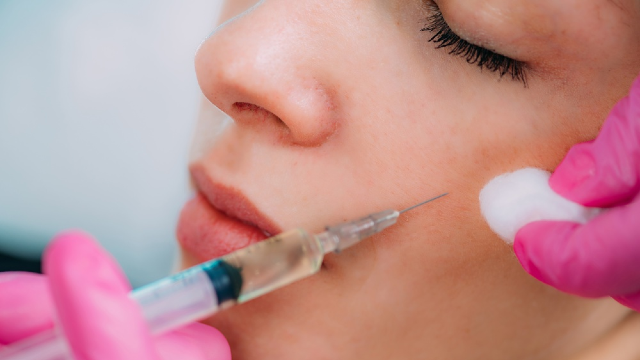
Gouri is an injectable collagen-regeneration treatment. It is designed to support gradual improvement in skin firmness, elasticity, hydration and overall skin quality, and it works by prompting your own collagen response rather than by placing material that occupies space.
That distinction governs everything else about it — how long it takes, what it looks like when it works, and who it is a poor choice for. This guide starts there and ends with the practical skill most patients never acquire: reading a dose on a piece of paper.
A whole-face treatment rather than a targeted one
Most injectables are placed where a specific problem is. Gouri is the clinic's whole-face option in the collagen-regeneration category, and the fields it is documented to address say why: overall facial firmness, skin thickness, and fine laxity.
Those are not features of one area. They are properties of the whole envelope, which is why a treatment aimed at them covers the whole face rather than a fold or a hollow.
The consequence for expectations is worth stating early. A treatment that improves the property of your skin across the whole face produces a change people notice without being able to name — the face reads as better rested rather than as having had something done to it. If you want a visible change in one specific place, this is the wrong category, and a clinician should say so at consultation.
Who it suits
Adults with early to moderate skin laxity, reduced elasticity, fine lines, dryness or generally declining skin quality who prefer gradual, natural-looking rejuvenation.
"Prefer gradual" is doing real work in that sentence. This treatment cannot be made to arrive quickly, so a patient who would rather see something in two weeks is not a candidate for it regardless of what their skin looks like.
It is not suitable for people with known hypersensitivity to the product components, active infection or significant inflammation at the injection site, or those for whom injectable treatment is medically inappropriate. Pregnancy, breastfeeding and certain medical conditions should be discussed with the treating physician.
At consultation the physician assesses skin quality, elasticity, laxity, facial concerns and treatment goals, and reviews medical history, allergies, medications and previous injectable treatments before deciding whether Gouri is appropriate.
The schedule, in the order it actually happens
The treatment itself is quick. Chair time is 20 to 30 minutes. The total visit runs longer, because consultation, preparation and post-treatment observation all sit around the injection, and none of them is optional.
Afterwards, injection-site swelling and bruising for a few days is expected with this class. Most people are covering what remains with makeup within the first week, and by the second week the skin has settled enough that what you see is the starting point rather than the aftermath.
Then it goes quiet, and staying calm through that stretch is the hardest part of this treatment.
Early change comes from about six to eight weeks, as collagen builds. The fullest effect arrives at about three to four months. Collagen stimulators in this class are generally discussed in terms of a year or more of duration, with one to two sessions per cycle.
Six to eight weeks is a long time to wait when you have already paid and already bruised. Patients who abandon this category usually do so at week four, which is before anything was ever going to be visible. Knowing the number in advance is most of the remedy.
The other half of the remedy is a photograph. Take one on the day of treatment, in daylight, from straight on, and take the next one at the eight-week mark in the same light and the same position. Gradual change is exactly the kind a mirror cannot register, because you see your face every day and the comparison you are making is against yesterday. A pair of photographs eight weeks apart is the only assessment method that works for a treatment built this way, and almost nobody sets it up in advance.
Temporary redness, swelling, tenderness, bruising, itching or small bumps at injection sites can occur. As with any injectable procedure, infection, prolonged inflammation, vascular complications or other adverse reactions are possible, though uncommon. Aftercare is undramatic: keep the treated areas clean, avoid unnecessary touching or pressure, and skip strenuous activity, excessive heat and anything else the treating provider advises against immediately afterwards.
One appointment, not a course
This is the practical feature that separates Gouri from most of its neighbors, and for a visiting patient it may be decisive.
Several collagen-building treatments are built as courses — three or four sessions, spaced weeks apart, with the result defined as arriving after the last one. That design is fine if you live nearby and awkward if you do not, because a course you cannot finish is not a cheaper version of a course you can.
Gouri is taken as one appointment rather than a course, with one to two sessions per cycle thereafter. For someone flying in, that changes the calculation entirely: the treatment completes inside the trip, and what happens afterwards happens to you at home without needing anything from the clinic.
The other feature American patients name is that results build slowly, which suits a patient who does not want a visible change on returning home. Those two together describe a fairly specific person — someone who wants the improvement to be real and the process to be invisible, and who is content to wait months for it.
If that is not you, say so early. A patient who wants to see something before they fly home is describing a different treatment, and the clinic's own list of nearest alternatives — Sculptra, Juvelook and Radiesse — includes options with different timing. The pairings it names for Gouri are botulinum toxin injections and Ultherapy PRIME, either of which may sit alongside it in a plan.
Reading a dose, and why it is the number that matters
Here is the practical skill. Aesthetic injectables are sold by name and delivered by amount, and the amount is what varies.
Liyan Clinic quotes Gouri in ampoules: one ampoule at 4cc, or two ampoules at 8cc. That is the whole menu for this treatment, and it is written down rather than left to the room.
Why that matters is simple arithmetic that patients rarely do. Two people who both "had Gouri" may have had twice as much of it as each other. If one is pleased and one is not, the product is not the variable that separated them. So when you are weighing a plan — against another clinic, against your own expectations, or against what a friend reports — the name tells you almost nothing and the amount tells you most of it.
Three habits follow. Ask what amount is being proposed for you and why that amount. Get it in writing before the appointment rather than after. And keep the paper, because in six weeks when you are assessing whether it worked, the amount you actually received is the only fact you will wish you had recorded.
The American Academy of Dermatology's guidance on preparing for filler treatment makes a related point about arriving informed rather than arriving trusting, and its overview of fillers is a reasonable grounding in the category even though Gouri is not one. The U.S. Food and Drug Administration's consumer page on soft tissue fillers is the regulatory counterpart — useful for the discipline it models rather than for anything it says about this product.
What it does not fix
Being clear about the ceiling is more useful than another paragraph about the benefits.
An injectable result is bounded by the amount given and by the tissue it is placed in. It will not correct skin laxity that has gone past what tightening can reach, and it will not substitute for surgery where surgery is what the anatomy requires. A collagen-regeneration treatment improves the quality of the envelope; it does not remove excess of it.
That boundary is easiest to misjudge in exactly the patient most likely to book this treatment — someone in their fifties or sixties whose skin quality and skin quantity have both changed. Improving the first does not address the second, and a plan that treats one while the patient is hoping for the other ends in disappointment that nobody misrepresented.
The Academy's guidance on cosmetic procedures for people 65 and older is worth reading if that describes you, because it is written about exactly this decision rather than about a product.
Deciding where, not just what
If you are choosing a clinic rather than a treatment, the questions are different and more portable. MedlinePlus, the U.S. National Library of Medicine's patient service, publishes a structured approach to choosing a provider that works as well for an appointment abroad as at home.
For this treatment specifically, three answers tell you most of what you need. What amount, and why that amount for my face? What will you assess at the review, and when is it? And what would you use instead if this is not the right fit? A clinician who answers the third question readily is telling you that the menu exists to serve the assessment rather than the other way round.
Those three questions travel well by email. Send them to the contact page and read the about page while you wait for the reply.
The Bottom Line
- Gouri is a collagen-regeneration injectable aimed at overall facial firmness, skin thickness and fine laxity — a whole-face treatment, not a targeted one.
- Chair time is 20 to 30 minutes, though the full visit is longer; expect injection-site swelling and bruising for a few days.
- Nothing is visible early: change begins at about six to eight weeks and peaks at three to four months, with duration discussed in terms of a year or more.
- The clinic quotes it in ampoules — one at 4cc or two at 8cc — and the amount, not the name, is what varies between two patients' outcomes.
- It improves the quality of skin, not the quantity; laxity past what tightening reaches is a different problem with a different answer.
Frequently Asked Questions
What does Gouri actually do?
It is an injectable collagen-regeneration treatment that supports gradual improvement in firmness, elasticity, hydration and overall skin quality by prompting your own collagen response.
How soon will I see anything?
Not soon. Early change comes from about six to eight weeks as collagen builds, and the fullest effect arrives at about three to four months.
How long does it last?
Collagen stimulators in this class are generally discussed in terms of a year or more, with one to two sessions per cycle.
How long is the appointment?
Chair time is 20 to 30 minutes. The total visit is longer because consultation, preparation and post-treatment observation sit around it.
What amount will I be given?
The clinic quotes this treatment as one ampoule at 4cc or two ampoules at 8cc. Which one is proposed for you, and the reason for it, is a question worth asking and worth having in writing.
What does recovery look like?
Injection-site swelling and bruising for a few days is expected with this class, generally coverable with makeup within the first week and settled by the second.
Who should not have it?
Anyone with known hypersensitivity to the components, active infection or significant inflammation at the injection site, or for whom injectable treatment is medically inappropriate. Pregnancy, breastfeeding and certain conditions need a conversation with the treating physician first.
This article is for general informational purposes only and does not constitute individualized medical advice. It is not a self-diagnosis tool, and it cannot replace an in-person assessment by a licensed dermatologist who has examined your skin.
More Articles
Continue reading our clinical guides.
Ultherapy PRIME Lifting in Korea: What to Expect
Ultherapy PRIME lifting at Liyan Clinic in Jeju: how micro-focused ultrasound works, who it suits, the honest results timeline, and how US patients plan it.
Learn More

Potenza RF Microneedling: Texture, Pores, and Scars
Potenza RF microneedling at Liyan Clinic in Jeju: how needles plus radiofrequency treat texture and acne scars, how long a course runs, and what to ask.
Learn More

Thermage FLX RF Skin Tightening: A Patient's Guide
Thermage FLX at Liyan Clinic in Jeju: how monopolar radiofrequency tightening works, what the shot count means, the results timeline, and who it suits.
Learn More