Personalized Medical Care & Dedicated International Patient Concierge

Medical Guide
Exosome Skin Booster: Evidence and Realistic Expectations
Exosome treatments at Liyan Clinic in Jeju: what the formulations are for, how delivery changes the treatment, and how to weigh a claim on a still-new category.
Schedule a ConsultationExosome Skin Booster: Evidence and Realistic Expectations
Medically reviewed by Dr. Oh Eunhui, Medical Director, Liyan Clinic
Of everything on Liyan Clinic's booster menu, this is the one where the gap between how it is discussed online and what can actually be stated about it is widest. So this guide is organized differently from the others: it covers what the treatment is, and then it spends real space on how to weigh what you read about it — including this.
Exosome skin treatments use exosome or extracellular-vesicle-based formulations intended to support skin repair and improve skin-quality parameters such as hydration, elasticity, texture, pigmentation and fine lines.
Delivery is part of the treatment
An unusual feature of this category, and the first thing to pin down at consultation: it is not one procedure.
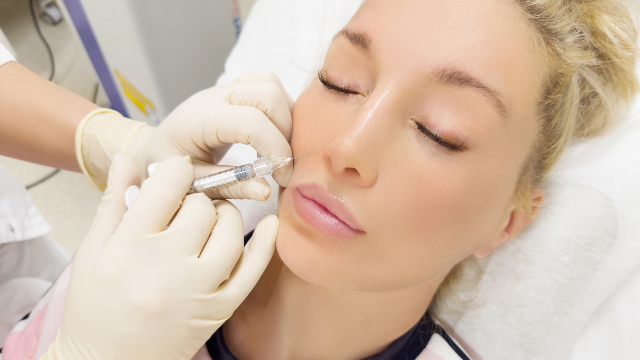
Delivery may be topical, through microneedling or laser-assisted application, or by injection, depending on the product and the clinical protocol. Those are materially different experiences with different recovery profiles, and "I had an exosome treatment" does not tell you which one happened.
At Liyan Clinic it is offered as an add-on inside the clinic's Synergist and MTS delivery programs, which means it is typically combined with something rather than taken alone. One practical consequence is that no separate appointment is needed when it is added to a device treatment. Another is that the recovery you experience will largely belong to the device, not to the formulation.
So the question to ask is not "what is the downtime for exosomes". It is "what is the downtime for the treatment you are adding this to".
A session commonly takes approximately 30 to 60 minutes depending on the area and technique, and the number of sessions varies with individual goals and the clinic's protocol.
Who it suits
Adults primarily concerned with early signs of skin aging, dull or uneven skin texture, dehydration, fine lines, reduced elasticity or certain pigmentation concerns — provided a clinician determines that the specific product and delivery method are appropriate. That proviso is heavier here than elsewhere, because both variables are in play.
It is not suitable for people with active skin infections or significant inflammation at the treatment site, known allergy to product components, uncontrolled medical conditions affecting healing, or anyone for whom the specific product and delivery method are contraindicated.
Potential benefits are improved hydration, smoother texture, a more even-looking complexion, improved radiance and a reduction in the appearance of fine lines. Results vary between patients.
Temporary redness, swelling, tenderness, warmth, itching or sensitivity may occur. Depending on the delivery method, bruising, pinpoint bleeding or irritation may also occur. Infection, prolonged inflammation, pigmentation changes or other complications are possible but less common.
Some people notice a change in skin appearance after the treatment, with further change developing over the following weeks. How long it lasts varies with the product, the method, your skin condition, your lifestyle and your individual response, and maintenance treatments may be recommended.
What being an add-on changes about planning
Because this is offered inside the clinic's existing delivery programs rather than as a standalone appointment, the planning questions are different from every other treatment in this guide's neighborhood.
You are booking two things at once. The device treatment has its own candidacy criteria, its own downtime and its own risk profile, and the formulation rides along with it. If the device treatment is not appropriate for you, the add-on question does not arise. Sort the base treatment first.
The recovery you should plan around is the device's. A formulation applied topically after a microneedling session does not extend that session's recovery in any way you would notice. What determines whether you look presentable on Thursday is the microneedling, not the addition.
No extra appointment is needed. For a patient compressing treatments into a short stay, this is the practical appeal and it is a real one — it adds something to a visit without adding a day to it.
The value proposition is harder to isolate. When two things happen in one session, you cannot tell afterwards which produced the result. That is not an argument against doing it; it is an argument for being clear in advance about what you expect the addition to contribute, so that you are not later attributing the whole outcome to the smaller half of it.
One reason patients give for wanting it is that it is commonly used to shorten visible recovery, which matters when you are flying home within days. If that is your reason for adding it, say so — because it makes the decision testable. You will know within a week whether your recovery went faster than you were told to expect.
How to weigh a claim about a new category
This is the part worth your attention, and the skill transfers well beyond this treatment.
Regenerative aesthetic products occupy a space where the vocabulary of biology arrives well ahead of the clinical evidence. Words like repair, regeneration and growth factor are doing real scientific work somewhere, and they are also doing marketing work here, and the two uses are hard to tell apart from a clinic's website.
Three questions separate them.
What exactly is the product, and what is it authorized for, where? Regulatory status is jurisdictional. A formulation available for one use in one country is not thereby available for another use somewhere else, and patients routinely collapse those. Notably, exosome products are not approved for injection in the United States — which is precisely why American patients seek them elsewhere, and which is a fact about regulation rather than a verdict on the science.
Who is making the claim, and what would they accept as disproof? A claim that cannot fail is not a finding. This applies to enthusiasm and to dismissal equally.
What is the evidence base, and how mature is it? The U.S. Food and Drug Administration publishes consumer guidance on regenerative medicine therapies that is written for exactly this problem — a patient deciding about a category whose evidence is still forming. It does not tell you whether to have a treatment; it models the questions. The Academy of Dermatology's discussion of platelet-rich plasma is a useful companion for the same reason: it walks through an aesthetic treatment built on a plausible biological mechanism and is candid about where the evidence stands.
The honest position on exosome skin treatments for a US patient reading in 2026 is that the mechanism is interesting, the clinical literature is younger than the marketing, and the sensible expectation is a skin-quality improvement rather than a transformation. A clinic that says this is being straight with you.
There is a corollary that is easy to miss. "The evidence is still forming" is not the same statement as "this does not work", and treating them as equivalent is its own error. Plenty of treatments now considered routine spent years in exactly this position. What the immaturity of an evidence base actually licenses is a narrower conclusion: you should expect less confidence about the size of the effect, and you should be more suspicious of anyone offering you a lot of it.
Applied to your own decision, that translates into something practical. It is reasonable to try a treatment in this category if the downside is small, the cost is one you would not regret, and your expectation is modest. It is not reasonable to build a plan around it, to pay for a long course of it in advance, or to choose it over an option with a longer track record because the newer one sounds more advanced.
A test case: the needle-free claim
Because delivery varies here, this category attracts a particular claim — that a product can be delivered without a needle and still do what the injected version does.
There is a cautionary parallel in the Academy of Dermatology's work on needle-free devices used for a different product class entirely. Do not stretch it — it is not about these formulations. Take only the general lesson, which is that the route into skin is part of what a treatment is rather than a packaging choice, and that comfort-led delivery earns the same scrutiny as effect-led delivery.
Keeping a record you can use later
For a treatment in a still-forming category, your own documentation is worth more than usual — and it is the thing almost nobody keeps.
Ask for, and write down: which product, which delivery method, which device it was added to, how many sessions, and on what dates. Translated documents are available from the clinic, so this is a request they can meet rather than an imposition.
Two reasons. The first is practical — if you continue treatment at home, a clinician needs to know what was already done, and "an exosome treatment in Korea" is not an answer. The second is that this category is moving. What is understood about these formulations in three years will be different from what is understood now, and a patient with a record can interpret that news about themselves. A patient without one cannot.
MedlinePlus, the U.S. National Library of Medicine's patient service, has a short overview of personal health records and why keeping one matters. It is written about medicine generally and applies here with unusual force.
Ask which formulation and which route, in advance, using the contact page. The about page covers the practice itself.
The Bottom Line
- Exosome skin treatments use exosome or extracellular-vesicle formulations aimed at hydration, elasticity, texture, pigmentation and fine lines.
- Delivery may be topical, microneedling or laser-assisted, or by injection — so the recovery you get largely belongs to the method, not the formulation.
- At this clinic it is an add-on inside existing delivery programs, so no separate appointment is needed when it is combined with a device treatment.
- The mechanism is plausible and the clinical evidence is younger than the marketing; expect a skin-quality improvement, not a transformation.
- Record the product, the method, the device, the session count and the dates — this category is moving, and a record is what lets you interpret it later.
Frequently Asked Questions
What are exosome skin treatments meant to do?
Support skin repair and improve skin-quality measures such as hydration, elasticity, texture, pigmentation and the appearance of fine lines.
Is it an injection?
Not necessarily. Delivery may be topical, through microneedling or laser-assisted application, or by injection, depending on the product and protocol. Ask which one is planned for you.
How long is a session?
Commonly about 30 to 60 minutes depending on the area and technique. The number of sessions varies with your goals and the clinic's protocol.
What should I expect the result to be?
A skin-quality improvement — hydration, smoothness, evenness, radiance, softer fine lines — that varies between patients and may develop over the weeks after treatment.
Why do American patients travel for this?
Exosome products are not approved for injection in the United States. That is a statement about regulation in one country, not a judgment about the science, and it is worth holding as the first rather than the second.
What are the risks?
Temporary redness, swelling, tenderness, warmth, itching or sensitivity; depending on delivery, bruising, pinpoint bleeding or irritation. Infection, prolonged inflammation and pigmentation changes are possible but less common.
How should I judge the claims I read about it?
Ask what the product is and what it is authorized for and where; ask who is making the claim and what would count against it; and ask how mature the evidence base is. Consumer guidance on regenerative therapies from the U.S. Food and Drug Administration models those questions well.
This article is for general informational purposes only and does not constitute individualized medical advice. It is not a self-diagnosis tool, and it cannot replace an in-person assessment by a licensed dermatologist who has examined your skin.
More Articles
Continue reading our clinical guides.
Ultherapy PRIME Lifting in Korea: What to Expect
Ultherapy PRIME lifting at Liyan Clinic in Jeju: how micro-focused ultrasound works, who it suits, the honest results timeline, and how US patients plan it.
Learn More

Potenza RF Microneedling: Texture, Pores, and Scars
Potenza RF microneedling at Liyan Clinic in Jeju: how needles plus radiofrequency treat texture and acne scars, how long a course runs, and what to ask.
Learn More

Thermage FLX RF Skin Tightening: A Patient's Guide
Thermage FLX at Liyan Clinic in Jeju: how monopolar radiofrequency tightening works, what the shot count means, the results timeline, and who it suits.
Learn More