Personalized Medical Care & Dedicated International Patient Concierge

Medical Guide
Botox vs Dermal Fillers: Which Is Right for Your Concern?
Botox vs fillers at Liyan Clinic in Jeju: one reduces muscle activity, the other occupies space. How to tell which your concern needs before you book.
Schedule a ConsultationBotox vs Dermal Fillers: Which Is Right for Your Concern?
Medically reviewed by Dr. Oh Eunhui, Medical Director, Liyan Clinic
Almost everyone who searches Botox vs fillers is asking the wrong question. The two are not rival answers to one problem; they are answers to two different problems that happen to look alike in a mirror. Get the problem right and the product chooses itself.
Both are injectables, both are quick, and both sit at the top of what American patients ask Liyan Clinic about. That is where the similarity stops.
One reduces movement, the other occupies space
Here is the whole distinction, and it is worth holding onto because every other difference follows from it.
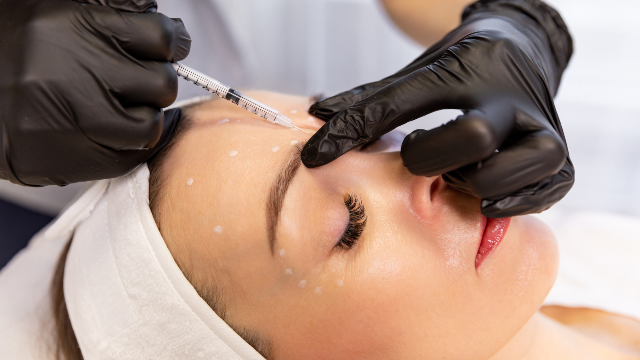
Botulinum toxin injections are a minimally invasive treatment that temporarily reduces muscle activity. They are used to soften dynamic wrinkles — the lines your face makes when it moves — and to create a more balanced appearance. The American Academy of Dermatology's overview of botulinum toxin therapy describes the same category of use for readers in the United States.
Dermal filler treatment does something structurally unrelated. A gel-like filler is injected beneath the skin to restore or enhance facial volume and to improve the appearance of areas such as the lips, cheeks, chin, or facial contours. Nothing about muscle activity changes. What changes is how much material is sitting under the surface.
The clinic's own framing of the alternatives says it plainly: botulinum toxin primarily reduces muscle activity, while treatments in the other family target volume loss, skin texture, or skin laxity.
So the useful question is not "which is better". It is: does my concern appear when my face moves, or is it there when my face is still?
A line that deepens when you frown, squint, or raise your brows is a movement problem. A hollow, a flattened cheek, a fold that sits there in a photograph taken mid-sentence — that is a volume problem. Most people over forty have some of each, in different places, which is why the honest answer to the original question is often "both, in these specific spots".
What each one is actually for
Liyan Clinic describes its Botox treatment as focusing on delicate design for balanced aesthetics, which is a fair description of what the product can and cannot do. It can dial down a specific muscle. It cannot put anything back.
Good candidates are adults with dynamic facial lines, or areas where reducing excessive muscle activity may improve facial balance. Suitability depends on individual anatomy and treatment goals. It is not appropriate for people who are pregnant or breastfeeding, who are allergic to botulinum toxin or its ingredients, who have an infection at the injection site, or who have certain neuromuscular disorders.
The filler side has a different candidate profile: adults in good general health whose main concern is volume loss, lips, cheeks and mid-face, chin and jaw projection, or nasolabial folds — and who understand that the change is non-surgical and visible straight away. It is not suitable for anyone with an active infection or significant inflammation at the planned injection site, a known allergy to the selected filler or its components, or expectations that no injectable could meet.
Read those two lists next to each other and the sorting is nearly automatic. They barely overlap.
The two clocks
This is where the practical decision usually gets made, especially for someone who does not live nearby.
With botulinum toxin, chair time is 10 to 20 minutes. Early change comes from about three to seven days, the full effect is there at about two weeks, and the result commonly lasts three to four months for facial sites, with body sites often described as lasting longer. Maintenance means repeating at roughly three-to-four-month intervals for expression lines.
With filler, the early change is immediate. The result settles at about two weeks, and duration is commonly discussed as six to eighteen months depending on the product and the area. It is generally one session, reviewed at the two-week mark.
Two things fall out of that pairing, and neither is obvious in advance.
The one that works faster lasts shorter. Filler shows you something before you leave the building and may still be there a year later. Toxin shows you nothing for most of a week and is gone by the season after next. If you have flown a long way and want to see what you paid for before you fly home, those are different propositions.
Both need a two-week look, and for different reasons. Toxin is not finished until then; filler has stopped swelling by then. Either way, the two-week mark is when what you actually received becomes visible, and if you will be somewhere else by then, that review has to be arranged rather than assumed. The AAD's guide to how long fillers last is a useful companion for setting that expectation before rather than after.
Planning around a repeat you may not be able to make
A three-to-four-month cycle is easy when your clinic is across town. It is a different commitment when it is a flight away, and it deserves a straight look rather than a hopeful one.
If you have toxin on a trip, the result will have faded well before any realistic second visit. That is not a reason to avoid it — it is a reason to know what you are buying: a result for this season, not a plan. Some people are entirely happy with that, especially around an event. Others discover afterwards that they wanted the thing they can maintain.
Filler's longer horizon fits a travel pattern better on the face of it, but it carries its own version of the problem. A product that lasts six to eighteen months will need a decision at the end of that window, and you will be making it from somewhere else. Ask at the time of treatment what the maintenance pattern looks like, what the review would consist of, and how it can be done if you are not in the building.
The general principle is unglamorous: choose the option whose follow-up you can actually complete, not the one whose first session is most appealing.
The risks are not the same shape
Injectables are often discussed as one risk category. They are not, and the difference matters when you are weighing a first treatment.
With botulinum toxin, temporary redness, swelling, bruising, tenderness, headache, or mild discomfort may occur. Rare complications can include unwanted muscle weakness, or temporary drooping of nearby areas. Note what that list is: almost everything on it resolves on the product's own schedule, because the product itself is temporary.
With filler, most patients can return to normal activities shortly after treatment, and mild swelling, redness, tenderness, or bruising usually improves over several days. But a gel occupying space beneath the skin introduces a category of complication that a neuromodulator does not have, and it is the reason injector training and anatomical knowledge are a fair thing to ask about directly. Bring that question to the consultation rather than inferring the answer from the waiting room.
Whichever you are considering, tell the clinician about medications, allergies, and medical conditions beforehand, and follow whatever specific preparation instructions you are given. The AAD's guidance on preparing for botulinum toxin therapy covers the same ground for a US reader, and it is worth reading before the appointment rather than in the chair.
Describing your concern so the answer picks itself
Most consultations that end in the wrong product started with a request for a product rather than a description of a problem.
Try this instead. Before you write to any clinic, look in a mirror and separate what you see into two lists. First, what shows up when you move — frowning, smiling, raising your brows. Second, what is there when your face is completely still, ideally checked in a photograph rather than a mirror, because a mirror invites you to arrange yourself.
Then write the two lists down and send those, not a product name. "The lines between my brows are there when I frown and gone when I relax; my cheeks look flatter than they did five years ago" is a message that can only be answered one way. "How much is Botox" is a message that can be answered several ways, most of them unhelpful.
The clinic's consultation process is built to work from that kind of description. For the filler side, the clinician evaluates facial proportions, skin condition, volume loss, asymmetry, and your desired outcome before the treatment area, filler type, amount, and injection plan are discussed. For the toxin side, the assessment covers your concerns, facial expressions, muscle activity, and treatment areas, and the injection sites and dosage follow from the facial anatomy and the outcome you want. Liyan Clinic states that its aesthetic approach focuses on finding an appearance suited to each individual rather than following a single standard of beauty — which only works if the clinic knows what you are actually trying to change.
MedlinePlus, the US National Library of Medicine's patient service, recommends writing your questions down before a medical appointment. For this decision the list is short and specific: which of my concerns is a movement concern and which is a volume concern; what would you do for each; what would you do first; and when should I look at the result.
Send those in writing before you commit to anything. The contact page is where they land, and the about page covers the practice that will be answering.
One last thing worth saying out loud. The comparison in this article's title suggests a contest, and there isn't one. Two people with the same request can correctly receive opposite answers, and the same person can correctly receive both answers for two different parts of one face. A clinic that tells you which of your concerns belongs in which category — and says plainly when a concern belongs in neither — is doing the part that actually determines whether you are pleased in a month.
The Bottom Line
- Botulinum toxin temporarily reduces muscle activity and softens the lines your face makes when it moves; dermal filler places a gel beneath the skin to restore volume and contour. They solve different problems.
- Sort your own concerns first: what appears when you move is a toxin question, and what is there when your face is still is usually a filler question.
- The clocks differ. Toxin starts at three to seven days, peaks at about two weeks, and lasts three to four months on the face; filler is immediate, settles at about two weeks, and is commonly discussed at six to eighteen months.
- Both deserve a two-week look, and if you will have traveled home by then, arrange that review before you leave rather than after.
- Send a description of the problem, not the name of a product — the second question has several answers and most of them are not yours.
Frequently Asked Questions
Which one should I have for frown lines?
Lines that appear when you frown and disappear when you relax are movement lines, which is what botulinum toxin injections are used for. If a crease remains visible when your face is completely still, say so at consultation, because that is a different finding.
How soon will each one show?
Filler shows an early change immediately and settles at about two weeks. Botulinum toxin shows early change from about three to seven days, with the full effect at about two weeks.
How long does each one last?
Toxin commonly lasts three to four months for facial sites, and body sites are often described as lasting longer. Filler duration is commonly discussed as six to eighteen months, depending on the product and the area treated.
Can I have both in one visit?
Many people have concerns in both categories, and whether to address them together or in sequence is a clinical judgment rather than a matter of preference. Ask for the reasoning, not just the plan.
How long does the appointment take?
Chair time for botulinum toxin injections is 10 to 20 minutes. Filler treatment is generally completed during one clinic visit, with the time depending on the number and size of areas treated.
Who should not have these treatments?
For botulinum toxin: anyone pregnant or breastfeeding, allergic to the toxin or its ingredients, with an infection at the injection site, or with certain neuromuscular disorders. For filler: anyone with an active infection or significant inflammation at the planned site, or a known allergy to the selected product or its components.
What should I tell the clinic before treatment?
Any medications you take, any allergies, and any medical conditions — and for filler, avoid applying makeup or skincare to the area beforehand. Follow whatever specific preparation instructions you are given.
What if I am not sure which category my concern falls into?
Then describe the concern rather than naming a product, and include when it is visible and when it is not. That single detail is usually enough for the assessment to place it.
This article is for general informational purposes only and does not constitute individualized medical advice. It is not a self-diagnosis tool, and it cannot replace an in-person assessment by a licensed dermatologist who has examined your skin.
More Articles
Continue reading our clinical guides.

Ultherapy PRIME Lifting in Korea: What to Expect
Ultherapy PRIME lifting at Liyan Clinic in Jeju: how micro-focused ultrasound works, who it suits, the honest results timeline, and how US patients plan it.
Learn More

Potenza RF Microneedling: Texture, Pores, and Scars
Potenza RF microneedling at Liyan Clinic in Jeju: how needles plus radiofrequency treat texture and acne scars, how long a course runs, and what to ask.
Learn More

Thermage FLX RF Skin Tightening: A Patient's Guide
Thermage FLX at Liyan Clinic in Jeju: how monopolar radiofrequency tightening works, what the shot count means, the results timeline, and who it suits.
Learn More