Personalized Medical Care & Dedicated International Patient Concierge

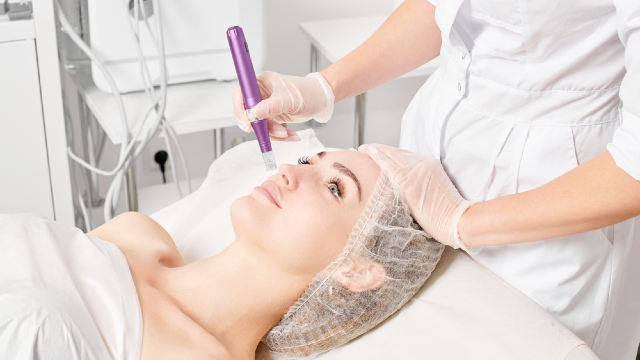
Medical Guide
Aqua Peel vs LDM vs Potenza: Comparing Skin Texture Care
Aqua Peel vs LDM vs Potenza at Liyan Clinic in Jeju, ranked by how strong each is and what it costs you in visible recovery days on a short trip.
Schedule a ConsultationMedically reviewed by Dr. Oh Eunhui, Medical Director, Liyan Clinic
The Aqua Peel vs LDM vs Potenza question has a clean answer once you stop asking which is best and start asking how strong you can afford to be this week. These three are the texture-focused treatments Liyan Clinic offers, and they sit at very different strengths with very different costs in visible recovery. If your skin is reactive, or your trip is short, that second number decides it.
Three strengths, in order
Start with what each one actually does, because the ranking follows from the mechanism rather than from the marketing.
Aqua Peel is a non-invasive facial treatment combining gentle exfoliation, pore cleansing and suction-assisted removal of surface impurities. It is used to improve smoothness, hydration and overall clarity. Nothing is injured and nothing is heated; material is lifted off the surface.
LDM Skin Treatment uses rapidly alternating ultrasound frequencies to produce a gentle micro-massage effect within the skin. It is used for hydration, skin conditioning and overall skin quality, and it is aimed at comfort rather than at change — particularly in sensitive or dehydrated skin.
Potenza is radiofrequency microneedling: it combines microneedling with radiofrequency energy to improve overall skin condition and produce smoother, more even-looking texture. This is the one that works by controlled injury plus a thermal effect, and it is in a different class from the other two.
Ranked by strength, that is Aqua Peel and LDM at one end and Potenza at the other, with a genuine gap rather than a gradient between them. The first two work on skin that is essentially intact. The third asks the skin to rebuild.
What each costs you in days
For a visitor this is the number that matters, and it is worth putting side by side.
| Chair time | Visible recovery | Cadence | |
|---|---|---|---|
| Aqua Peel | About 30 minutes | Normal activities right away; mild redness or tightness, when present, commonly resolves within several hours to a day | Commonly monthly maintenance |
| LDM | 12 or 24 minutes, as priced | Little to no downtime; normal activities usually resumed at once, with temporary mild redness or sensitivity possible | Often a short course |
| Potenza | 40 to 60 minutes including numbing | Visible treatment points and redness; skin looks worked on rather than finished for a short period | Three or more sessions at monthly intervals |
Read the middle column first. Two of these three you can have on the morning of a day you intend to be seen in. The third you cannot, and pretending otherwise is how people end up avoiding photographs at an event they traveled for.
Read the right-hand column second, because it carries the sting. Potenza's result is cumulative across a course and maintained with periodic sessions — which means a single session is a sample of the treatment rather than the treatment. Aqua Peel and LDM do not have that problem in the same way: each session does its own work.
What each is actually for
Strength is not the only axis, and choosing on strength alone produces the wrong answer surprisingly often.
Aqua Peel suits adults whose main concern is clogged pores, blackheads, surface dullness or hydration, and who understand the change is non-surgical and visible right away. Its benefits are cleaner-looking pores, smoother texture, less surface oil and improved hydration — and they are described plainly as cosmetic and temporary rather than as a permanent correction of anything underneath.
LDM suits adults whose main concern is redness and irritation, skin barrier recovery, or puffiness. What it offers is hydration, comfort, elasticity, texture and a quieter-looking complexion, particularly where skin is sensitive or dehydrated. Its early effect is immediate and its barrier benefit accumulates across a course, progressing rather than arriving.
Potenza suits a different question entirely: texture you want structurally changed rather than cleaned or comforted. Texture change begins from about three to four weeks, with the fullest effect two to three months after the final session.
So the sorting question is not "how strong do I want to be". It is: is my skin dirty, irritated, or structurally rough? Those three descriptions point at three different treatments, and only the third one needs the strongest option.
If your skin is reactive
This is the case the comparison exists for, and it deserves its own answer.
Reactive, easily irritated or dehydrated skin is exactly where the gentlest option earns its place. LDM is documented for redness and irritation and for barrier recovery, and it requires little to no downtime. For someone whose skin reddens at the slightest provocation, that combination is not a compromise — it is the correct treatment.
It is also worth knowing what would rule any of these out. LDM may not be appropriate where there are active skin infections, open wounds, or certain medical conditions affecting ultrasound treatment. Aqua Peel may not suit active skin infections, significant irritation, open wounds or severe inflammatory skin conditions, and treatment should be postponed when the skin barrier is significantly compromised. Excessive suction or inappropriate exfoliation can increase irritation, particularly in sensitive or already-compromised skin — which is a reminder that even the gentle end of this range is operator-dependent.
MedlinePlus, the US National Library of Medicine's patient service, maintains an overview of skin conditions that is a useful reference if you are unsure whether what you are seeing is a texture concern at all or something that needs treating as a condition first.
If your trip is short
Then work backwards from the day you need to look normal.
A treatment with no meaningful visible recovery can go early in a stay or late in it; you have freedom. A treatment that leaves visible treatment points has to sit far enough from your departure that you are comfortable, and far enough from any event that you are not counting hours.
There is a second constraint people miss. The strongest option here is a course, and a course cannot be completed inside one visit. Before you start one, ask the clinic what a single session or a partial course would and would not produce for your concern, and what continuing at home would involve. The answer decides whether starting is sensible, and it is a better question than "is it worth it".
The American Academy of Dermatology publishes a list of questions worth asking before any cosmetic treatment; for this decision the useful additions are about timing rather than technology — how long will I look treated, and what would make that longer than expected.
Where these sit against what you may have read
Two comparisons from US-facing content are worth heading off.
Chemical peels are a different route to some of the same goals, and the Academy of Dermatology's overview of them describes a category whose recovery varies enormously with strength — a useful reminder that "a facial" and "a peel" are not one thing. Microdermabrasion is another mechanical surface treatment, and the Academy's material on it is a good description of what a purely surface-level approach reaches.
Needle-based work is the other comparison, and it is the one most often flattened. The US Food and Drug Administration publishes consumer information on microneedling devices, which is worth reading precisely because it treats them as regulated devices with defined intended uses — and the Academy's material on microneedling for scars sets out what a course realistically looks like. Neither of those is describing a facial, and treating them as interchangeable with one is how expectations go wrong.
What none of the three will do
A short list, because it saves a disappointed appointment.
None of these three addresses volume. If what has changed about your face is fullness or contour rather than the state of the surface, you are describing a different category of treatment entirely, and no amount of the strongest option on this page will reach it.
None of them is a treatment for a skin condition. Two of them are explicitly postponed where there is significant irritation, infection or a compromised barrier, which is the clinical way of saying that a condition gets treated first and cosmetic work comes after.
And none of them is permanent. The gentlest results are described as temporary by their own documentation, and even the strongest is maintained with periodic sessions rather than finished. That is normal for this whole category and it is worth building into the budget of time you expect to spend, not just the budget of money.
Matching the treatment to the week you actually have
Here is the decision in four steps, and it takes about a minute.
Name the concern in the plainest word you have: congested, irritated, or rough. Then count the days between the appointment and the first day you need to look unremarkable. Then check whether your answer is a course — and if it is, ask what a partial one gives you. Then send all of that to the clinic before you book, rather than deciding in the chair.
Put those four things in one message. The contact page takes it, and the about page describes the practice that will answer. A recommendation that arrives knowing your dates is a different and better recommendation than one that does not.
One closing note on expectations. Two of these three treatments are, by their own description, temporary and cosmetic. That is not a criticism — a clean, hydrated, comfortable complexion for a few weeks is exactly what some people want, and buying it deliberately is sensible. What causes disappointment is buying it while expecting the third treatment's kind of result, which is a different purchase with a different timeline and a different number of appointments.
The Bottom Line
- The three sit at very different strengths: two work on essentially intact skin, and the third works by controlled injury plus radiofrequency energy.
- Sort by concern, not by strength — congested pores, irritated skin, and structurally rough texture point at three different treatments.
- Visible recovery is the number that decides a short trip: two of the three leave you presentable the same day, and one does not.
- The strongest option is a course of three or more sessions at monthly intervals, so a single session is a sample rather than the treatment.
- Even at the gentle end, technique matters — excessive suction or inappropriate exfoliation can irritate sensitive skin.
Frequently Asked Questions
Which one is gentlest?
LDM is the one aimed at comfort rather than change, using rapidly alternating ultrasound frequencies for a gentle micro-massage effect, and it is documented for redness, irritation and barrier recovery.
Which one is strongest?
Potenza, which combines microneedling with radiofrequency energy. It is in a different class from the other two and carries visible recovery that they do not.
How long does each appointment take?
Aqua Peel is about 30 minutes. LDM is 12 or 24 minutes, as priced. Potenza is 40 to 60 minutes including numbing time.
Can I have any of them the day before flying home?
The two gentler options generally allow normal activities at once, with temporary mild redness or sensitivity possible. The strongest option leaves visible treatment points, so plan it well away from any day you need to look unremarkable.
How long do the results last?
Aqua Peel's improvement is short-lived and typically lasts a few weeks, with monthly maintenance common. LDM's benefit accumulates across a course and is maintained with repeat sessions. Potenza's result builds across a course and is held with periodic sessions.
Who should not have these treatments?
Anyone with active skin infections or open wounds should not have any of them. Aqua Peel should also be postponed where there is significant irritation, severe inflammatory skin disease, or a significantly compromised skin barrier.
My skin is very sensitive — is any of this suitable?
That is exactly the case the gentlest option is documented for. Say so at consultation, describe what your skin usually reacts to, and let the recommendation follow from that rather than from a treatment name.
Can I combine them?
Whether more than one belongs in a plan, and in what order, is a clinical decision. Ask for the reasoning behind any combination proposed to you rather than assembling one yourself.
This article is for general informational purposes only and does not constitute individualized medical advice. It is not a self-diagnosis tool, and it cannot replace an in-person assessment by a licensed dermatologist who has examined your skin.
More Articles
Continue reading our clinical guides.
Ultherapy PRIME Lifting in Korea: What to Expect
Ultherapy PRIME lifting at Liyan Clinic in Jeju: how micro-focused ultrasound works, who it suits, the honest results timeline, and how US patients plan it.
Learn More

Potenza RF Microneedling: Texture, Pores, and Scars
Potenza RF microneedling at Liyan Clinic in Jeju: how needles plus radiofrequency treat texture and acne scars, how long a course runs, and what to ask.
Learn More

Thermage FLX RF Skin Tightening: A Patient's Guide
Thermage FLX at Liyan Clinic in Jeju: how monopolar radiofrequency tightening works, what the shot count means, the results timeline, and who it suits.
Learn More