Personalized Medical Care & Dedicated International Patient Concierge


Specialty Overview
Regenerative Medicine & Stem Cell Therapy
Regenerative medicine and stem cell therapy at Liyan Clinic in Jeju, Korea: one autologous blood-derived preparation, assessed by a doctor in person first.
Schedule a ConsultationRegenerative Medicine and Stem Cell Therapy in Jeju, Korea

Medically reviewed by Dr. Oh Eunhui, Medical Director, Liyan Clinic
Regenerative medicine and stem cell therapy at Liyan Clinic in Jeju, Korea covers one documented treatment: a preparation derived from the patient's own blood, given either into the face or intravenously. Liyan Clinic is a dermatology and aesthetic medicine practice in Jeju City, and this department holds that single preparation rather than a menu of cell-based options. What follows describes what the preparation is, what an appointment involves, and what the clinic has not published about it — on this subject the second list matters as much as the first, and a page that left it out would be telling you less than you need.
What Is Regenerative Medicine and Stem Cell Therapy?
Regenerative medicine and stem cell therapy are developing medical approaches intended to support tissue repair, healing, or the restoration of function, and the exact treatment depends on the medical indication and on the type and source of cells used.
The field is defined by its intent rather than by one fixed technique, which is why two treatments described with the same words can differ completely in what they contain and how they are given.
At Liyan Clinic the cell source is autologous: the material comes from the patient's own blood, collected at the appointment, and no donor or non-human source is documented under this department.
There are two documented routes of administration — into the face, where the stated concern is skin quality, and intravenously, where the stated concern is general wellness.
The appointment runs 60 to 90 minutes, and that figure includes the blood draw and the processing time, not just the administration.
Recovery across this category ranges from minimal downtime for injection-based approaches to a longer recovery where tissue harvesting or another invasive procedure is involved; the treatment documented here is injection-based.
Patient-facing guidance from the International Society for Stem Cell Research is direct about the state of the field as a whole: most stem cell treatments marketed to patients by clinics are unproven, are not approved, and carry a real possibility of harm (ISSCR — A Closer Look at Stem Cells). That is a statement about the category, and it is the reason this page is built around process and limits rather than around results. Anyone reading this department page should read that society material alongside it, not instead of it.
Who Performs Regenerative Medicine and Stem Cell Therapy at Liyan Clinic
|
|
|
Dr. Oh Eunhui, Medical Director | Dr. Hyun Moonsu, Vice Director | Dr. Kim Seunkon, Vice Director |
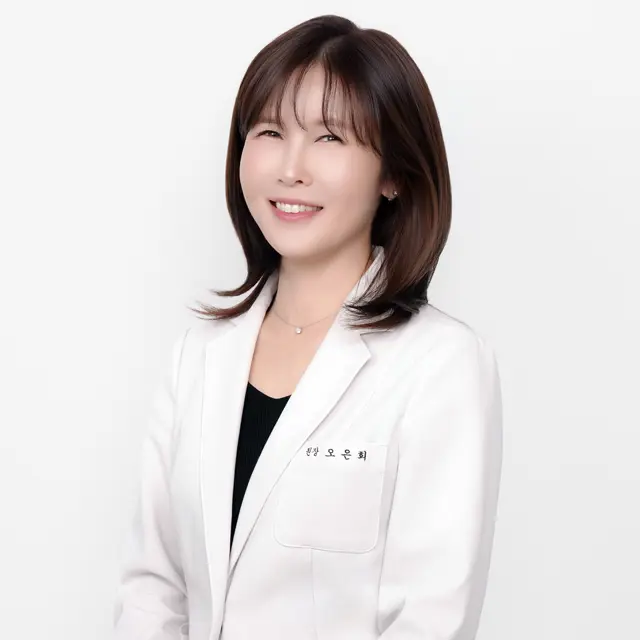
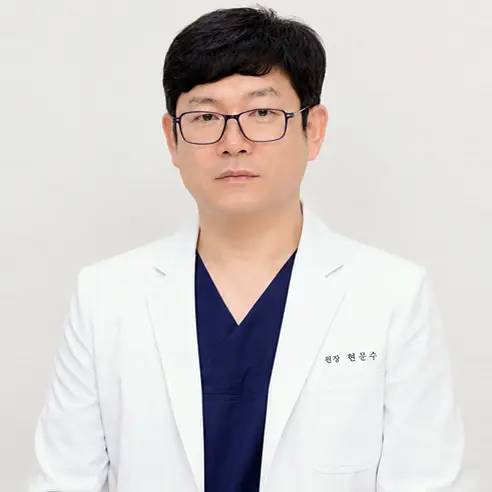
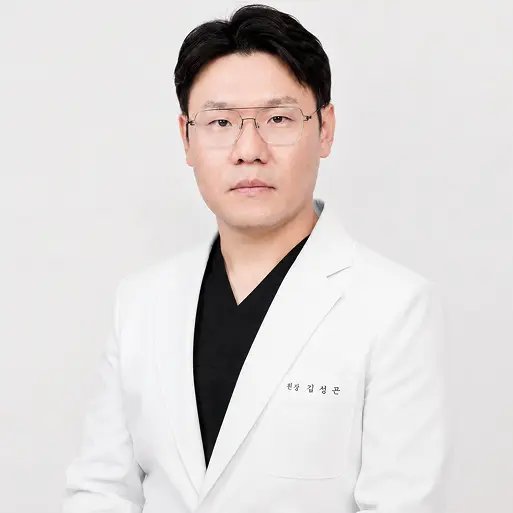
For a cell-based treatment the decision that carries the weight is made before anything is drawn or injected, so the question worth asking is who assesses you, not who holds the syringe. Liyan Clinic names its three doctors publicly and publishes their training and society memberships, and their career details are on their own pages: the Medical Director, Dr. Oh Eunhui, and the two Vice Directors, Dr. Kim Seunkon and Dr. Hyun Moonsu. The clinic does not publish a separate qualification in regenerative medicine for any of them, and this page claims none on their behalf.
Dr. Oh Eunhui is the Medical Director of Liyan Clinic and the clinic's legal representative on its business registration. She graduated from Seoul National University. Before Liyan Clinic she held Vice Director posts at Joy Dermatology and Me&Me Clinic and was Medical Director of The Goun Clinic. She is a full member of the Korean Society of Aesthetic Plastic Surgery and Laser Medicine and of the Korean Society of Laser Dermatology and Hair Research, and a member of the Korean Society of Aesthetic Medicine, the Korean Society of Obesity and Aesthetic Medicine and the Korean Society of Aesthetic Functional Medicine.
Dr. Hyun Moonsu is a Vice Director at Liyan Clinic and a medical specialist associated with Dong-A University. He previously served as Head of the Medical Department at Seogwipo Medical Center, as Director at Mijak Clinic and as Representative Director at Neulbom Miarum Clinic. He is a member of the Basic Aesthetic Research Association, the Korean Society of Laser Dermatology and Hair Research, the Korean Society of Aesthetic Plastic Surgery and Laser Medicine and the Korean Society of Obesity and Aesthetic Medicine.
Dr. Kim Seunkon is a Vice Director at Liyan Clinic. He previously held Director posts at Madi Clinic and at Jeju Clinic before joining Liyan Clinic. He is a member of the Korean Society of Laser Dermatology and Hair Research, the Korean Society of Aesthetic Plastic Surgery and Laser Medicine and the Korean Society of Obesity and Aesthetic Medicine.
All three of Liyan Clinic's doctors are listed as performing doctors for this area of treatment, and the clinic has not published an assignment of particular treatments or sessions to particular doctors, so this page names the team rather than claiming one doctor performs every session.
One note for readers comparing this against a United States practice. Korean medical titles and professional society memberships do not map onto American board certification, and the memberships listed above are memberships, not specialty board credentials. If board status in the American sense is the thing you are checking for, ask the clinic directly rather than reading it into a society list.
Regenerative Medicine and Stem Cell Therapy Options Available
Treatment | Cell source | How it is given | Stated concern |
|---|---|---|---|
the patient's own blood | into the face | skin quality | |
the patient's own blood | intravenously | general wellness |
One preparation, two routes. The clinic publishes no second cell source and no other treatment under this heading, so if you have read about a different kind of stem cell procedure and are expecting to find it here, it is not part of this department. Which of the two routes is discussed with you depends on the concern you arrive with, and that is settled at consultation rather than at booking.
Who Is a Good Candidate for Regenerative Medicine and Stem Cell Therapy?

Every patient at Liyan Clinic speaks with a doctor before treatment begins, and the clinic assesses each face, each skin and each way of living before recommending anything. Candidacy here is a medical judgement made in person, and nothing on this page substitutes for it.
You may be a candidate if
You are an adult in generally good health and medically appropriate for the treatment after a physician's assessment.
Your concern is skin quality, if the treatment is being discussed for the facial route.
Your concern is general wellness, if the treatment is being discussed for the intravenous route.
You want a non-surgical change rather than a surgical one.
You can fit the appointment and one review visit into a trip to Jeju.
You are willing to have suitability decided by a doctor in person rather than settled online before you travel.
You may need to avoid or postpone treatment if
You have a medical condition that raises the risk of treatment.
You have an active infection.
You have an illness that is not currently controlled.
You are pregnant.
You have any other factor identified at assessment that increases the risk of treatment.
Candidacy in this field also turns on a question that is not about you at all: whether there is reasonable clinical evidence for the specific therapy being proposed. That is a fair question to put to the doctor directly, in those words, at consultation. A clinic that answers it plainly — including by saying what is not known — is giving you more than one that answers it enthusiastically.
What to Expect: Procedure, Recovery, and Results Timeline
Stage | What happens |
|---|---|
Consultation | Medical history, current symptoms and diagnosis, physical examination, relevant laboratory or imaging assessment where indicated, and a discussion of expected benefits and risks. |
Preparation | The cell-based product is prepared from the material collected at the appointment. |
Administration | The prepared product is given through the planned route. |
Follow-up | An assessment visit, with the number of visits set by the treatment plan. |
The appointment takes 60 to 90 minutes, including the blood draw and the processing step. The documented downtime for the facial route is injection-site swelling and bruising. Possible risks across this category vary by cell type and administration method and may include pain, swelling, infection, inflammation, bleeding, allergic or immune reactions, or complications related to the procedure itself.
Preparation before the appointment may include a medical history review, a medication review, examination, laboratory testing, imaging, and instructions about food, medications or supplements where these are relevant. Patients are asked to avoid alcohol and smoking beforehand. Do not stop or change any prescribed medication or supplement on your own; tell the medical team what you take, and they will advise whether anything should be paused before treatment. Any fasting, medication or activity instruction given by the medical team takes precedence over general advice, including this page.
Aftercare depends on the treatment given. Instructions may cover activity, care of the injection site, medications, the warning signs that should prompt contact, and follow-up visits. During the initial recovery period patients are asked to avoid strenuous exercise, heavy alcohol use, smoking, and unnecessary pressure on or manipulation of the treated area.
On results, the honest position is a short one. Results in this category are gradual rather than immediate; early changes may become noticeable over several weeks, and any further effect develops over subsequent months, with a final assessment made once enough time has passed for the intended process to play out. Liyan Clinic has not published a time to first visible change, a time to fullest effect, or an expected duration for this treatment, and no such figure is stated here. The change, where it occurs, is a modification rather than a transformation, and the timing and durability vary considerably by condition, product, method and individual response.
Travel affects all of this for an international patient. There is no non-stop route between any United States airport and Jeju International Airport, so United States patients fly into Seoul Incheon — roughly 13 to 14 hours from the West Coast and 14 to 15 hours from the East Coast — and take a domestic connection to Jeju. Seoul Gimpo to Jeju takes about 1 hour 15 minutes, and Liyan Clinic is about 20 minutes by car from Jeju International Airport. United States nationals are exempt from K-ETA from 1 January 2026 to 31 December 2026 under the Korean Ministry of Foreign Affairs notice, and normally enter Korea visa-free for short visits.
Safety, Precision, and Clinic Standards
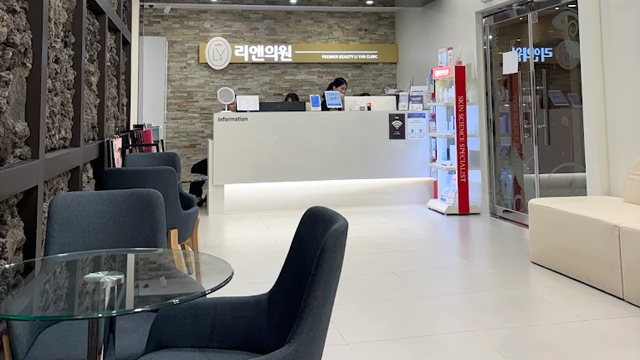
Liyan Clinic opened in Jeju City in 2013, has operated from the same address ever since, and records more than 60,000 cumulative patient visits.
Liyan Clinic is a Registered Medical Institution for Attracting Foreign Patients, certified by the Ministry of Health and Welfare in compliance with the Medical Overseas Expansion and Foreign Patients Attraction Act. That registration is about the institution's standing to treat patients from abroad. It is not a statement about any individual treatment, and it should not be read as one.
Liyan Clinic publishes no case volume, no outcome rate and no complication rate for this treatment, and this page claims none.
The United States Food and Drug Administration has issued a public safety alert about the marketing of unapproved stem cell and exosome products, describing serious adverse events reported in patients who received them and advising that a patient confirm a product is covered by an active investigational new drug application before agreeing to treatment (FDA — public safety alert on unapproved stem cell and exosome products). The same alert states plainly that no exosome product has been approved by that agency. Patient resources published by the International Society for Stem Cell Research take the same line from the professional side and set out how a patient can tell a proven treatment from an unproven one, and what questions to ask before consenting (ISSCR — A Closer Look at Stem Cells). Both bodies are describing the treatment category, not this clinic or its preparation, and both are worth reading before a consultation rather than after it.
Where this page describes what treatments in this category are known and not known to do, the source is the regulator or the professional society named in the citation. Where it describes what happens at an appointment in Jeju, the source is the clinic. Those two are kept apart deliberately, and a claim that appears in neither place does not appear on this page.
The Bottom Line
This department contains one documented treatment: an autologous, blood-derived preparation given into the face or intravenously.
The appointment is 60 to 90 minutes including blood draw and processing, and the facial route has documented injection-site swelling and bruising.
The clinic publishes no outcome data, no case numbers and no expected duration of effect for this treatment, and none is asserted here.
Regulator and professional-society guidance on stem cell treatments as a category is cautionary, and this page cites it rather than working around it.
Candidacy is decided by a doctor in person at Liyan Clinic in Jeju, and the evidence question is one you are entitled to ask in the room.
Frequently Asked Questions
Is stem cell treatment in Korea safe?
Safety in this category depends on what is actually in the preparation, how it is given, and who assesses you first. The documented risks for injection-based approaches include pain, swelling, infection, inflammation, bleeding, and allergic or immune reactions. Both the FDA alert and the ISSCR patient resources cited on this page were written for patients asking exactly this question, and they are the right first stop before any specific clinic's material.
How many days should I stay in Korea?
The recommended stay depends on the treatment plan, the number of sessions and whether follow-up is needed, and there is no single number that covers this category. Treatment duration and the number of visits depend on the specific therapy and the medical indication, both of which are settled at the consultation. Confirm the schedule with the clinic before booking flights rather than after.
When can I fly home?
Flying is generally possible once you are medically stable and any immediate effects such as swelling, soreness or fatigue are manageable. The timing depends on the specific treatment and on how it was administered, so it is a question for the treating doctor rather than a fixed rule. Build at least one buffer day into the itinerary so the answer does not have to be rushed.
How much does this treatment cost?
Liyan Clinic has not published a price or a price range for this treatment, so none is stated on this page, and cost is confirmed at consultation. You can raise it during an online consultation before committing to travel. Ask what is and is not included in whatever figure you are given.
Will the doctor speak English, and can I consult online first?
Liyan Clinic has an English-speaking team, and online consultation is available. An online consultation is a reasonable way to ask about scheduling, suitability in general terms and what to bring. It does not replace the in-person assessment, which is where suitability for this treatment is actually decided.
How is this different from the clinic's other injectable treatments?
This department uses material derived from your own blood, prepared at the appointment. The clinic's skin booster and injectable rejuvenation treatments work by a different mechanism and are a separate part of its range. Which is appropriate, if either is, depends on the concern you present with and on the doctor's assessment.
What results are realistic?
Results vary by the condition being treated, the therapy used, individual response and the goal that was set. Improvements in this category develop gradually, and the purpose of treatment is to support a process rather than to produce a fixed correction. Liyan Clinic publishes no outcome figures for this treatment, so no numerical expectation is offered here.
What should I check before choosing any clinic for this?
Three things are verifiable before you travel: how long the clinic has been at its address, whether the doctors are named with their careers published, and what the clinic will and will not claim in writing about the treatment. Liyan Clinic has been at the same Jeju City address since 2013 and names three doctors publicly. The fourth thing to check is not about the clinic at all — read the regulator and society guidance on this category first, so you arrive at the consultation already knowing what to ask.
Book a Consultation at Liyan Clinic
Regenerative medicine and stem cell therapy at Liyan Clinic in Jeju is a single autologous, blood-derived preparation, and whether it is appropriate for you is a decision made in consultation.
Liyan Clinic is at 3rd Floor, 371 Jungang-ro, Jeju-si, Jeju-do, South Korea, and opens Monday 10:00-19:00, Tuesday 10:00-20:00, Thursday 10:00-19:00, Friday 10:00-20:00 and Saturday 10:00-15:30, closed Wednesdays, Sundays and Korean public holidays. Note the Wednesday and Sunday closures when planning a short itinerary, since they determine which day your treatment can fall on.
English-speaking assistance is available for both online and in-person consultations at Liyan Clinic, and enquiries are handled through the clinic's contact page. Use the Liyan Clinic contact page to ask a question or to request an appointment date.
Disclaimer
This page is for general informational purposes and does not constitute individualized medical advice. Candidacy, technique, and expected outcomes can only be determined through a consultation with a qualified physician.
Sources & Further Reading
FDA — public safety alert on unapproved stem cell and exosome products — serious adverse events reported after unapproved products, no approved exosome product, and the advice to confirm an active investigational new drug application before treatment: https://www.fda.gov/safety/medical-product-safety-information/public-safety-alert-due-marketing-unapproved-stem-cell-and-exosome-products
ISSCR — A Closer Look at Stem Cells, patient resources — how to tell a proven stem cell treatment from an unproven one, what to ask before consenting, and why most clinic-marketed treatments in this category are unproven: https://www.closerlookatstemcells.org/patient-resources
Related Services
Procedures available within our clinical departments.
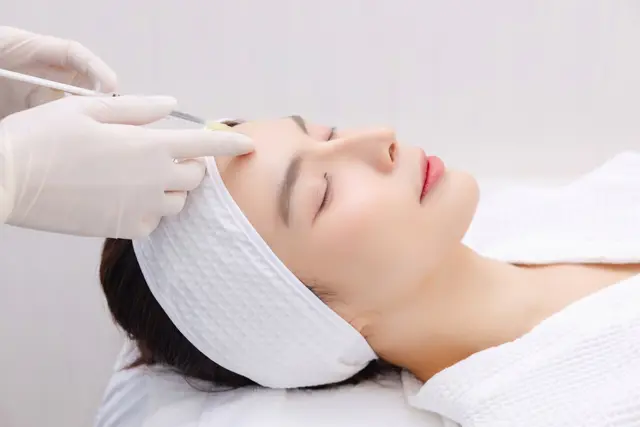
Radiesse
Radiesse is an injectable implant of synthetic calcium hydroxylapatite microspheres in a gel carrier, used to restore facial volume and improve the appearance of wrinkles and folds, and capable of stimulating a collagen and elastin response as well.
Learn More
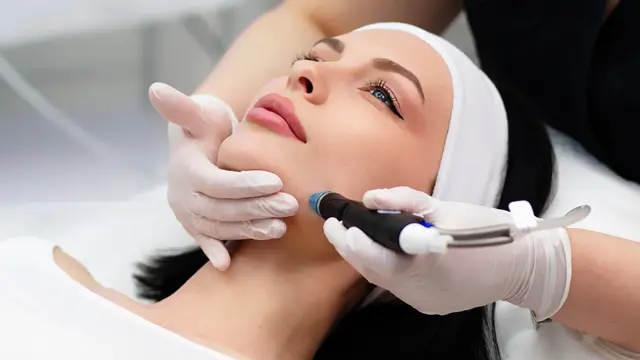
Aqua Peel
Aqua Peel is a hydro-dermabrasion facial: a handpiece combines liquid flow with vacuum suction to lift surface debris out of the pores while an exfoliating or cleansing solution loosens it.
Learn More
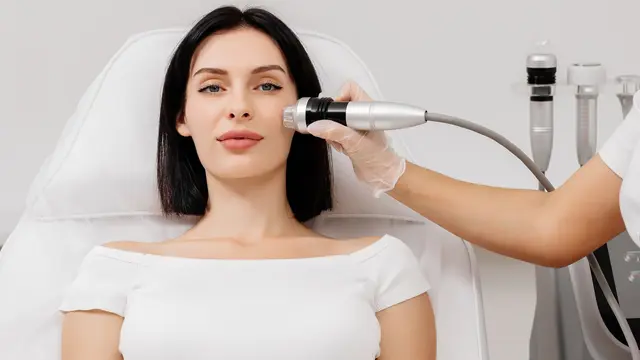
Thermage FLX RF
Thermage FLX, made by Solta Medical, is a radiofrequency system that delivers controlled RF heating to the skin and underlying tissue and may add skin vibration during treatment.
Learn More