Personalized Medical Care & Dedicated International Patient Concierge


Regenerative Medicine & Stem Cell Therapy · Consultation Required
Novastem Autologous Blood-Derived Stem Cell Treatment
Novastem Autologous Blood-Derived Stem Cell Treatment uses stem-cell-related components taken from the patient's own blood, prepared at the clinic and administered according to the treatment plan, with the stated intention of supporting tissue repair and regeneration.
Schedule a ConsultationNovastem Autologous Blood-Derived Stem Cell Treatment in Jeju, Korea

Medically reviewed by Dr. Oh Eunhui, Medical Director, Liyan Clinic
Novastem Autologous Blood-Derived Stem Cell Treatment is a regenerative treatment offered at Liyan Clinic in Jeju, Korea that uses stem-cell-related components derived from the patient's own blood, prepared during the visit and then given either into the face or intravenously. Liyan Clinic opened in Jeju City in 2013, has operated from the same address ever since, and records more than 60,000 cumulative patient visits. This page sets out the material, the appointment and the limits, in that order, and it is deliberate that the limits get as much space as the rest.
What Is Novastem Autologous Blood-Derived Stem Cell Treatment?
Novastem Autologous Blood-Derived Stem Cell Treatment uses stem-cell-related components taken from the patient's own blood, prepared at the clinic and administered according to the treatment plan, with the stated intention of supporting tissue repair and regeneration.
Autologous means the biological material starts and ends with the same person: blood is drawn from you at the appointment, processed, and given back to you. Nothing is sourced from a donor.
The preparation is dosed by kit, so the quantity administered is set by the kit rather than assembled on the spot.
Two routes are documented. Given into the face, the stated concern is skin quality; given intravenously, the stated concern is general wellness.
The full appointment runs 60 to 90 minutes, and the blood draw and the processing step both sit inside that window.
The technique in this category generally consists of collecting blood, processing the collected material to a protocol, and administering it; the steps documented for this treatment are consultation, collection, preparation and administration, and no other step is listed.
It is worth separating two things that often get merged in marketing copy. "Autologous" answers a question about where the material came from. It does not answer the question of whether a given preparation does what it is said to do, which is a separate question and is addressed further down this page rather than skipped.
Who Performs Novastem Autologous Blood-Derived Stem Cell Treatment at Liyan Clinic
|
|
|
Dr. Oh Eunhui, Medical Director | Dr. Hyun Moonsu, Vice Director | Dr. Kim Seunkon, Vice Director |
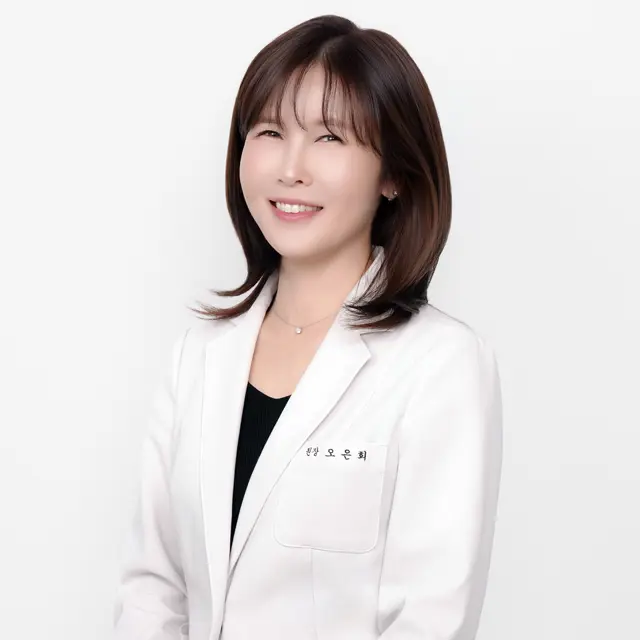
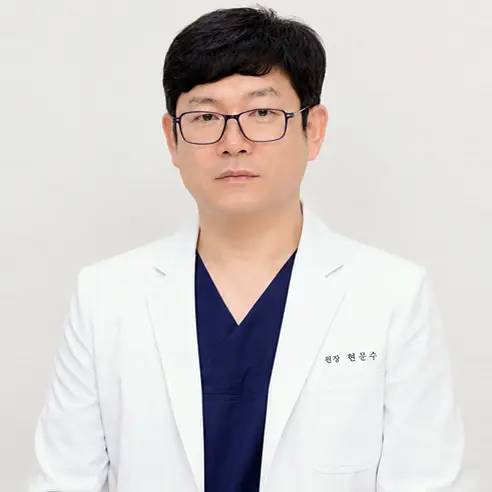

A treatment that begins with drawing your blood and ends with putting a preparation of it back is, first and last, a physician's judgement about whether it should happen at all. Liyan Clinic publishes the careers of the doctors who make that judgement, and each has a profile page — Dr. Oh Eunhui, Dr. Hyun Moonsu, and Dr. Kim Seunkon. No specific regenerative-medicine qualification is published for any of the three, and none is claimed for them here; what is published is set out below, unedited.
Dr. Oh Eunhui is the Medical Director of Liyan Clinic and the clinic's legal representative on its business registration. She graduated from Seoul National University. Before Liyan Clinic she held Vice Director posts at Joy Dermatology and Me&Me Clinic and was Medical Director of The Goun Clinic. She is a full member of the Korean Society of Aesthetic Plastic Surgery and Laser Medicine and of the Korean Society of Laser Dermatology and Hair Research, and a member of the Korean Society of Aesthetic Medicine, the Korean Society of Obesity and Aesthetic Medicine and the Korean Society of Aesthetic Functional Medicine.
Dr. Hyun Moonsu is a Vice Director at Liyan Clinic and a medical specialist associated with Dong-A University. He previously served as Head of the Medical Department at Seogwipo Medical Center, as Director at Mijak Clinic and as Representative Director at Neulbom Miarum Clinic. He is a member of the Basic Aesthetic Research Association, the Korean Society of Laser Dermatology and Hair Research, the Korean Society of Aesthetic Plastic Surgery and Laser Medicine and the Korean Society of Obesity and Aesthetic Medicine.
Dr. Kim Seunkon is a Vice Director at Liyan Clinic. He previously held Director posts at Madi Clinic and at Jeju Clinic before joining Liyan Clinic. He is a member of the Korean Society of Laser Dermatology and Hair Research, the Korean Society of Aesthetic Plastic Surgery and Laser Medicine and the Korean Society of Obesity and Aesthetic Medicine.
All three of Liyan Clinic's doctors are listed as performing doctors for this area of treatment, and the clinic has not published an assignment of particular treatments or sessions to particular doctors, so this page names the team rather than claiming one doctor performs every session.
This treatment sits under the clinic's regenerative medicine and stem cell therapy department, which contains no other procedure.
Who Is a Good Candidate for Novastem Autologous Blood-Derived Stem Cell Treatment?

Every patient at Liyan Clinic speaks with a doctor before treatment begins, and the clinic assesses each face, each skin and each way of living before recommending anything. For this treatment that consultation is not a formality ahead of a booking already made; it is where the question of whether to proceed is actually answered.
You may be a candidate if
You are an adult who is medically appropriate for an autologous regenerative treatment following a physician's assessment.
You are specifically interested in a treatment that uses your own blood-derived material rather than a manufactured product.
Your concern is skin quality and the facial route is the one under discussion.
Your concern is general wellness and the intravenous route is the one under discussion.
You are looking for a non-surgical option.
You can schedule the appointment and one review visit within a trip to Jeju.
What the assessment weighs before saying yes
Your medical history.
Your current state of health.
The medications you are taking.
Blood-related factors, which matter here because the treatment begins with a blood draw.
The condition being treated and what is realistically being asked of the treatment.
Suitability is decided by a doctor at Liyan Clinic in person, not online. An online consultation beforehand is useful for logistics and for general questions, but it cannot stand in for the assessment above, and a clinic that offered to settle candidacy for a cell-based treatment over a message thread would be telling you something about its standards.
What to Expect: Procedure, Recovery, and Results Timeline
Stage | What happens |
|---|---|
Consultation and assessment | A physician consultation and medical assessment to determine whether the treatment is appropriate at all. |
Blood collection | Blood is collected from the patient in the same way as a standard blood draw. |
Preparation | The autologous cellular product is prepared from the collected blood, dosed by kit. |
Administration | The prepared material is given by the planned route — into the face, or intravenously. |
Review | Follow-up appointments as set by the treatment plan, to monitor recovery and assess response. |
The whole appointment takes 60 to 90 minutes, and the preparation step is the reason it is not shorter. Blood collection causes the brief discomfort of a normal blood draw. Any further discomfort depends on how and where the prepared material is then administered. The documented downtime for the facial route is swelling and bruising at the injection site.
The risks recorded for this treatment are temporary pain, bruising, swelling, bleeding or infection related to the blood collection or to the administration. Other risks depend on the specific cellular treatment given. Temporary soreness, redness, swelling or bruising may occur depending on the collection and administration method, and these usually settle during the recovery period. Recovery itself is individualised and varies with the method used and the condition being treated.
Before the appointment, follow the physician's instructions on medications, hydration, food intake and any required medical testing, and stay adequately hydrated unless you have been told otherwise. Avoid alcohol beforehand. Tell the doctor about every medication and supplement you take, including ones you would not think to mention. Afterwards, follow the clinic's individual instructions, monitor the treatment area where that applies, and report unusual or persistent symptoms to the treating physician.
On timing of results, this page will not give you a number, because the clinic has not published one. Results may become noticeable gradually rather than immediately, and the timing varies with the purpose of treatment, the protocol and the individual biological response. The final result varies between individuals and may take time to develop, and it is judged at follow-up assessment rather than on a date fixed in advance. No time to first visible change, no time to peak effect and no expected duration has been published by Liyan Clinic for this treatment, and inventing one to fill the gap would be the opposite of useful.
Before you fly home
International patients leave the clinic and then leave the country, which makes a short list of practical questions worth settling in the room rather than from an airport. Ask the treating doctor, at the appointment:
Which symptoms belong to normal recovery, and which ones mean you should seek medical attention wherever you are.
Whether there is any restriction on air travel in your case, and when it lifts.
Whether dry cabin air, sun exposure through an aircraft window, or makeup matter for your recovery, and if so for how long.
What medication you may take afterwards, and whether anything prescribed can be obtained in the United States.
What written documentation of the treatment you can take home in English for your own physician or dermatologist — product name, what was given, and how.
Whether recovery photographs can be sent from abroad for review, and if so, to whom.
Who holds your clinical photographs, where they are stored, and what consent you have given for any further use of them.
What the clinic's follow-up hours are in your time zone, given that Korea runs on UTC+9 with no daylight saving.
Safety, Precision, and Clinic Standards

Liyan Clinic states a genuine-product, full-dose principle, and opens the product in front of the patient so that the product and its dose are visible. Since this preparation is dosed by kit, that principle is something you can observe directly on the day.
Liyan Clinic is a Registered Medical Institution for Attracting Foreign Patients, certified by the Ministry of Health and Welfare in compliance with the Medical Overseas Expansion and Foreign Patients Attraction Act. That is a standing granted to the institution for treating patients from abroad, and nothing more should be read into it than that.
Liyan Clinic publishes no case volume, no outcome rate and no complication rate for this treatment, and this page claims none.
Patients considering any treatment in this category should read what the regulators and the professional societies say about it first. The United States Food and Drug Administration has published a safety alert warning consumers about unapproved stem cell and exosome products, reporting serious adverse events in patients who received them and setting out what a patient should verify before agreeing to treatment with one (FDA — public safety alert on unapproved stem cell and exosome products). The International Society for Stem Cell Research maintains patient resources built around the same problem, explaining how treatments in this field are evaluated, why so many of those marketed to the public remain unproven, and which questions separate a credible offer from an incredible one (ISSCR — A Closer Look at Stem Cells). Neither body is describing Liyan Clinic or its preparation; both are describing a category, and both are addressed to patients rather than to clinicians.
That distinction is the whole basis of this page. Liyan Clinic is the source for what the appointment consists of. The regulator and the society are the source for what is and is not established about treatments of this kind. Nothing here borrows the second to speak for the first, and a reader who noticed that no claim of effectiveness appears anywhere above has read the page correctly.
The Bottom Line
The material is autologous: drawn from your own blood at the appointment, processed, and returned to you, dosed by kit.
The appointment is 60 to 90 minutes, and blood collection feels like a standard blood draw.
Documented risks are temporary pain, bruising, swelling, bleeding and infection tied to the collection or the administration.
No outcome figures, case numbers or expected duration of effect are published by the clinic for this treatment, and none appear here.
Regulator and society guidance on this category is cautionary and is cited above; read it before the consultation, not after the treatment.
Frequently Asked Questions
What actually happens during the appointment?
Blood is collected, the blood-derived cellular material is prepared, and it is administered according to the treatment plan. Allow 60 to 90 minutes in total, most of which is collection and preparation rather than administration. The exact duration varies by protocol, and the clinic can confirm the expected appointment length once you have consulted.
Is it painful?
The blood collection causes brief discomfort comparable to any standard blood draw. What you feel after that depends on how and where the prepared material is administered. If the facial route is planned, expect the sensation associated with injections into the skin, and expect swelling and bruising at the injection sites afterwards.
How should I prepare, and what should I avoid beforehand?
Follow the clinic's pre-treatment instructions and stay adequately hydrated unless told otherwise. Bring your medical history, your current medication list, any allergies and any relevant health information to the consultation. Avoid alcohol beforehand, and follow whatever instructions you are given about medications, supplements, food and strenuous exercise.
What documents or photographs should I bring?
Expect to be asked for basic medical history, current medication details, records of previous treatments and any relevant medical test results. Photographs may be requested where they help in assessing the treatment area. Bringing these in advance saves consultation time, which matters when your trip has a fixed length.
Can this be combined with another treatment?
Combining it with another procedure may be possible depending on your condition, your treatment goals and safety considerations, and that decision belongs to a qualified medical professional rather than to a booking preference. Liyan Clinic has not published a list of combinations for this treatment, so no specific pairing is suggested here. Raise it at consultation and ask for the reasoning either way.
How is this different from the other injectable treatments the clinic offers?
The difference is the source of the material. Here it comes from your own blood; the clinic's skin booster treatments use manufactured products and work by a different mechanism. Which of them is appropriate, if either is, depends on your goals and on the doctor's assessment, not on which sounds more advanced.
How much does it cost?
Liyan Clinic has not published a price or a price range for this treatment, so none is stated on this page, and cost is confirmed at consultation. English-speaking assistance is available if you want to raise it in an online consultation first. Ask specifically what a quoted figure includes and what it does not.
How many follow-up visits will I need?
The number varies with the treatment plan and with individual need. Follow-up appointments may be recommended to monitor recovery and to evaluate the response to treatment. If you are travelling from abroad, agree the follow-up arrangement before you book flights, since one review visit inside the same trip is the common pattern.
Book a Consultation at Liyan Clinic
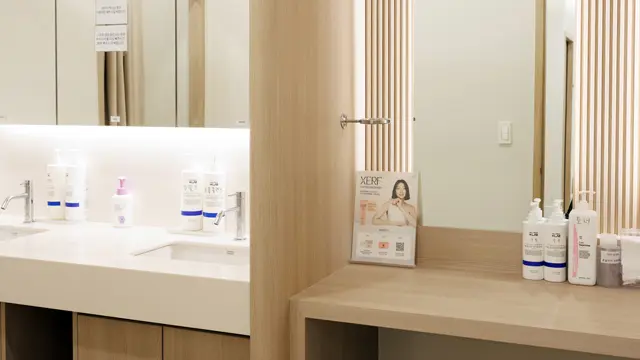
Novastem Autologous Blood-Derived Stem Cell Treatment is carried out at Liyan Clinic in Jeju, and whether it is appropriate for you is a question the consultation exists to answer honestly, including when the answer is no.
Liyan Clinic is at 3rd Floor, 371 Jungang-ro, Jeju-si, Jeju-do, South Korea, and opens Monday 10:00-19:00, Tuesday 10:00-20:00, Thursday 10:00-19:00, Friday 10:00-20:00 and Saturday 10:00-15:30, closed Wednesdays, Sundays and Korean public holidays.
English-speaking assistance is available for both online and in-person consultations at Liyan Clinic, and enquiries are handled through the clinic's contact page. Appointment requests and questions can be sent through the Liyan Clinic contact page.
Disclaimer
This page is for general informational purposes and does not constitute individualized medical advice. Candidacy, technique, and expected outcomes can only be determined through a consultation with a qualified physician.
Sources & Further Reading
ISSCR — A Closer Look at Stem Cells, patient resources — patient-facing explanation of how treatments in this field are evaluated, why most marketed directly to the public are unproven, and what to ask a clinic: https://www.closerlookatstemcells.org/patient-resources
FDA — public safety alert on unapproved stem cell and exosome products — what the agency reports about serious adverse events following unapproved products in this category, and what a patient should verify before consenting to treatment: https://www.fda.gov/safety/medical-product-safety-information/public-safety-alert-due-marketing-unapproved-stem-cell-and-exosome-products
Other Services
Explore additional treatments offered by our specialists.
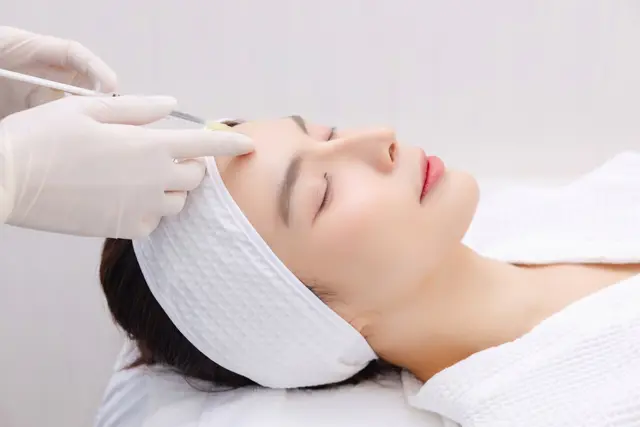
Radiesse
Radiesse is an injectable implant of synthetic calcium hydroxylapatite microspheres in a gel carrier, used to restore facial volume and improve the appearance of wrinkles and folds, and capable of stimulating a collagen and elastin response as well.
Learn More
Aqua Peel
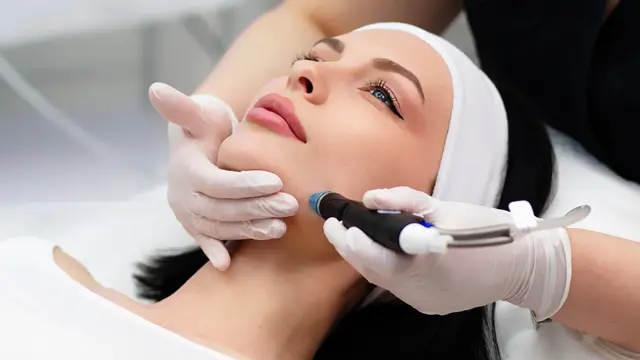
Aqua Peel is a hydro-dermabrasion facial: a handpiece combines liquid flow with vacuum suction to lift surface debris out of the pores while an exfoliating or cleansing solution loosens it.
Learn More
Thermage FLX RF
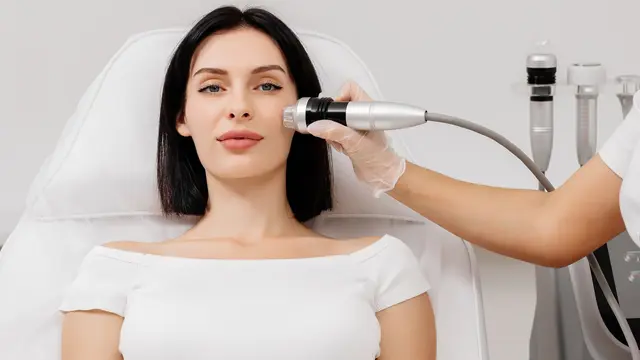
Thermage FLX, made by Solta Medical, is a radiofrequency system that delivers controlled RF heating to the skin and underlying tissue and may add skin vibration during treatment.
Learn More