Personalized Medical Care & Dedicated International Patient Concierge


Specialty Overview
Facial Lifting & Skin Tightening
Facial lifting and skin tightening in Jeju, Korea: six non-surgical ultrasound and radiofrequency treatments at Liyan Clinic, planned by its three doctors.
Schedule a ConsultationFacial Lifting and Skin Tightening in Jeju, Korea

Medically reviewed by Dr. Oh Eunhui, Medical Director, Liyan Clinic
Facial lifting and skin tightening at Liyan Clinic in Jeju, Korea is a group of six non-surgical treatments that put either ultrasound or radiofrequency energy into facial tissue to improve mild-to-moderate laxity. Three of the six are ultrasound platforms and three are radiofrequency platforms, and none of them makes an incision or removes skin. This page is the umbrella: it covers what the category does, what it does not do, and how the six are told apart, and it leaves each platform's own numbers to its own page.
What Is Facial Lifting & Skin Tightening?
Facial lifting and skin tightening is a group of non-surgical aesthetic treatments in which controlled ultrasound or radiofrequency energy is delivered into targeted tissue, producing heating that can cause tissue contraction and stimulate collagen remodeling over the following months. The mechanical facts a patient should hold onto are short:
The working agent is heat placed at a chosen depth, not a cut. Nothing is excised and nothing is closed.
The energy modality is a decision. Ultrasound systems deliver energy to selected tissue depths; radiofrequency systems heat the dermal and deeper tissue, with the affected layers depending on the device.
The areas that can be addressed include the brow, cheeks, jawline, the area under the chin and the neck, depending on which device is used and what that device is indicated for.
The response is slow. Improvement develops rather than appears, and how much of it a given face shows varies between patients.
There is a ceiling. Substantial excess skin cannot be removed by energy, and where tissue descent is advanced, this category will under-deliver against a facelift or neck lift.
The areas named above are not arbitrary either. In the United States, microfocused ultrasound with visualization is the category recorded for non-invasive lift of the brow, the submental area and the neck (FDA — Ulthera 510(k) K134032), and those regions are what ultrasound-based lifting is generally discussed against.
That ceiling is not a caveat invented for this page. The American Society of Plastic Surgeons describes non-surgical facial tightening as producing moderate and temporary change, with surgery remaining the option once it no longer answers the problem (ASPS — Nonsurgical facelift). A consultation exists in part to decide which side of that line a particular face is on.
Who Performs Facial Lifting & Skin Tightening at Liyan Clinic
|
|
|
Dr. Oh Eunhui, Medical Director | Dr. Hyun Moonsu, Vice Director | Dr. Kim Seunkon, Vice Director |
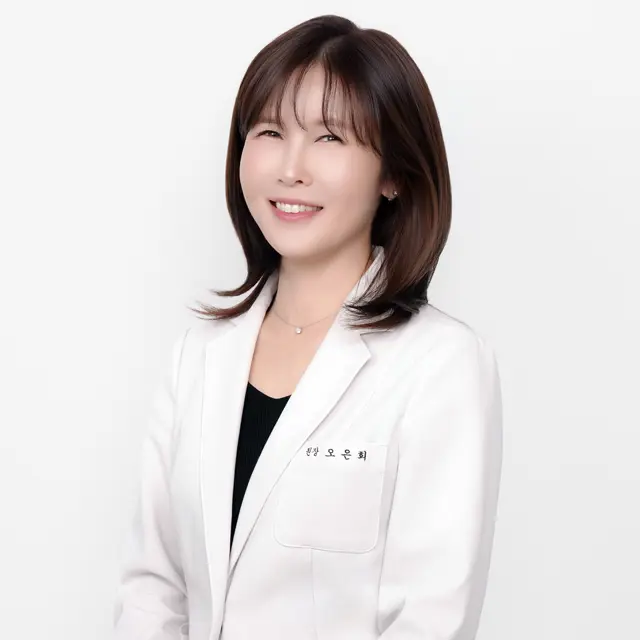
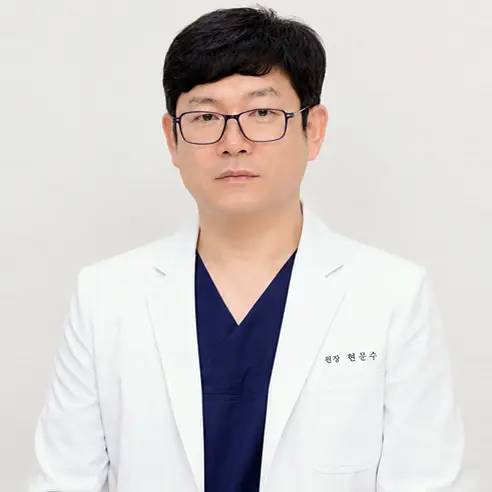

Energy-based lifting is less a manual procedure than a series of planning decisions — which modality, what depth, how much dose, which part of the face — and those decisions are made in the room after the face has been examined. Liyan Clinic runs six platforms in this category, which means the first question at a lifting consultation is not how a device is operated but which of the six, if any, matches the finding. The doctors below are the ones who make that call.
Dr. Oh Eunhui is the Medical Director of Liyan Clinic and the clinic's legal representative on its business registration. She graduated from Seoul National University. Before Liyan Clinic she held Vice Director posts at Joy Dermatology and Me&Me Clinic and was Medical Director of The Goun Clinic. She is a full member of the Korean Society of Aesthetic Plastic Surgery and Laser Medicine and of the Korean Society of Laser Dermatology and Hair Research, and a member of the Korean Society of Aesthetic Medicine, the Korean Society of Obesity and Aesthetic Medicine and the Korean Society of Aesthetic Functional Medicine. Her full profile is at Dr. Oh Eunhui.
Dr. Hyun Moonsu is a Vice Director at Liyan Clinic and a medical specialist associated with Dong-A University. He previously served as Head of the Medical Department at Seogwipo Medical Center, as Director at Mijak Clinic and as Representative Director at Neulbom Miarum Clinic. He is a member of the Basic Aesthetic Research Association, the Korean Society of Laser Dermatology and Hair Research, the Korean Society of Aesthetic Plastic Surgery and Laser Medicine and the Korean Society of Obesity and Aesthetic Medicine.
Dr. Kim Seunkon is a Vice Director at Liyan Clinic. He previously held Director posts at Madi Clinic and at Jeju Clinic before joining Liyan Clinic. He is a member of the Korean Society of Laser Dermatology and Hair Research, the Korean Society of Aesthetic Plastic Surgery and Laser Medicine and the Korean Society of Obesity and Aesthetic Medicine.
All three of Liyan Clinic's doctors are listed as performing doctors for this area of treatment, and the clinic has not published an assignment of particular treatments or sessions to particular doctors, so this page names the team rather than claiming one doctor performs every session.
Facial Lifting & Skin Tightening Options / Types Available
Six treatments sit under this heading. They split first by energy type, and that split is the one that matters most, because ultrasound and radiofrequency reach tissue differently and are therefore chosen for different findings.
Treatment | Energy delivered | Full detail |
|---|---|---|
Ultherapy PRIME Lifting | Ultrasound | |
Shurink Lifting | Ultrasound | |
V-RO Ultrasound Lifting | Ultrasound | |
Thermage FLX RF | Radiofrequency | |
XERF RF Lifting | Radiofrequency | |
Oligio RF Skin Tightening | Radiofrequency |
Two of the six, Ultherapy PRIME Lifting and Shurink Lifting, are named by Liyan Clinic among its signature programs. Ultherapy PRIME uses microfocused ultrasound with real-time imaging, which lets the operator see tissue layers and select the depth at which energy is placed rather than estimating it from the surface. The device-level numbers for each of the six — session length, dose units, when change becomes visible, how long it is discussed as lasting — differ enough that stating a single figure for the group would be wrong, and each is stated on its own page.
What the doctor is weighing when selecting among them is set out plainly: skin quality, the degree and location of laxity, facial anatomy, the patient's goal and the medical history. The clinic's stated position is that the energy modality is tailored to the laxity, the area and the goal, rather than one platform being offered as the answer to everything. A patient who arrives asking for a specific device by name should expect to be told if the finding points somewhere else.
Who Is a Good Candidate for Facial Lifting & Skin Tightening?
Every patient at Liyan Clinic speaks with a doctor before treatment begins, and the clinic assesses each face, each skin and each way of living before recommending anything. Candidacy for this category is decided at that assessment, not from photographs sent in advance.
You may be a candidate if
You are an adult in generally good health with mild-to-moderate skin laxity or reduced firmness.
Your concern is early laxity along the jawline or neck, or loss of firmness in the mid-face, rather than a large volume of loose skin.
You want an approach without incisions and are prepared for gradual rather than immediate change.
You understand that the result is a modification of what is already there, not a surgical-level lift.
Your expectations can be stated in specific terms that a doctor can confirm or correct at the consultation.
You may need to avoid or postpone treatment if
You have an implanted electronic device, which is a common exclusion across energy-based platforms and depends on the specific device selected.
There is an active skin infection, inflammation or an open wound in the area that would be treated.
You are pregnant, or there is another circumstance in which postponement is the safer course.
You have a medical condition that the treating doctor judges to raise the risk of energy-based treatment.
Suitability is device-specific as well as patient-specific, so an exclusion that rules out one of the six does not automatically rule out the others. The treating clinician makes the final determination.
What to Expect: Procedure, Recovery, and Results Timeline
The visit follows the same arc whichever platform is chosen. The doctor assesses the area and confirms suitability. The technology, treatment area and settings are selected. The skin is cleansed and prepared, and topical numbing may be used depending on the device and the plan. Energy is then delivered to the mapped area while the clinician monitors comfort and the condition of the treated skin. The area is inspected once delivery is complete. Aftercare instructions covering skincare, heat and sun exposure and activity follow, and a review or maintenance treatment may be recommended according to the device and the individual response.
Appointment length across the group runs from roughly 20 to 90 minutes, depending on which platform is used and how much dose is delivered. No overnight stay is involved in any of the six.
Stage | What is generally observed across the group |
|---|---|
Day 0 | Warmth, redness, tenderness or swelling in the treated area, varying by treatment |
Days 1–3 | Temporary sensitivity or swelling persists in some patients |
Week 1 | Most temporary effects settle, though individual recovery varies |
Weeks 2–6 | Early tightening may begin to be noticeable, with first visible change commonly from about four to six weeks |
Months 2–6 | Collagen remodeling and the overall response continue to develop; fullest effect falls in this window for most platforms |
Months 6–24 | Duration is discussed as anywhere from about six to twenty-four months, depending on the platform and the dose |
Before the appointment, the useful sequence is: confirm consultation and travel about four weeks out; give the clinic the medical history, medications, allergies and recent aesthetic treatments one to two weeks out, and ask whether any medication or skincare change is needed; follow the clinic's instructions on skincare, sun exposure, makeup and topical products; and arrive with the area clean, carrying identification and relevant medical information. For a patient traveling from the United States, the clinic should confirm when flying, strenuous exercise and other activities are appropriate after the specific treatment selected, because that advice belongs to the device and not to the category.
Liyan Clinic has not published a price or a price range for this treatment, so none is stated on this page, and cost is confirmed at consultation. What does affect what a plan involves is stated: the technology, the treatment area, the number of shots or lines, the energy level, the number of sessions, whether treatments are combined, and the individual plan itself.
Combining Facial Lifting & Skin Tightening with Other Treatments
Combination is possible in this category, but Liyan Clinic does not publish a fixed combination protocol, and suitability is determined after assessment rather than offered as a package. Within the clinic's own range, the treatments most often discussed alongside lifting are:
Ultherapy PRIME Lifting, named by the clinic among its signature programs
Shurink Lifting, also named among the signature programs
InMode, which sits in the clinic's contouring category rather than this one
Because the six platforms in this group all work by heating tissue, stacking them is a clinical decision about total energy and tissue tolerance, not a matter of preference. Ask for the reasoning, and expect the answer to be specific to your face.
Safety, Precision, and Clinic Standards
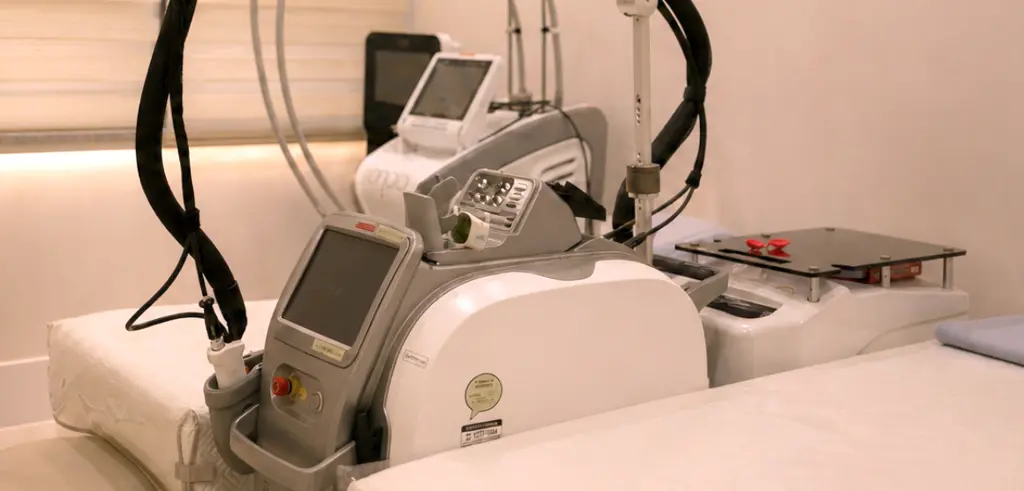
Liyan Clinic is a Registered Medical Institution for Attracting Foreign Patients, certified by the Ministry of Health and Welfare in compliance with the Medical Overseas Expansion and Foreign Patients Attraction Act. Liyan Clinic opened in Jeju City in 2013, has operated from the same address ever since, and records more than 60,000 cumulative patient visits.
Liyan Clinic publishes no case volume, no outcome rate and no complication rate for this treatment, and this page claims none. That absence is stated rather than filled, because a number invented to satisfy a reader is worse than no number.
The risks of the category are real and worth reading before the consultation rather than during it. Common temporary effects include redness, warmth, swelling, tenderness, sensitivity, tingling or discomfort in the treated area. Less common complications, depending on the technology and the settings used, include burns, blistering, prolonged changes in sensation, bruising, pigmentation changes and unintended tissue injury. Severe or worsening pain, significant swelling, blistering or marked skin changes are reasons to contact the clinic promptly rather than wait. The exact risk profile and the warning signs differ by device and should be confirmed for the platform selected.
United States patients are accustomed to checking a practitioner through a specialty board, and the American Academy of Dermatology's guidance on choosing a dermatologist is built around that check and around the questions to ask before a cosmetic consultation (AAD — How to select a dermatologist). Korean qualifications and society memberships do not map onto that system, which is why the credential paragraphs above list what each doctor's memberships actually are rather than translating them into an American equivalent.
The Bottom Line
Six treatments sit under this heading at Liyan Clinic: three ultrasound platforms and three radiofrequency platforms, none of them surgical.
The choice between them is a clinical finding about depth and laxity, made after the face is examined, not a menu selection made in advance.
Change is gradual: commonly first visible from about four to six weeks, fullest at about two to six months, and discussed as lasting from roughly six to twenty-four months depending on platform and dose.
Energy cannot remove excess skin. Where the anatomy calls for surgery, this category will disappoint.
The clinic publishes no outcome figures for this category, and none are claimed here.
Frequently Asked Questions
How do I choose between six lifting treatments at one clinic?
You do not choose first; the assessment does. The doctor examines skin quality, how much laxity there is and where it sits, facial anatomy and your stated goal, then matches a modality and a depth to that finding. Arriving with a preferred device name is fine, and being told the finding points elsewhere is a normal outcome of the consultation.
Is non-surgical lifting a substitute for a facelift?
No. These treatments do not involve incisions and do not remove excess skin, so they produce more gradual and more modest tightening than surgery does. Where there is significant skin laxity or advanced tissue descent, a surgical procedure provides a substantially greater correction, and the honest answer at consultation may be that this category is not the right tool.
How long do I need to stay in Jeju for one of these treatments?
Non-surgical lifting does not generally require a prolonged medical stay, and international patients can often fit the treatment into a short visit. The realistic planning constraint is not recovery but the calendar. Arrive at least one full day before treatment. A patient who lands at Jeju and is treated the same day is treated jet-lagged after two flights, and the clinic's Wednesday and Sunday closure means the arrival day has to be chosen so that the treatment day falls on an open day.
When can I fly home?
Most of these treatments have little or no downtime, so travel shortly afterward is often possible. Because the route home from Jeju means a domestic connection and then a long-haul flight, allow enough time to see whether swelling, redness, bruising or discomfort develops before you are in the air. Confirm the timing for your specific treatment with the clinic before you book the return leg.
When will I actually see something?
Some improvement may be noticed relatively soon, but collagen-stimulating treatments develop gradually and the honest first checkpoint is around four to six weeks. The fuller effect generally lands somewhere between two and six months depending on the platform used. Patients treated with Ultherapy PRIME may see meaningful change after a single treatment, with further improvement over the following months.
Can two lifting treatments be combined?
Combination appears possible, but the clinic does not publish a fixed protocol, so there is no standing answer to give here. Whether two energy treatments can sensibly be used together depends on the total energy involved, the areas treated and the individual assessment. Ask at consultation and expect a case-specific answer.
What should I send before an online consultation?
Online consultation is available and an English-speaking team is on hand for it. Clinics commonly ask for clear facial photographs from the front, both sides and sometimes a three-quarter angle, together with medical history, current medications, previous procedures, allergies and your treatment goals. A remote discussion can establish general suitability, but it does not replace an in-person medical assessment.
What do I do if something looks wrong after I get home?
Contact the clinic as soon as possible and send photographs along with a description of the symptoms. Do not wait to see whether it settles if the symptom is severe or worsening pain, significant swelling, blistering or a marked change in the skin. Knowing before you fly home who to contact and how is part of preparing for treatment abroad.
Book a Consultation at Liyan Clinic
Facial lifting and skin tightening is carried out at Liyan Clinic in Jeju, Korea, and every plan in this category begins with an assessment rather than a booking for a named device.
Liyan Clinic is at 3rd Floor, 371 Jungang-ro, Jeju-si, Jeju-do, South Korea, and opens Monday 10:00-19:00, Tuesday 10:00-20:00, Thursday 10:00-19:00, Friday 10:00-20:00 and Saturday 10:00-15:30, closed Wednesdays, Sundays and Korean public holidays.
English-speaking assistance is available for both online and in-person consultations at Liyan Clinic, and enquiries are handled through the clinic's contact page. Enquiries can be sent through the clinic's contact page.
Disclaimer
This page is for general informational purposes and does not constitute individualized medical advice. Candidacy, technique, and expected outcomes can only be determined through a consultation with a qualified physician.
Sources & Further Reading
ASPS — Nonsurgical facelift — what non-surgical lifting achieves and where surgery remains the option: https://www.plasticsurgery.org/news/blog/what-is-a-nonsurgical-facelift
FDA/CDRH — Ulthera System 510(k) K134032 — the United States device record behind the brow, submental and neck indications for focused ultrasound: https://www.accessdata.fda.gov/cdrh_docs/pdf13/k134032.pdf
AAD — How to select a dermatologist — verifying credentials and what to ask before a cosmetic consultation: https://www.aad.org/public/fad/how-to-select-a-derm
Frequently Asked Questions
How do I choose between six lifting treatments at one clinic?
You do not choose first; the assessment does. The doctor examines skin quality, how much laxity there is and where it sits, facial anatomy and your stated goal, then matches a modality and a depth to that finding. Arriving with a preferred device name is fine, and being told the finding points elsewhere is a normal outcome of the consultation.
Related Services
Procedures available within our clinical departments.
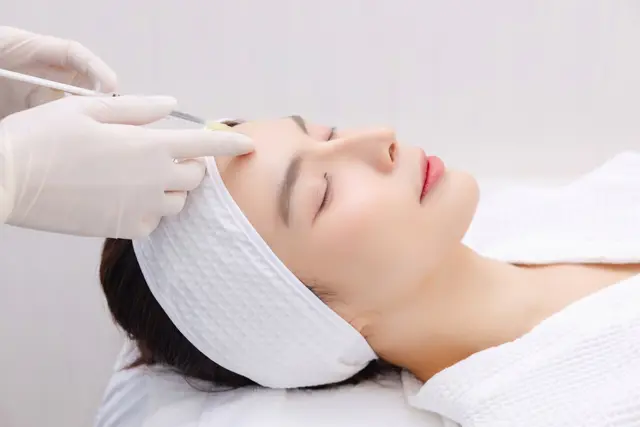
Radiesse
Radiesse is an injectable implant of synthetic calcium hydroxylapatite microspheres in a gel carrier, used to restore facial volume and improve the appearance of wrinkles and folds, and capable of stimulating a collagen and elastin response as well.
Learn More
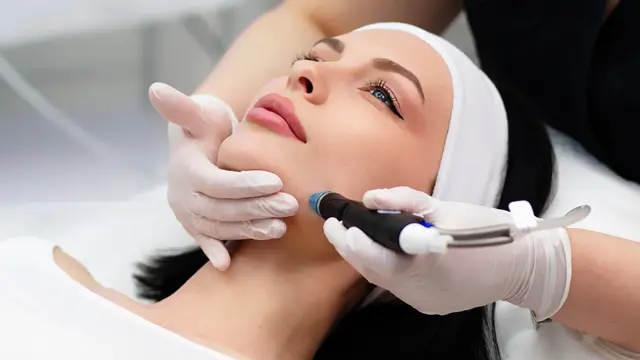
Aqua Peel
Aqua Peel is a hydro-dermabrasion facial: a handpiece combines liquid flow with vacuum suction to lift surface debris out of the pores while an exfoliating or cleansing solution loosens it.
Learn More
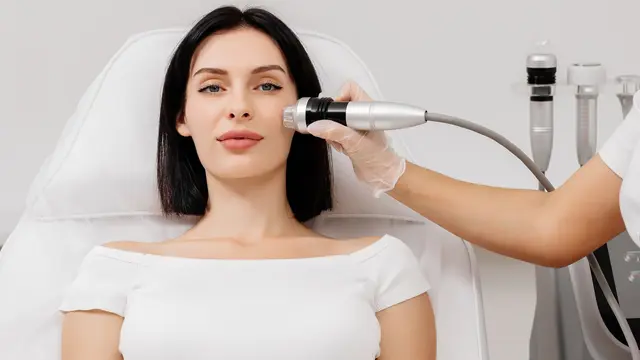
Thermage FLX RF
Thermage FLX, made by Solta Medical, is a radiofrequency system that delivers controlled RF heating to the skin and underlying tissue and may add skin vibration during treatment.
Learn More