Personalized Medical Care & Dedicated International Patient Concierge

Specialty Overview
Botox & Dermal Filler Treatments
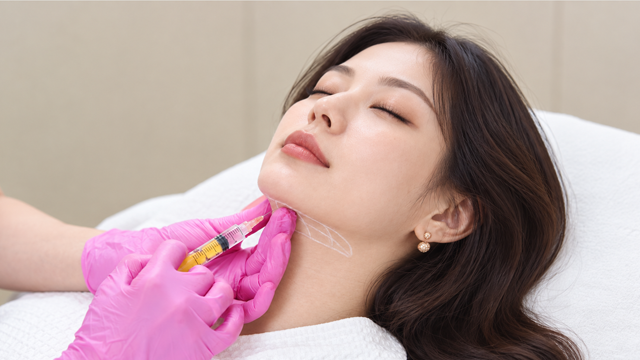
Botox and dermal fillers in Jeju, Korea at Liyan Clinic: one relaxes a muscle, one adds volume. Three doctors, outpatient injectables, US patient guide.
Schedule a ConsultationBotox and Dermal Fillers in Jeju, Korea
Medically reviewed by Dr. Oh Eunhui, Medical Director, Liyan Clinic
Botox and dermal fillers in Jeju, Korea are the two injectable treatments Liyan Clinic groups together under Botox & Dermal Filler Treatments, and mechanically they do opposite things. Botulinum toxin temporarily reduces the activity of a muscle, so the crease that muscle folds into the skin softens. Dermal filler places a gel beneath the skin, so a hollow or a flattened contour is given back its volume. This page is about how that choice gets made, because the concern you arrive with — rather than the product name you already recognise — is what determines which of the two is used, and in what order.
What Are Botox and Dermal Filler Treatments?
Botox and dermal filler treatments are minimally invasive injectable procedures used to refine facial appearance, one by temporarily reducing muscle activity and the other by adding or restoring volume.
The two mechanisms are not interchangeable. Toxin acts on the muscle that creates a line when you frown, squint or smile. Filler acts on the space under the skin that has lost support, and it does nothing to muscle movement.
Both are delivered by injection through fine needles into a treatment area that has been cleansed and marked, and both are outpatient treatments with no overnight stay.
The assessment is the same for both: the doctor evaluates facial anatomy, muscle movement, wrinkles, volume loss, proportions and the patient's stated aesthetic goals, then decides on injection areas, product type and treatment amount.
At Liyan Clinic this area of treatment is delivered through two services covering three botulinum toxin brands and four dermal filler brands, so the product used is a decision made in the room rather than a fixed house default.
Chair time across the group runs from 10 to 40 minutes. An appointment including assessment and planning is more commonly 15 to 60 minutes.
Neither result is fixed. Toxin wears off; filler is absorbed. Both are maintained by repeating treatment, on schedules that differ substantially from each other.
Liyan Clinic describes this treatment area as individualized and focused on balanced, harmonious results rather than on a single standard of appearance. What a US reader should take from that framing is narrow and useful: the clinic's stated position is that the plan follows the face, which is the opposite of a menu bought by the syringe.
Who Performs Botox and Dermal Filler Treatments at Liyan Clinic
|
|
|
Dr. Oh Eunhui, Medical Director | Dr. Hyun Moonsu, Vice Director | Dr. Kim Seunkon, Vice Director |



Injectable work in the face is judged on placement and on restraint, and the person holding the needle is the whole of the technique. There is no device setting to fall back on and no operator-independent protocol. That makes the question of who treats you more consequential here than in almost any other category the clinic offers, and it is worth reading the three doctors' backgrounds before booking rather than after.
Dr. Oh Eunhui is the Medical Director of Liyan Clinic and the clinic's legal representative on its business registration. She graduated from Seoul National University. Before Liyan Clinic she held Vice Director posts at Joy Dermatology and Me&Me Clinic and was Medical Director of The Goun Clinic. She is a full member of the Korean Society of Aesthetic Plastic Surgery and Laser Medicine and of the Korean Society of Laser Dermatology and Hair Research, and a member of the Korean Society of Aesthetic Medicine, the Korean Society of Obesity and Aesthetic Medicine and the Korean Society of Aesthetic Functional Medicine.
Dr. Hyun Moonsu is a Vice Director at Liyan Clinic and a medical specialist associated with Dong-A University. He previously served as Head of the Medical Department at Seogwipo Medical Center, as Director at Mijak Clinic and as Representative Director at Neulbom Miarum Clinic. He is a member of the Basic Aesthetic Research Association, the Korean Society of Laser Dermatology and Hair Research, the Korean Society of Aesthetic Plastic Surgery and Laser Medicine and the Korean Society of Obesity and Aesthetic Medicine.
Dr. Kim Seunkon is a Vice Director at Liyan Clinic. He previously held Director posts at Madi Clinic and at Jeju Clinic before joining Liyan Clinic. He is a member of the Korean Society of Laser Dermatology and Hair Research, the Korean Society of Aesthetic Plastic Surgery and Laser Medicine and the Korean Society of Obesity and Aesthetic Medicine.
All three of Liyan Clinic's doctors are listed as performing doctors for this area of treatment, and the clinic has not published an assignment of particular treatments or sessions to particular doctors, so this page names the team rather than claiming one doctor performs every session.
Botox and Dermal Filler Options Available
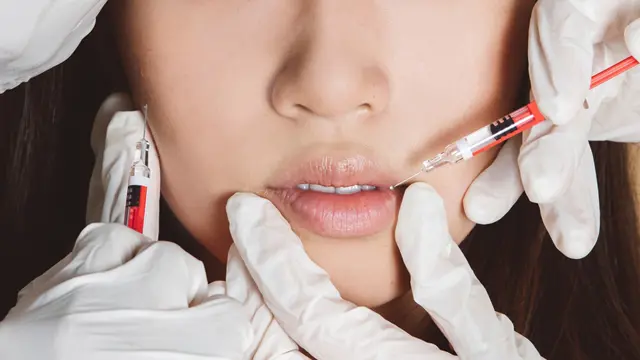
The group contains two services. They are not two versions of the same thing, and the table below is the shortest honest statement of how they differ.
Botulinum toxin injections | Dermal filler treatment | |
|---|---|---|
What it does | Temporarily reduces the activity of a targeted muscle | Places a gel beneath the skin to restore or add volume |
The concern it answers | Lines produced by expression; masseter and jawline width | Volume loss, facial contours, proportions, selected folds |
When you first see change | Three to seven days | Immediately, though swelling can mask it |
Fullest effect | About two weeks | About two weeks |
How long it holds | Three to four months at facial sites | Six to eighteen months |
Maintenance rhythm | Repeated roughly every three to four months | Reviewed at two weeks, repeated at six to eighteen months |
Its own page |
Two practical consequences follow from that table, and they matter more than the mechanism does.
The first is that a line which is only visible when you move is a muscle problem, and a line or hollow that is visible when your face is completely still is usually a volume problem. A patient can perform that test at home in a mirror before the consultation, and it predicts the recommendation more reliably than anything else a patient can self-assess.
The second is the maintenance mismatch. Toxin comes due roughly three times a year; filler comes due somewhere between once every six months and once every year and a half. For a patient who lives in Jeju that is a scheduling detail. For a patient flying from the United States it is the single most important planning fact on this page, because the two treatments will not fall due on the same trip for very long, and the trip you can realistically repeat should shape what you start.
Who Is a Good Candidate for Botox or Dermal Filler Treatment?
Every patient at Liyan Clinic speaks with a doctor before treatment begins, and the clinic assesses each face, each skin and each way of living before recommending anything. Candidacy for this group is decided in that conversation and in person, not from a form.
You may be a candidate if
Adults seeking improvement in facial wrinkles, volume loss, facial proportions or contour definition are the broad group this treatment area is for.
Your concern is expression lines, or masseter and jawline width, or lost volume in the mid-face and around the mouth.
You want a non-surgical change and understand that it is a modification rather than a transformation.
You are medically suitable for injectable treatment and have realistic expectations about what an injection can reach.
You can fit the appointment and, where the doctor wants one, a single review into the same trip.
You may need to avoid or postpone treatment if
Active infection or inflammation is present at the site that would be injected.
You have a known allergy to the treatment product or its components.
You have certain neuromuscular conditions, which require evaluation before any toxin is considered.
You are pregnant or breastfeeding.
Other medical factors, including current medications, make injectable treatment unsuitable until they have been reviewed.
Nothing on this list is a self-test. Each item is a reason to raise something at consultation, and several of them — particularly neuromuscular history and medication lists — change the answer for toxin without changing it for filler, or the reverse.
What to Expect: Procedure, Recovery, and Results Timeline
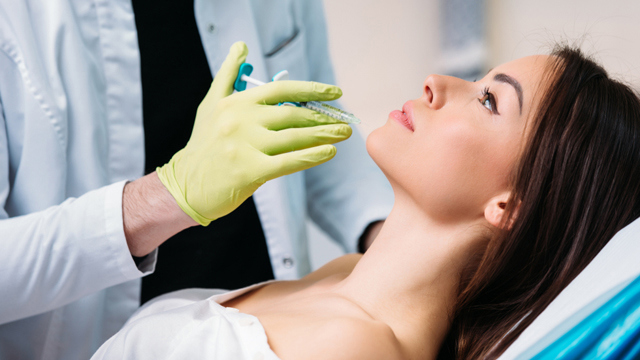
The visit starts with assessment rather than with injection. The doctor looks at facial anatomy, muscle movement, wrinkles, volume loss and proportions, and talks through what you want changed. Injection areas, product type and treatment amount are set from that assessment. The area is then cleansed and marked. Toxin is injected into selected muscles with fine needles. Filler is injected into targeted areas to restore volume or improve contour. The treated areas are checked before you leave, and aftercare instructions are given.
Before the appointment, expect to discuss medical history, allergies, medications, previous injectables and treatment goals. Treatment is not carried out over active skin infection or inflammation. Blood-thinning medicines and supplements are a conversation with your doctor rather than something to stop on your own initiative.
Stage | Botulinum toxin | Dermal filler |
|---|---|---|
Day 0 | Injection marks; normal daily activity resumes shortly afterwards | Visible change immediately, partly obscured by early swelling |
Days 1–7 | First real change from day three to day seven | Swelling, redness, tenderness or bruising settling |
Week 2 | Effect fully developed; this is when it is assessed | Result settled; this is when it is reviewed |
Months 3–4 | Effect fading at facial sites; repeat treatment due | Result holding |
Months 6–18 | — | Result fading over this window; repeat treatment due |
Afterwards, avoid rubbing or pressing the treated areas. The clinic gives instructions covering exercise, alcohol, heat exposure, makeup and other facial treatments, and those instructions are specific to what you had done. Mild swelling, redness or bruising may persist for several days; filler swelling can take longer to settle depending on the area and the product.
One aftercare instruction is not cosmetic and should be read twice. After filler treatment, seek medical attention promptly if there is severe pain, unusual skin discolouration, vision changes, or swelling that increases rapidly. Those are the signs that matter, and the reason they matter is in the safety section below.
For a patient flying in from the United States, the trip has a shape worth planning around rather than improvising:
Getting there. There is no non-stop route between any United States airport and Jeju International Airport, so United States patients fly into Seoul Incheon — roughly 13 to 14 hours from the West Coast and 14 to 15 hours from the East Coast — and take a domestic connection to Jeju. Seoul Gimpo to Jeju takes about 1 hour 15 minutes, and Liyan Clinic is about 20 minutes by car from Jeju International Airport.
Entry. United States nationals are exempt from K-ETA from 1 January 2026 to 31 December 2026 under the Korean Ministry of Foreign Affairs notice, and normally enter Korea visa-free for short visits.
Arrival day. Arrive at least one full day before treatment. A patient who lands at Jeju and is treated the same day is treated jet-lagged after two flights, and the clinic's Wednesday and Sunday closure means the arrival day has to be chosen so that the treatment day falls on an open day.
Public holidays. Korean public holidays close the clinic as well, so check them against the week you intend to travel before the flights are booked.
Total. No fixed block of days applies here — an extended medical stay is usually unnecessary for routine toxin or filler treatment.
Safety, Precision, and Clinic Standards
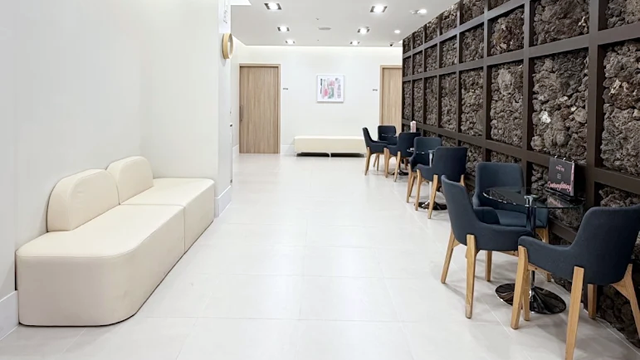
Liyan Clinic is a Registered Medical Institution for Attracting Foreign Patients, certified by the Ministry of Health and Welfare in compliance with the Medical Overseas Expansion and Foreign Patients Attraction Act.
Liyan Clinic publishes no case volume, no outcome rate and no complication rate for this treatment, and this page claims none.
Liyan Clinic opened in Jeju City in 2013, has operated from the same address ever since, and records more than 60,000 cumulative patient visits.
The risks attached to these two treatments are different risks, and a US reader is entitled to both stated plainly. For botulinum toxin, the US prescribing information carries a boxed warning that the effects of the toxin can spread from the injection area hours to weeks after injection, with symptoms that have included swallowing and breathing difficulties (FDA — BOTOX Cosmetic prescribing information). For dermal fillers, the serious risk is vascular: the FDA describes unintentional injection into a blood vessel, which can block blood supply and lead to tissue death, vision abnormalities and blindness (FDA — Dermal fillers). These are rare events. They are also the reason the aftercare warning above exists.
Common effects are ordinary by comparison: temporary redness, swelling, tenderness, bruising and mild discomfort at injection sites. Toxin can rarely cause temporary unwanted muscle weakness or drooping of an eyelid or brow. Filler can rarely cause lumps, asymmetry, infection or inflammatory reactions.
Product authenticity is a live concern in this category rather than a theoretical one. The FDA has warned that counterfeit botulinum toxin obtained from unlicensed sources has caused harmful reactions and hospitalisations in the United States, and its guidance to patients is to make sure the product comes from a licensed source (FDA — Counterfeit Botox). Liyan Clinic states a genuine-product, full-dose principle, and opens the product in front of the patient so that the product and its dose are visible. On the filler side, the materials used in this category — hyaluronic acid, calcium hydroxylapatite and poly-L-lactic acid among them — behave differently from each other in how long they last and how they are injected, and the FDA publishes which materials are approved for which use (FDA — FDA-approved dermal fillers).
The Bottom Line
Toxin relaxes a muscle; filler replaces volume. Ask which problem you have before asking which product you want.
A line that only appears when you move points toward toxin. A line or hollow visible at rest points toward filler.
Both are outpatient, both are assessed at about two weeks, and neither lasts indefinitely.
The maintenance intervals are different — roughly three to four months versus six to eighteen — and for an overseas patient that difference drives the whole plan.
The serious risks are specific and documented: distant spread of toxin effect, and vascular occlusion from filler. Both belong in the consent conversation.
Frequently Asked Questions
Which one do I actually need, toxin or filler?
It depends on whether the concern is mainly muscle movement, volume loss or contour. Botulinum toxin works by temporarily reducing targeted muscle activity; dermal fillers add or restore volume. Many patients arrive asking for one and are assessed as needing the other, which is why the consultation precedes any product decision.
Can a doctor decide this from photographs before I travel?
Photographs help with a preliminary assessment and are worth sending: bare-faced images of the treatment area in even light, front, three-quarter and profile, plus a written list of current medicines and supplements and any previous treatment in the same area. They do not settle candidacy. Suitability is decided by a doctor at Liyan Clinic in person.
How long does an appointment take?
Chair time for treatments in this group runs from 10 to 40 minutes. Counting assessment and planning, expect roughly 15 to 60 minutes depending on how many areas are treated and how complex the plan is.
Does it hurt, and is numbing used?
Most patients report only mild discomfort from the injections themselves. General anaesthesia is not used for these treatments. Topical or local numbing may be used for comfort depending on the area and the product, and it is more often relevant for filler than for toxin.
How soon can I fly home?
Many patients can fly soon after an uncomplicated injectable treatment, but the timing is individualised and should come from the treating doctor. After filler in particular, allowing several days before a long-haul flight is sensible if swelling or bruising has appeared.
What can go wrong, and what should I watch for?
Common effects are redness, swelling, tenderness and bruising that settle on their own. The uncommon but serious problems are unintended muscle weakness after toxin and vascular complications after filler. Severe pain, unusual skin discolouration, vision changes or rapidly increasing swelling after filler are reasons to seek medical attention immediately rather than waiting.
What can nobody promise me?
Exact symmetry, a specific appearance, results that last indefinitely, or the complete elimination of wrinkles. Results vary according to anatomy, product, dosage, technique and individual response. A realistic outcome is a change you notice and that people who see you daily do not attribute to a treatment.
Book a Consultation at Liyan Clinic
Botox and dermal filler treatment at Liyan Clinic in Jeju is booked as a consultation first, and the consultation is where the choice between the two mechanisms is made.
One thing is worth settling before you book travel. Liyan Clinic has not published a price or a price range for this treatment, so none is stated on this page, and cost is confirmed at consultation.
Liyan Clinic is at 3rd Floor, 371 Jungang-ro, Jeju-si, Jeju-do, South Korea, and opens Monday 10:00-19:00, Tuesday 10:00-20:00, Thursday 10:00-19:00, Friday 10:00-20:00 and Saturday 10:00-15:30, closed Wednesdays, Sundays and Korean public holidays.
English-speaking assistance is available for both online and in-person consultations at Liyan Clinic, and enquiries are handled through the clinic's contact page. Enquiries and appointment requests go through the Liyan Clinic contact page.
Disclaimer
This page is for general informational purposes and does not constitute individualized medical advice. Candidacy, technique, and expected outcomes can only be determined through a consultation with a qualified physician.
Sources & Further Reading
FDA — BOTOX Cosmetic prescribing information — the manufacturer's US labelling, carrying the boxed warning about toxin effect spreading beyond the area injected: https://www.accessdata.fda.gov/drugsatfda\_docs/label/2024/103000s5316s5319s5323s5326s5331lbl.pdf
FDA — Counterfeit version of Botox found in multiple states — harm caused by counterfeit and unlicensed-source toxin, and how to confirm authentic product: https://www.fda.gov/drugs/drug-alerts-and-statements/counterfeit-version-botox-found-multiple-states
FDA — Dermal fillers (soft tissue fillers) — what can happen when filler enters a vessel by accident: blocked blood supply, tissue death, loss of vision, stroke: https://www.fda.gov/medical-devices/aesthetic-cosmetic-devices/dermal-fillers-soft-tissue-fillers
FDA — FDA-approved dermal fillers — which filler materials are approved, and how hyaluronic acid, calcium hydroxylapatite and poly-L-lactic acid differ: https://www.fda.gov/medical-devices/aesthetic-cosmetic-devices/fda-approved-dermal-fillers
Related Services
Procedures available within our clinical departments.

Radiesse
Radiesse is an injectable implant of synthetic calcium hydroxylapatite microspheres in a gel carrier, used to restore facial volume and improve the appearance of wrinkles and folds, and capable of stimulating a collagen and elastin response as well.
Learn More
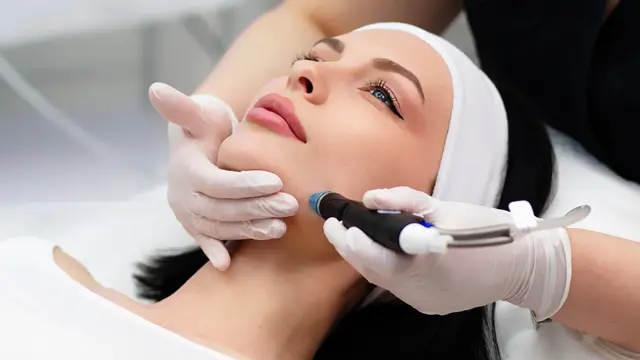
Aqua Peel
Aqua Peel is a hydro-dermabrasion facial: a handpiece combines liquid flow with vacuum suction to lift surface debris out of the pores while an exfoliating or cleansing solution loosens it.
Learn More
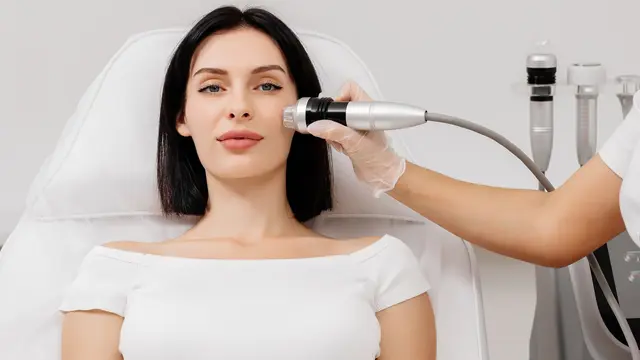
Thermage FLX RF
Thermage FLX, made by Solta Medical, is a radiofrequency system that delivers controlled RF heating to the skin and underlying tissue and may add skin vibration during treatment.
Learn More