Personalized Medical Care & Dedicated International Patient Concierge

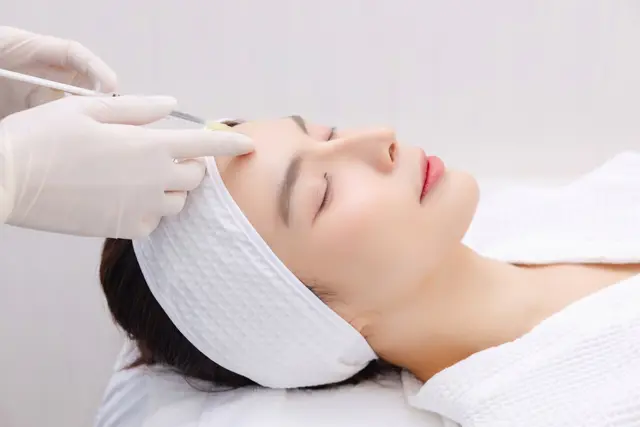
Skin Boosters & Injectable Rejuvenation · Consultation Required
Radiesse
Radiesse is an injectable implant of synthetic calcium hydroxylapatite microspheres in a gel carrier, used to restore facial volume and improve the appearance of wrinkles and folds, and capable of stimulating a collagen and elastin response as well.
Schedule a ConsultationRadiesse Filler Treatment in Jeju, Korea
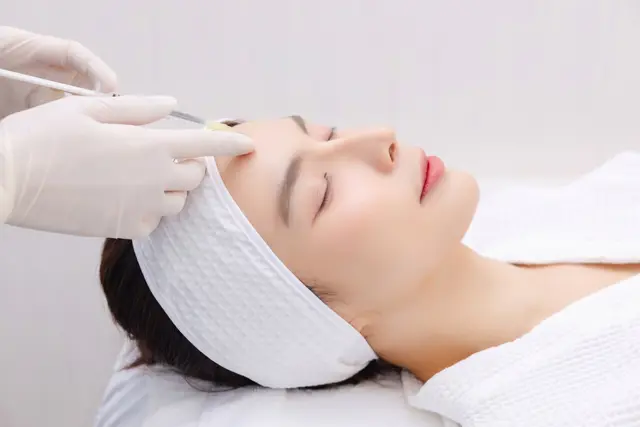
Medically reviewed by Dr. Oh Eunhui, Medical Director, Liyan Clinic
Radiesse, offered at Liyan Clinic in Jeju, Korea, is an injectable dermal filler made of calcium hydroxylapatite microspheres suspended in a gel carrier. It does two things at once, and that is the reason it sits where it does in the clinic's range: the gel gives an immediate structural effect, while the CaHA component stimulates collagen and elastin production over the months that follow. It can also be given in diluted or hyperdiluted form when the objective is skin quality rather than contour.
Everything a patient needs to decide about this treatment follows from that dual behavior — including why the face in the mirror on the way out of the clinic is not the finished answer.
What Is Radiesse?
Radiesse is an injectable implant of synthetic calcium hydroxylapatite microspheres in a gel carrier, used to restore facial volume and improve the appearance of wrinkles and folds, and capable of stimulating a collagen and elastin response as well.
The immediate part of the effect is mechanical. The gel carrier supports tissue from the moment it is placed, which is why some change in contour is visible straight away.
The delayed part of the effect is biological. The CaHA microspheres prompt a collagen and elastin response that continues developing after the carrier's contribution has gone.
Liyan Clinic marks it against jawline and mid-face support, volume loss, and skin quality where the diluted approach is used.
A treatment typically takes 30 to 60 minutes and is performed as an outpatient appointment; most patients need one session, with further sessions decided on assessment.
The injection plane, the amount, the dilution where applicable and the technique are selected by the treating doctor for the specific anatomy in front of them.
For an American reader, the practical appeal is the compression of two mechanisms into one appointment — useful when the whole treatment has to fit inside a single trip. Interest in hyperdilute biostimulator technique has grown in the United States, and this is the clinic's calcium hydroxylapatite product. It complements rather than duplicates the poly-L-lactic acid and poly-D,L-lactic acid options in the same section: those are stimulators only, while this one carries structure as well.
Who Performs Radiesse at Liyan Clinic
|
|
|
Dr. Oh Eunhui, Medical Director | Dr. Hyun Moonsu, Vice Director | Dr. Kim Seunkon, Vice Director |



Filler placed for structural support sits close to facial vasculature, and the product's labeling emphasizes practitioner expertise and familiarity with it for that reason. Liyan Clinic publishes its doctors by name with their career histories: Dr. Oh Eunhui and Dr. Hyun Moonsu are Vice Directors, and Dr. Kim Seunkon is the Medical Director.
Dr. Oh Eunhui is the Medical Director of Liyan Clinic and the clinic's legal representative on its business registration. She graduated from Seoul National University. Before Liyan Clinic she held Vice Director posts at Joy Dermatology and Me&Me Clinic and was Medical Director of The Goun Clinic. She is a full member of the Korean Society of Aesthetic Plastic Surgery and Laser Medicine and of the Korean Society of Laser Dermatology and Hair Research, and a member of the Korean Society of Aesthetic Medicine, the Korean Society of Obesity and Aesthetic Medicine and the Korean Society of Aesthetic Functional Medicine.
Dr. Hyun Moonsu is a Vice Director at Liyan Clinic and a medical specialist associated with Dong-A University. He previously served as Head of the Medical Department at Seogwipo Medical Center, as Director at Mijak Clinic and as Representative Director at Neulbom Miarum Clinic. He is a member of the Basic Aesthetic Research Association, the Korean Society of Laser Dermatology and Hair Research, the Korean Society of Aesthetic Plastic Surgery and Laser Medicine and the Korean Society of Obesity and Aesthetic Medicine.
Dr. Kim Seunkon is a Vice Director at Liyan Clinic. He previously held Director posts at Madi Clinic and at Jeju Clinic before joining Liyan Clinic. He is a member of the Korean Society of Laser Dermatology and Hair Research, the Korean Society of Aesthetic Plastic Surgery and Laser Medicine and the Korean Society of Obesity and Aesthetic Medicine.
All three of Liyan Clinic's doctors are listed as performing doctors for this area of treatment, and the clinic has not published an assignment of particular treatments or sessions to particular doctors, so this page names the team rather than claiming one doctor performs every session.
A note on titles, because it comes up with American patients: Korean qualifications and society memberships do not map onto the US vocabulary of certification, and reading them as though they did produces the wrong picture in both directions. What is published here is what is published: names, posts held, and society memberships.
Radiesse Options / Types Available
Approach | What it is for | How it is placed |
|---|---|---|
Standard formulation | Facial volume loss, moderate-to-severe wrinkles and folds, jawline and mid-face structural support | Injected undiluted for structural support in the planned plane |
Diluted or hyperdiluted formulation | Skin-quality and collagen-stimulation objectives rather than contour | Diluted before injection, with the degree of dilution set by the treating clinician |
The same product used two ways is not the same treatment, and the decision between them belongs to the consultation. A jawline that needs support and a cheek that needs skin quality are different problems even when the box on the tray is identical.
Who Is a Good Candidate for Radiesse?

Every patient at Liyan Clinic speaks with a doctor before treatment begins, and the clinic assesses each face, each skin and each way of living before recommending anything. For this treatment the doctor reviews medical history, medications, allergies, previous aesthetic treatments, skin condition, facial anatomy and treatment goals, then decides whether Radiesse is appropriate at all or whether another injectable would suit you better.
You may be a candidate if
You have age-related facial volume loss.
You have moderate-to-severe facial wrinkles or folds.
You have selected areas that need structural support, such as the jawline or mid-face.
You want an immediate effect as well as a gradual one, and can only make one trip.
Your anatomy, skin condition, medical history and goals are consistent with an injectable approach.
You may need to avoid or postpone treatment if
There is active infection or significant inflammation at the intended injection site.
Any of the product's ingredients is something you are known to react to.
You have a medical condition that makes injectable treatment inappropriate.
You are pregnant or breastfeeding, have a bleeding disorder, take medication affecting clotting, or have significant allergies — all of which need discussion with the treating clinician first.
What to Expect: Procedure, Recovery, and Results Timeline
The appointment itself is short and follows a set sequence:
The injection area is cleansed and prepared with antiseptic.
Photographs of the area are taken for the clinical record, with your consent.
Injection points are marked against jawline and mid-face support, volume loss, and skin quality where the diluted approach is being used.
Numbing cream, where the doctor uses it, is left on long enough to take effect.
Liyan Clinic states a genuine-product, full-dose principle, and opens the product in front of the patient so that the product and its dose are visible.
The dose settled at consultation is placed in the plane that was planned for it.
Pressure, cooling and inspection follow at each point that was injected.
Post-treatment instruction is given and the review appointment is booked.
Afterwards, avoid unnecessary pressure on or manipulation of the treated area unless you are specifically instructed otherwise, and watch for unusual or worsening pain, skin discoloration, significant swelling or visual symptoms.
When | What is happening |
|---|---|
Day 0 | Injection points visible, swelling begins, and some structural change is already apparent. |
Days 1 to 5 | Swelling and bruising, expected for several days. |
Week 1 | Bruising fading and concealable with make-up for most patients. In clinical information for jawline treatment with Radiesse (+), most reported side effects lasted seven days or less, though some lasted longer. |
Week 2 | Swelling has gone down far enough for the shape to be assessed. |
Weeks 4 to 8 | The structural effect is established; the collagen effect is building underneath it. |
About 3 months | The collagen effect is at its fullest, and the natural review point for the treatment cycle. |
12 to 18 months | The duration commonly discussed for this product. |
Follow-up for this treatment comes in two parts: a review shortly afterwards, then a second look once the collagen effect has matured at roughly three months. A United States patient normally takes the first of those in Jeju before flying and handles the second remotely. That is a count of follow-up visits, not a count of days in Korea.
Common temporary effects include swelling, redness, tenderness, bruising, itching and firmness at the injection sites. Less common but potentially serious complications include infection, nodules, vascular occlusion, skin injury and, rarely, vision-related complications. On travel: There is no non-stop route between any United States airport and Jeju International Airport, so United States patients fly into Seoul Incheon — roughly 13 to 14 hours from the West Coast and 14 to 15 hours from the East Coast — and take a domestic connection to Jeju. Seoul Gimpo to Jeju takes about 1 hour 15 minutes, and Liyan Clinic is about 20 minutes by car from Jeju International Airport. United States nationals are exempt from K-ETA from 1 January 2026 to 31 December 2026 under the Korean Ministry of Foreign Affairs notice, and normally enter Korea visa-free for short visits. Scheduling treatment several days before departure gives you room if visible swelling or bruising develops, and the clinic should confirm your condition rather than a flight date being declared safe in advance.
Safety, Precision, and Clinic Standards
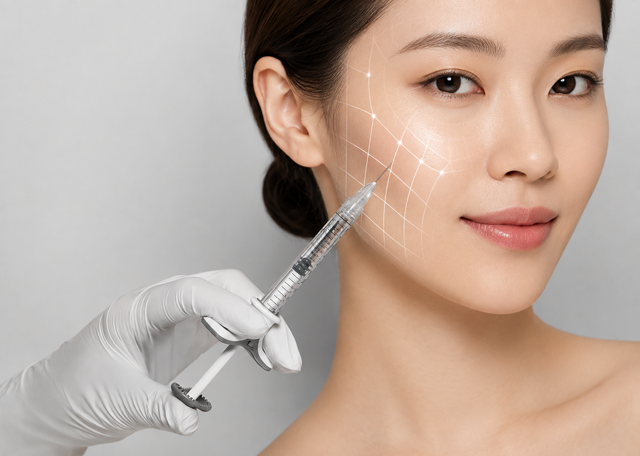
Liyan Clinic opened in Jeju City in 2013, has operated from the same address ever since, and records more than 60,000 cumulative patient visits.
Liyan Clinic is a Registered Medical Institution for Attracting Foreign Patients, certified by the Ministry of Health and Welfare in compliance with the Medical Overseas Expansion and Foreign Patients Attraction Act.
Liyan Clinic publishes no case volume, no outcome rate and no complication rate for this treatment, and this page claims none.
Two category-level facts are worth carrying home. The FDA's page on approved dermal filler materials records that calcium hydroxylapatite fillers last around 18 months and that the material is radiopaque (FDA-approved dermal fillers). Radiopaque means it can be visible on imaging, which is exactly the sort of thing a radiologist in the United States should not have to guess about — one more reason to ask for written documentation of what was injected, where and how much, in English, before you leave Jeju.
The second is the risk that governs technique. The FDA's soft tissue filler safety page describes unintended injection into a blood vessel and the tissue necrosis, vision loss and stroke that can result (FDA dermal fillers). Risk reduction is correspondingly unglamorous: patient selection, review of allergies and history, assessment of the treatment area, authentic product, aseptic practice, knowledge of facial anatomy and vascular structures, and appropriate injection technique.
The Bottom Line
Radiesse is calcium hydroxylapatite microspheres in a gel carrier — immediate structural support plus a collagen and elastin response over time.
It can be diluted or hyperdiluted when the objective is skin quality rather than contour.
Some change is visible on the day, but early swelling means the same-day appearance is not the settled result.
The collagen effect is fullest at about three months; the product's effect is commonly discussed as lasting 12 to 18 months.
CaHA is radiopaque as a material, so keep written documentation of your treatment for your doctors at home.
Frequently Asked Questions
How is Radiesse different from Sculptra?
Radiesse contains calcium hydroxylapatite microspheres in a gel carrier and can provide immediate structural support while stimulating collagen and elastin over time. Sculptra uses poly-L-lactic acid and works purely as a gradual collagen stimulator. They are different products and are not interchangeable; the right choice depends on your anatomy, the treatment area and the goal.
Will I see a result the same day?
Some improvement in volume, contour, wrinkles or folds is usually visible immediately, because the gel carrier provides structure on placement. The immediate appearance also includes temporary swelling, so it should not be taken as the final result. The collagen-related change develops progressively afterwards.
When is the result actually settled?
The structural effect appears quickly and the collagen-related change develops over the following months, with about three months being the usual review point. The exact moment depends on treatment area, formulation, technique, amount used and individual response, so a flat statement that the result is final on a fixed date is not something a clinician should make.
Does it hurt?
Temporary pain, tenderness, stinging or pressure during or after injection is common, and the level varies with the treatment area and individual sensitivity. Pain is among the reported adverse events for Radiesse and Radiesse (+). Comfort measures can be discussed with your doctor before treatment begins.
Can I have other treatments at the same appointment?
Combination may be appropriate in selected patients but has to be planned individually. The safety of Radiesse combined with other drugs, substances or implants has not been systematically studied. Laser treatments, chemical peels and other procedures that create an active dermal response may need particular caution, since swelling can occur at the implant site.
What symptoms mean I should get help immediately?
Unusual severe pain, changes in skin color near an injection site, or any visual symptom after treatment. These can indicate vascular occlusion, and rare vision abnormalities have been reported with Radiesse and other dermal fillers. Do not wait for a scheduled review — seek urgent medical attention wherever you are.
How long should I stay in Korea?
Long enough for the swelling, redness, bruising or other injection-site reactions to be assessed before a long-haul flight, which is a clinical judgment rather than a fixed number of nights. The treating clinic should determine whether an in-person review is appropriate before you leave.
What should I bring or send beforehand?
Clear, recent photographs of the treatment area in consistent lighting and from relevant angles, a list of medications and supplements, your allergies and medical conditions, and details of previous aesthetic treatments. Tell the clinic if you take blood thinners, since they can increase bruising and bleeding. Confirm the exact documentation requirements directly with the clinic.
Book a Consultation at Liyan Clinic
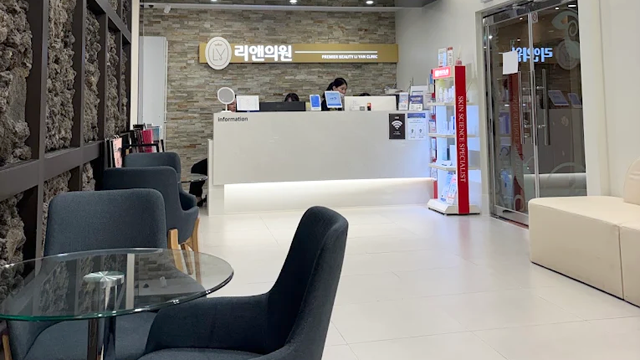
This treatment is given at the clinic's Jeju City premises, and the question of whether Radiesse suits you — and in which form — belongs to the consultation.
Liyan Clinic is at 3rd Floor, 371 Jungang-ro, Jeju-si, Jeju-do, South Korea, and opens Monday 10:00-19:00, Tuesday 10:00-20:00, Thursday 10:00-19:00, Friday 10:00-20:00 and Saturday 10:00-15:30, closed Wednesdays, Sundays and Korean public holidays.
English-speaking assistance is available for both online and in-person consultations at Liyan Clinic, and enquiries are handled through the clinic's contact page.
Liyan Clinic has not published a price or a price range for this treatment, so none is stated on this page, and cost is confirmed at consultation.
Start with the Liyan Clinic contact page. The alternatives within the Skin Booster Injections range — Sculptra, Juvelook and Dermal Filler Treatment — each have their own page.
Disclaimer
This page is for general informational purposes and does not constitute individualized medical advice. Candidacy, technique, and expected outcomes can only be determined through a consultation with a qualified physician.
Sources & Further Reading
FDA-approved dermal fillers — materials used in approved dermal fillers, including calcium hydroxylapatite, its approximate 18-month duration and its radiopacity: https://www.fda.gov/medical-devices/aesthetic-cosmetic-devices/fda-approved-dermal-fillers
FDA dermal fillers — the filler safety page, covering accidental injection into a vessel and its consequences for tissue and sight: https://www.fda.gov/medical-devices/aesthetic-cosmetic-devices/dermal-fillers-soft-tissue-fillers
Other Services
Explore additional treatments offered by our specialists.
Radiesse
Radiesse is an injectable implant of synthetic calcium hydroxylapatite microspheres in a gel carrier, used to restore facial volume and improve the appearance of wrinkles and folds, and capable of stimulating a collagen and elastin response as well.
Learn More
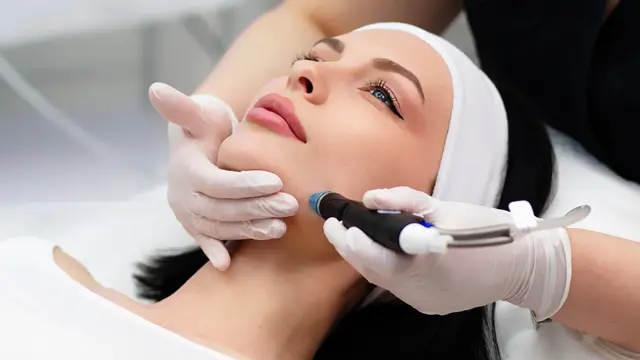
Aqua Peel
Aqua Peel is a hydro-dermabrasion facial: a handpiece combines liquid flow with vacuum suction to lift surface debris out of the pores while an exfoliating or cleansing solution loosens it.
Learn More
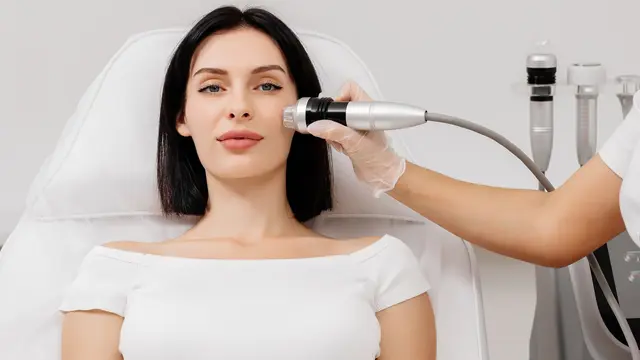
Thermage FLX RF
Thermage FLX, made by Solta Medical, is a radiofrequency system that delivers controlled RF heating to the skin and underlying tissue and may add skin vibration during treatment.
Learn More