Personalized Medical Care & Dedicated International Patient Concierge


Laser & Light-Based Skin Treatments · Consultation Required
Laser Skin Treatment
Laser skin treatment is the use of controlled light energy, selected and set according to a diagnosed skin concern, to act on uneven pigmentation, skin texture, redness or signs of photoaging without surgery.
Schedule a ConsultationLaser Skin Treatment in Jeju, Korea

Medically reviewed by Dr. Oh Eunhui, Medical Director, Liyan Clinic
Laser skin treatment at Liyan Clinic in Jeju, Korea is a grouped service rather than a single named machine: it covers the clinic's laser and light platforms other than pico toning, and which of them is used is decided from what the skin assessment finds. The concerns it is directed at are uneven pigmentation, texture, redness and selected signs of photoaging, and the appropriate laser and its settings depend on the patient's skin condition.
That structure is unusual enough to be worth stating plainly at the top. Because the service is defined by what it treats rather than by one device, the useful thing a page can do is explain how the choice is made and what to ask about it — not assert which machine will be pointed at your face.
What Is Laser Skin Treatment?
Laser skin treatment is the use of controlled light energy, selected and set according to a diagnosed skin concern, to act on uneven pigmentation, skin texture, redness or signs of photoaging without surgery.
The concern is identified first, and the laser is chosen second. Selection and intensity are individualized to the skin condition and to the outcome being sought.
At Liyan Clinic this service is the grouped one: it covers the clinic's laser and light platforms other than pico toning, so the specific platform varies by indication.
Chair time is 10 to 40 minutes depending on the platform and the area treated, and the requirement varies by indication.
Pigment and scar work is normally a course rather than a single appointment, while some other indications are not.
No overnight stay is required for a treatment of this type.
The range of behaviour inside this category is wide, and it is worth understanding before comparing quotes between countries. At one end, gentle light-based work leaves essentially no downtime. At the other, ablative resurfacing removes tissue and has a documented set of contraindications and complications alongside its indications, which is why it is planned differently and healed differently (NIH/NCBI Bookshelf, ablative laser resurfacing). Two treatments described by the same three words can therefore mean very different weeks.
Much of what the category is asked to address is photoaging. The American Academy of Dermatology attributes freckles, age spots and wrinkles to accumulated ultraviolet exposure (AAD on photoaging from sun damage), which is also why longevity of any result here depends partly on what happens after the appointment.
Who Performs Laser Skin Treatment at Liyan Clinic
|
|
|
Dr. Oh Eunhui, Medical Director | Dr. Hyun Moonsu, Vice Director | Dr. Kim Seunkon, Vice Director |

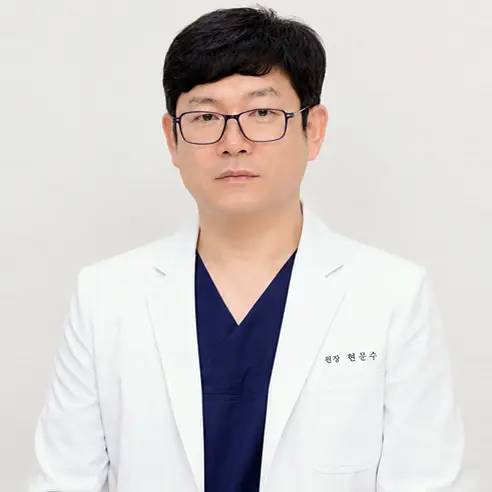
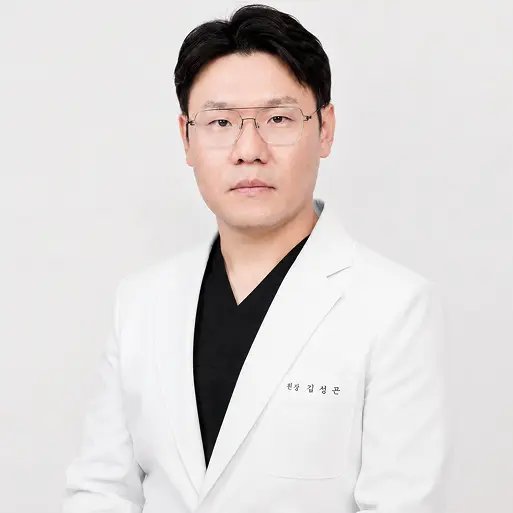
When the treatment is a category rather than a device, the clinician's judgment is the product. The assessment decides whether laser treatment is appropriate at all, then which platform, then at what intensity. Liyan Clinic names three doctors and publishes a career history for each; the profiles are Dr. Hyun Moonsu, Dr. Kim Seunkon and the Medical Director, Dr. Oh Eunhui. The clinic describes its approach as combining medical expertise with individualized aesthetic planning rather than applying one protocol to everybody.
Dr. Oh Eunhui is the Medical Director of Liyan Clinic and the clinic's legal representative on its business registration. She graduated from Seoul National University. Before Liyan Clinic she held Vice Director posts at Joy Dermatology and Me&Me Clinic and was Medical Director of The Goun Clinic. She is a full member of the Korean Society of Aesthetic Plastic Surgery and Laser Medicine and of the Korean Society of Laser Dermatology and Hair Research, and a member of the Korean Society of Aesthetic Medicine, the Korean Society of Obesity and Aesthetic Medicine and the Korean Society of Aesthetic Functional Medicine.
Dr. Hyun Moonsu is a Vice Director at Liyan Clinic and a medical specialist associated with Dong-A University. He previously served as Head of the Medical Department at Seogwipo Medical Center, as Director at Mijak Clinic and as Representative Director at Neulbom Miarum Clinic. He is a member of the Basic Aesthetic Research Association, the Korean Society of Laser Dermatology and Hair Research, the Korean Society of Aesthetic Plastic Surgery and Laser Medicine and the Korean Society of Obesity and Aesthetic Medicine.
Dr. Kim Seunkon is a Vice Director at Liyan Clinic. He previously held Director posts at Madi Clinic and at Jeju Clinic before joining Liyan Clinic. He is a member of the Korean Society of Laser Dermatology and Hair Research, the Korean Society of Aesthetic Plastic Surgery and Laser Medicine and the Korean Society of Obesity and Aesthetic Medicine.
All three of Liyan Clinic's doctors are listed as performing doctors for this area of treatment, and the clinic has not published an assignment of particular treatments or sessions to particular doctors, so this page names the team rather than claiming one doctor performs every session.
Who Is a Good Candidate for Laser Skin Treatment?
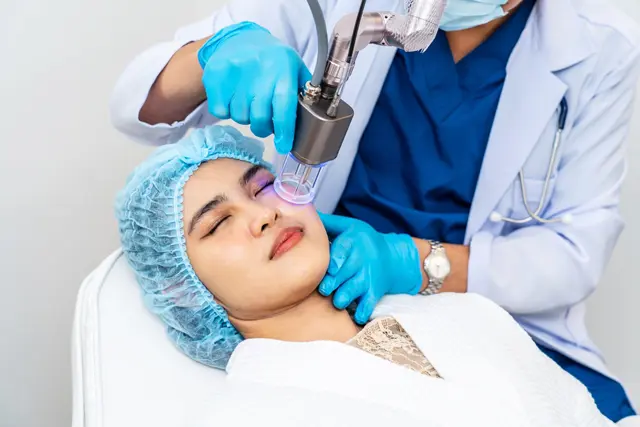
You may be a candidate if
You are an adult whose concern is uneven pigmentation.
Your concern is sun-related discoloration.
Your concern is an irregularity of skin texture.
Your concern is ABNOM or naevus of Ota.
Your concern is one of the selected signs of aging this category addresses.
You are looking for a minimally invasive option rather than surgery.
You may need to avoid or postpone treatment if
There is an active skin infection.
The area is significantly irritated or inflamed.
An open wound sits where treatment would be applied.
Another condition is present that could interfere with treatment.
You are pregnant, or have a medical condition relevant to the treatment, in which case suitability is discussed with the doctor beforehand.
Suitability here depends on skin type, on the skin's current condition, and on the specific laser being considered — which is another way of saying the three variables are assessed together rather than one at a time. Every patient at Liyan Clinic speaks with a doctor before treatment begins, and the clinic assesses each face, each skin and each way of living before recommending anything. The clinic's stated position is that it recommends only what the skin actually needs, which is the direct answer to the concern American patients raise most often about treatment abroad: being sold more than they came for.
What to Expect: Procedure, Recovery, and Results Timeline
The clinic documents a seven-step sequence for this service, and it is worth reading as a sequence, because it shows where the device decision sits.
Initial consultation: the patient's skin concerns, goals, medical history and previous treatments are discussed.
Skin assessment: the skin is examined for pigmentation, texture, tone, redness and sensitivity.
Diagnosis: the primary concern is identified, and whether laser treatment is appropriate at all is determined here.
Treatment selection: the appropriate laser or energy-based treatment is selected according to skin condition and goals.
Personalized planning: treatment area, intensity and the expected number of sessions are set from the assessment.
Treatment discussion: expected benefits, possible side effects, recovery and realistic results are explained before proceeding.
Final confirmation: the plan is confirmed and treatment proceeds once the patient agrees.
Step three is the one patients tend to skip past, and it is the one that protects them. A laser is not indicated for every mark on the skin, and the sequence above puts the question of whether to treat ahead of the question of what to treat with.
Stage | What happens | Timing |
|---|---|---|
Consultation and diagnosis | Concern identified, suitability determined, platform and intensity selected | Before treatment |
Preparation | Sun exposure avoided beforehand; medications, skin conditions and recent procedures disclosed | Weeks to days before |
Treatment | The selected laser or energy-based treatment is applied to the planned area | 10 to 40 minutes of chair time |
Immediate recovery | Ranges from minimal downtime to several days or longer for visible healing after more aggressive resurfacing | Hours to several days |
First change | Improvement may become noticeable as the skin heals; texture and collagen-related change develops progressively | Days to weeks |
Course | Some plans involve multiple sessions with periodic visits; pigment and scar work is normally a course | Weeks apart |
Longer term | Longevity depends on the condition treated, the treatment type, skincare and ongoing environmental exposure | Ongoing |
Comfort varies by treatment and by individual sensitivity, and some energy-based treatments produce warmth, tingling or brief discomfort during the session; intensity can be adjusted to the patient's condition and tolerance. Afterwards, avoid excessive sun exposure, intense heat, harsh skincare products, aggressive exfoliation and unnecessary irritation of the treated area, and follow the aftercare instructions given for the specific treatment performed.
For an international patient, an extended medical stay is generally not required for a non-surgical laser skin treatment, but the schedule should be confirmed with the clinic before booking flights rather than assumed. When it is appropriate to fly is judged against the treatment actually performed and any redness or swelling it produced, which is a conversation to have at the review rather than a date to plan around in advance.
Combining Laser Skin Treatment with Other Treatments
Liyan Clinic publishes no combination package for this service. Within its confirmed service list, the treatments that pair naturally with it are:
LDM Skin Treatment
Exosome Skin Booster
Aqua Peel
Pico Toning
Whether any of them can be performed on the same day is a clinical decision, and the clinic has not documented a same-day protocol, so it is a question for the consultation rather than something to plan an itinerary around. Both this service and Pico Toning sit under Skin Resurfacing with Laser Technology, and they are not interchangeable — the clinic offers both so the choice can be made on the diagnosis. Outside this specialty, depending on the concern, the alternatives are radiofrequency-based treatments, injectables or ultrasound-based lifting; the clinic lists Potenza, Rejuran, Ultherapy Prime, Shurink and InMode among its aesthetic programs.
Safety, Precision, and Clinic Standards
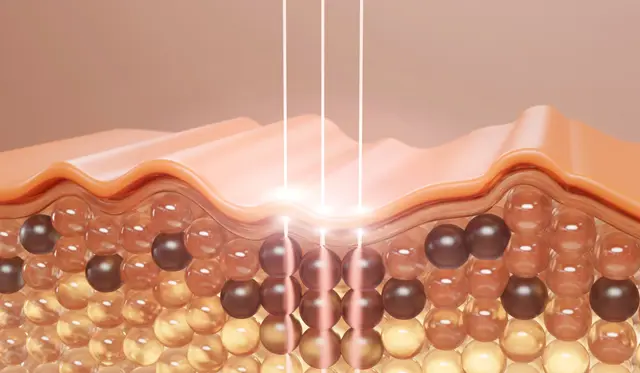
Liyan Clinic is a Registered Medical Institution for Attracting Foreign Patients, certified by the Ministry of Health and Welfare in compliance with the Medical Overseas Expansion and Foreign Patients Attraction Act.
Liyan Clinic publishes no case volume, no outcome rate and no complication rate for this treatment, and this page claims none.
Liyan Clinic opened in Jeju City in 2013, has operated from the same address ever since, and records more than 60,000 cumulative patient visits.
Temporary redness, warmth, swelling, tenderness, sensitivity or mild irritation can follow energy-based skin treatment, and which of them occurs depends on the device and the intensity used. The risks that should be named before consent are prolonged redness or swelling, skin irritation, pigmentation changes, burns and other skin reactions. Individual risk depends on skin type, on the settings selected and on the specific device used — the same three variables that decide suitability in the first place.
Because this service is defined by indication rather than by one machine, the questions worth asking are about the specifics of your own plan. The American Academy of Dermatology's guidance on choosing a provider makes the same general point for cosmetic consultations: establish who will perform the treatment and what the plan is before agreeing to it (AAD, how to select a dermatologist). A practical list for this consultation:
Which laser or energy device is being proposed for my concern, and why that one.
What intensity and how many sessions the plan assumes.
What downtime this specific plan produces, and on which days.
What the expected effect is, and what it will not change.
What written record of the treatment I can take home.
That last one matters more for a patient flying back to the United States than it does for a local patient. American patients generally expect written documentation of what was done — the device or product used, the treatment details and doses where they apply — in a form that can be handed to a physician at home. Asking for it at the clinic, in English, is easier than reconstructing it afterwards. It is also worth knowing that credential vocabulary does not translate directly between the two countries: Korean professional society memberships and titles do not map onto United States certification categories, and should be read as what they are rather than as equivalents.
The Bottom Line
This is a grouped service: it covers the clinic's laser and light platforms other than pico toning, and the platform is chosen from the diagnosis.
The published sequence puts diagnosis and the decision of whether to treat ahead of the choice of device.
Chair time is 10 to 40 minutes depending on platform and area, and no overnight stay is required.
Downtime is the widest variable in this category, from minimal to several days or longer after more aggressive resurfacing.
Results vary by condition, skin type and number of sessions, and one session should not be expected to completely transform the skin.
Frequently Asked Questions
How is the laser chosen if the treatment is not named after one device?
It is chosen at step four of the clinic's documented sequence, after the skin has been examined and the primary concern identified. Selection and intensity are individualized to the skin condition and the stated goal. The reason the service is not named after a device is that the same concern in two people can call for different platforms.
How long does a session take?
Chair time is 10 to 40 minutes depending on the platform used and the area treated, and the requirement varies by indication. Consultation, preparation and photography sit outside that figure, so the visit runs longer than the treatment step. No overnight stay is required for a treatment of this type.
How much downtime should I expect?
That is the hardest question to answer generically, because recovery varies considerably by laser type and intensity. Milder treatments may involve minimal downtime; more aggressive resurfacing can require several days or longer before visible healing is complete. The clinic gives aftercare instructions specific to the treatment performed rather than a single standard protocol.
Is laser skin treatment painful?
Comfort varies by treatment and by individual sensitivity. Some energy-based treatments produce warmth, tingling or brief discomfort while they are being delivered. Intensity can be adjusted according to your condition and tolerance, which is worth raising during the treatment discussion rather than after the first pulse.
What should I avoid before treatment?
Two to four weeks without deliberate sun exposure or tanning is the standard requirement, because tanned skin narrows the range of settings that can be used safely. In the days immediately before, leave out at-home exfoliating acids and retinoids for the same reason. Tell the doctor about medications, existing skin conditions, allergies, previous cosmetic treatments and any recent procedures.
Can it be combined with other treatments at the clinic?
There is no published combination package for this service. Within the clinic's confirmed service list, LDM Skin Treatment, Exosome Skin Booster, Aqua Peel and Pico Toning are the treatments that pair naturally with it. Whether any of them can be done on the same visit is a clinical decision made at consultation rather than a documented protocol.
How many follow-up visits will I need?
It depends on the plan. Some treatments require little in the way of formal downtime monitoring, while a plan involving multiple sessions may require periodic visits. That number is set at the personalized planning step, which is where the expected number of sessions is decided.
What written record should I take home?
Ask for documentation of the treatment in English, covering the device or product used, the treatment details and any doses that apply. United States patients commonly expect that level of record to pass to their own physician, and it is far easier to obtain at the clinic than to reconstruct from memory later. An online consultation before travel is possible, and relevant medical history and details of previous cosmetic treatments are useful to have ready for it.
Book a Consultation at Liyan Clinic
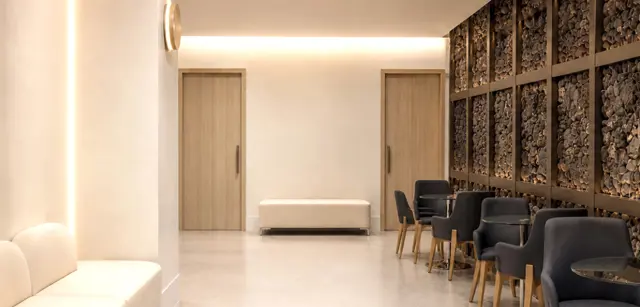
Laser skin treatment at Liyan Clinic in Jeju begins with an assessment, and whether a laser is the right tool for your concern is part of what that assessment decides.
Liyan Clinic is at 3rd Floor, 371 Jungang-ro, Jeju-si, Jeju-do, South Korea, and opens Monday 10:00-19:00, Tuesday 10:00-20:00, Thursday 10:00-19:00, Friday 10:00-20:00 and Saturday 10:00-15:30, closed Wednesdays, Sundays and Korean public holidays.
English-speaking assistance is available for both online and in-person consultations at Liyan Clinic, and enquiries are handled through the clinic's contact page.
Liyan Clinic has not published a price or a price range for this treatment, so none is stated on this page, and cost is confirmed at consultation.
To arrange a consultation, use the Liyan Clinic contact page.
Disclaimer
This page is for general informational purposes and does not constitute individualized medical advice. Candidacy, technique, and expected outcomes can only be determined through a consultation with a qualified physician.
Sources & Further Reading
NIH/NCBI Bookshelf, Ablative Laser Resurfacing — mechanism, indications, contraindications and complications of ablative resurfacing: https://www.ncbi.nlm.nih.gov/books/NBK557474/
AAD, Sun damage and your skin — the photoaging changes this category is most often asked to address: https://www.aad.org/public/everyday-care/sun-protection/sun-damage-skin
AAD, How to select a dermatologist — what to establish and what to ask before a cosmetic consultation: https://www.aad.org/public/fad/how-to-select-a-derm
Other Services
Explore additional treatments offered by our specialists.
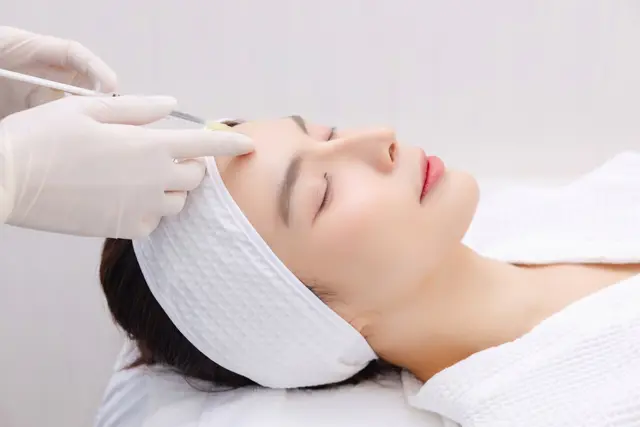
Radiesse
Radiesse is an injectable implant of synthetic calcium hydroxylapatite microspheres in a gel carrier, used to restore facial volume and improve the appearance of wrinkles and folds, and capable of stimulating a collagen and elastin response as well.
Learn More
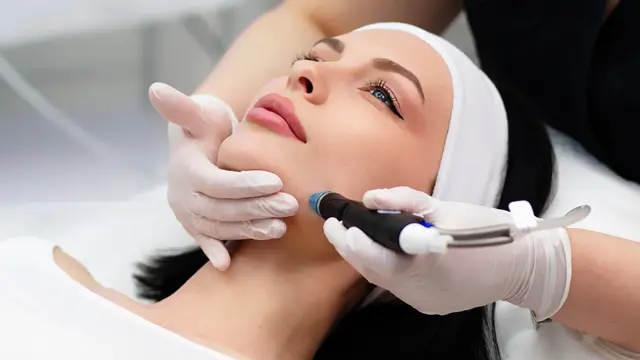
Aqua Peel
Aqua Peel is a hydro-dermabrasion facial: a handpiece combines liquid flow with vacuum suction to lift surface debris out of the pores while an exfoliating or cleansing solution loosens it.
Learn More
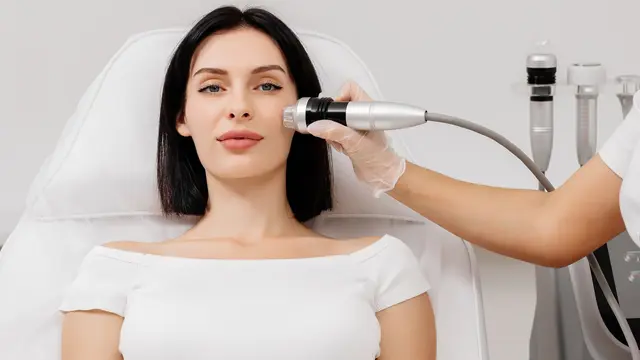
Thermage FLX RF
Thermage FLX, made by Solta Medical, is a radiofrequency system that delivers controlled RF heating to the skin and underlying tissue and may add skin vibration during treatment.
Learn More